
Much of California's architectural legacy is rooted in the midcentury and, in particular, the city's wealth of modernist houses. Southern California has always been among the most architecturally progressive parts of the USA, especially since the 1920s, when Los Angeles experienced a golden era with the birth of the movie and entertainment industry. Linked to this, modernist architecture and design became a catalyst for a new modern lifestyle.

Insley House
Explore the modernist houses of Los Angeles
It was in Los Angeles, where, from the 1920s to the 1960s, designers and architects transformed the ideas of the European avant-garde to fit the climate and environment of the American West. From the modern bungalows of Greene & Greene and the very first modernist creations of Irving Gill at the beginning of the 20th century to the pioneering and now-iconic houses of Richard Neutra and Rudolph Schindler, Los Angeles became one of the most important places for architectural experimentation, even before the Second World War.

Morris house and studio
A history of modernist houses of Los Angeles
It was in the 1950s, especially, that the city became a symbol of the American dream – a new American society of prosperity for the middle class. A specific style of midcentury modernism, based on the ideas of the Bauhaus and the rationalisation of design and architecture, was born here after the Second World War, fuelled by the country's rapid economic growth. The main aim of the modernists was to create a clear, universal system of manufacturing and building for both products and construction, which would provide the components for elevated, modern living. The Case Study House program, a series of commissions for forward-thinking homes run by the Arts and Architecture magazine, and the architects involved in it, were central to this mission.

Victor M Carter Residence
However, more thoughts and experiments, beyond the minimalist modernism of the Case Study House program, emerged at that time. More significant strands of this movement, including organic architecture and the Hollywood Regency style, were flourishing. Architects, such as John Lautner, built lavish houses representing the American Dream.

Mutual Housing Association Development
Los Angeles beyond modernism
During the late 1960s and 1970s, the modernist dream slowly started winding down to make way for Postmodernism and, in Los Angeles, especially, Deconstructivism. The last, in particular, an experimental movement that challenged the norm, gave birth to architecture giants such as Pritzker-winning architects Frank Gehry and Thom Mayne. Their work symbolically brought the evolution of 20th-century architecture in Southern California to a close – preparing it for the 21st century that followed.
Tour the modernist houses of Los Angeles
Gamble House

Architect: Greene & Greene
When: 1908
Based in Pasadena, brothers Charles Sumner Greene and Henry Mather Greene were influential practitioners of the American Arts and Crafts Movement in the early twentieth century. Their residential architecture centres around sophisticated wooden construction in which complex designs were realised through elaborate joinery and framing, partly inspired by traditional Japanese aesthetics. Gamble House in Pasadena is one of their finest works and exemplary of the architects’ style.
Horatio West Court

Architect: Irving Gill
When: 1919
Irving Gill is considered a forgotten pioneer of American modernism – and not only that. His very early interpretations of functionalist principles even overtook some of his progressive European counterparts, such as Josef Hoffmann or Adolf Loos. His small housing complex, West Horatio Court in Santa Monica, highlights the architect‘s ability to connect the historical continuity of colonial and Hispanic influences with orthodox modernist principles.
Spadena House (The Witch's House)

Architect: Harry Oliver
When: 1921
Originally built as offices and a dressing room for Irvin Willat's film studio in Culver City, Spadena House is a whimsical relict of Hollywood's golden age silent movie era. Designed by art director Harry Oliver, the house, which was moved to its present location in 1926, represents a specific movement within Hollywood architecture called Storybook architecture, often influenced by European fairytale stories.
Storer House

Architect: Frank Lloyd Wright
When: 1924
It was in Los Angeles where architect Frank Lloyd Wright experimented with the Mayan Revival style, which he applied to several house designs during the 1920s. After his success with Hollyhock House, Wright was commissioned by other clients to deliver more glamorous residential designs. In 1923 and 1924, Wright designed four houses in Los Angeles, constructed in precast concrete modules interwoven by steel rods, today known as Textile Block Houses. One of the lesser-known examples is the Storer House.
Victor M. Carter Residence

Architect: Milton J. Black
When: 1935
One of the most celebrated architects of the Streamline Moderne style, in the mid-1930s, Milton J. Black, worked in Los Angeles, where he mainly built private homes with dynamic modern forms, as well as Spanish Colonial Revival residences. This house in Los Feliz demonstrates typical Streamline Moderne features such as white curved walls and expansive corner windows.
Entanza House

Architect: Harwell Hamilton Harris
When: 1937
John Entanza, editor-in-chief of Arts and Architecture Magazine, commissioned architect Harwell Hamilton Harris to build his own house in Pacific Palisades. The house is a unique interpretation of Harris‘s modernism. He was often inspired by the Bay Area Style and Wright‘s organicism, but Entanza's house reveals more Bauhaus and Streamline Moderne influences.
Insley House

Architect: Edith Northman
When: 1940
The much lesser-known, Denmark-born architect Edith Norman was best known for the Union Oil Stations she designed. Insley House, at the foot of the famous Griffith Observatory park, shows masterful finesse in its protruding geometric volumes on a very steep site.
Alexander and Flora Hural House

Architect: Gregory Ain
When: 1940
Gregory Ain is one of the most influential early Californian modernists, interested mainly in low and medium-cost housing. He designed a number of residences, including a house for Alexander and Flora Hural with simple lines and volumes hinting at Ain‘s involvement with the International Style.
Kimpson Nixon House

Architect: Raphael Soriano
When: 1940
Located on Long Beach in Los Angeles, the Kimpson Nixon House was one of the first projects of Californian modernist pioneer Ralph Soriano. He designed the house with a European modernist flavour and looked for inspiration in the early work of Richard Neutra, for whom he had worked.
Mutual Housing Association Development

Architect: Archibald Quincy Jones
When: 1947
In the late 1940s, young architect Archibald Quincy Jones was commissioned to design the Mutual Housing Association Development in Crestwood Hills. From the originally planned 500 houses, only 160 were built, and a fire in 1961 took out about 47. As of today, only 33 remained. In this project, Jones used his typical dynamic approach influenced by Frank Lloyd Wright.
Dawnridge House

Architect: Tony Duquette
When: 1950s onwards
The bizarre world of Tony Duquette is revealed in his Beverly Hills home. This interior designer studied on scholarships at the Chouinard Art Institute and Yale School of Drama. At that time, he also met the socialite and decorator Elsie de Wolfe, who had a background in European classicism and Surrealism. Under her influence, Duquette established himself as a designer, expressing his boundless imagination, as showcased in his only surviving interior.
Morris House and Studio

Architect: Allyn E. Morris
When: 1958
Allyn E. Morris, one of California’s lesser-known but no less important, innovative modernists, built this house and studio for himself in 1958 in the hilly area of Silver Lake, Los Angeles. Standing on a steep slope, from street level, one encounters the red-trimmed brick wall and canopy of the carport. However, the building extends at the back into a three-floor structure descended via a red spiral staircase. With its expansive glass windows, red steel framework and cantilevered roof, Morris’ residence combines sophisticated functionalism and bespoke engineering with an organic approach to spatial layout and vibrant use of colour.
Hunt House

Architect: Craig Ellwood
When: 1957
Craig Ellwood was a highly influential American architect who, in 1953, was one of those commissioned by Arts and Architecture magazine for its Case Study Houses programme. His minimal, slender style of architecture with an emphasis on openness and transparency is exemplary of California modernism. Designed as a weekend residence for its owners, the Hunt House sits over the beach in Malibu and comprises two boxy pavilions elevated above the sand on wooden stilts.
The Jacob and Sophia Karasik Residence

Architect: Lloyd Wright
When: 1961
Located in Beverly Hills, the Karasik House was designed by Frank Lloyd Wright‘s son Lloyd Wright, whose contribution to Los Angeles architecture history is also very important. Obviously influenced by the work of his father, Lloyd Wright designed several residences in Los Angeles using perforated pre-cast blocks. Karasik Residence is one of his last projects.
Kambara Residence

Architect: Richard Neutra
When: 1960
Around the corner from his VDL House, architect Richard Neutra designed a small colony of homes in 1960. One of them is Kambara Residence, which demonstrates Neutra's typical sleek horizontal architecture, synonymous with Los Angeles building culture.
Strick House

Architect: Oscar Niemeyer
When: 1963
Built in 1963, the Strick House in Santa Monica is the only Oscar Niemeyer project in North America. Defined by an open plan interior, large floor-to-ceiling windows and punctuated overhangs, the house lacks Niemeyer‘s signature curves and rather reflects the more typical Californian horizontal lines.
Waxman Residence

Architect: Barry J. Mottif
When: 1964
Little-known architect Barry J. Mottif designed this house for his friend, artist Arlene Waxman, and her husband, Jerry. It was completed in 1964. Located on a steeply sloped site in Studio City, the house features stacked wooden-covered volumes revealing the influence of the organic architecture of John Lautner, whose studio Mottif was an intern in.
Stevens House

Architect: John Lautner
When: 1968
An absolute master of American organic architecture and unconventional residential designs, John Lautner was responsible for some of the best midcentury buildings created in California. Malibu is home to several of his designs. One is this beach house built by Lautner in 1968, the year he realised his famous Elrod House in Palm Springs. The house features two curved concrete shell structures set at opposing orientations.
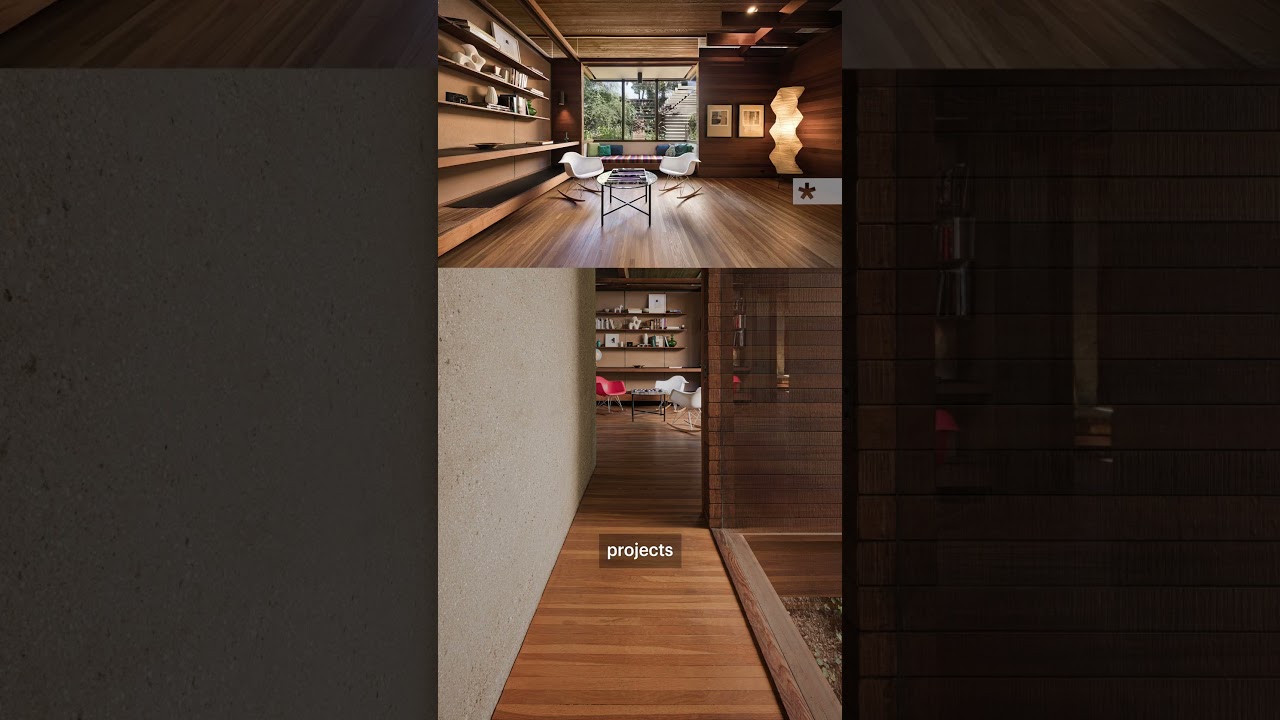
Kappe Residence

Architect: Ray Kappe
When: 1965–67
Although Ray Kappe was one of the leading Californian modernists, his work remains relatively unknown. The architect, who was also a co-founder of the prestigious Southern California Institute of Architecture (SCI-Arc), became a master in creating spacious residential architecture, focusing his efforts on designing private houses. The Kappe Residence, built for himself and his wife Shelly, is the result of his interest in both the sleek, geometric lines of modernism and the harmony between dwelling and nature, as promoted by Frank Lloyd Wright.
Norton House

Architect: Frank Gehry
When: 1984
Designed in 1984 for artist Lynn Norton and writer William Norton, Norton House is technically not modernist, but rather represents the essence of Gehry‘s pioneering deconstructivist period. Composed of different volumes and materials, the structure is a seemingly chaotic assemblage of rooms with a studio set atop a pillar.
Al Struckus House

Architect: Bruce Goff
When: 1982
With the Al Struckus House, the master of organic architecture, Bruce Goff, left a powerful legacy. His final built project, and his only private residence in California, is a playful but commanding union of space and form. One of the most original architects of his generation, Goff completed the design just before he died in 1982. His client was aeronautical engineer Al Struckus, and the project is set in Woodland Hills.
Schwartz House

Architect: Pierre Koenig
When: 1994
Built in 1994, Schwartz House is an example of the late career of one of the most influential Californian architects, Pierre Koenig. Known mostly for his Case Study House number 22 (Stahl House), Koenig remained loyal to modernist minimalism and structural simplicity until the end of his career.