
If there’s one thing that Wallpaper* does well, it’s houses – spotlighting architecturally arresting gems from around the globe and spanning the spectrum of modern design. Our inboxes are overflowing with news of the world’s most boundary-pushing architectural projects, and we strive to bring you the very best.
To ensure you don’t miss a thing – and to showcase the scope of residential architecture today – we’ve launched a monthly series: The Architecture Edit. Each instalment will highlight our favourite houses of the month: buildings that demonstrate creative planning, innovative methods and, of course, aesthetic excellence.
A Californian community

Set within California’s Sea Ranch community, The House of Four Ecologies is a coastal retreat designed by a group of architect friends. Led by James Leng alongside Natasha Sadikin, Juney Lee and Hoang Nguyen, the 1,600 sq ft home is conceived as four distinct volumes nestled into a riparian corridor of firs, grasses and shrubs. Each space is oriented to a different ecological condition, creating varied relationships to ocean, garden, meadow and forest. Inside, rooms unfold as experiential moments: the Ocean Room frames the Pacific through a single large window; the Garden Room blurs interior and exterior with sliding walls and a courtyard; the kitchen and dining area forms the social heart; and an ensuite studio overlooks the meadow beyond.
A sunken garden home
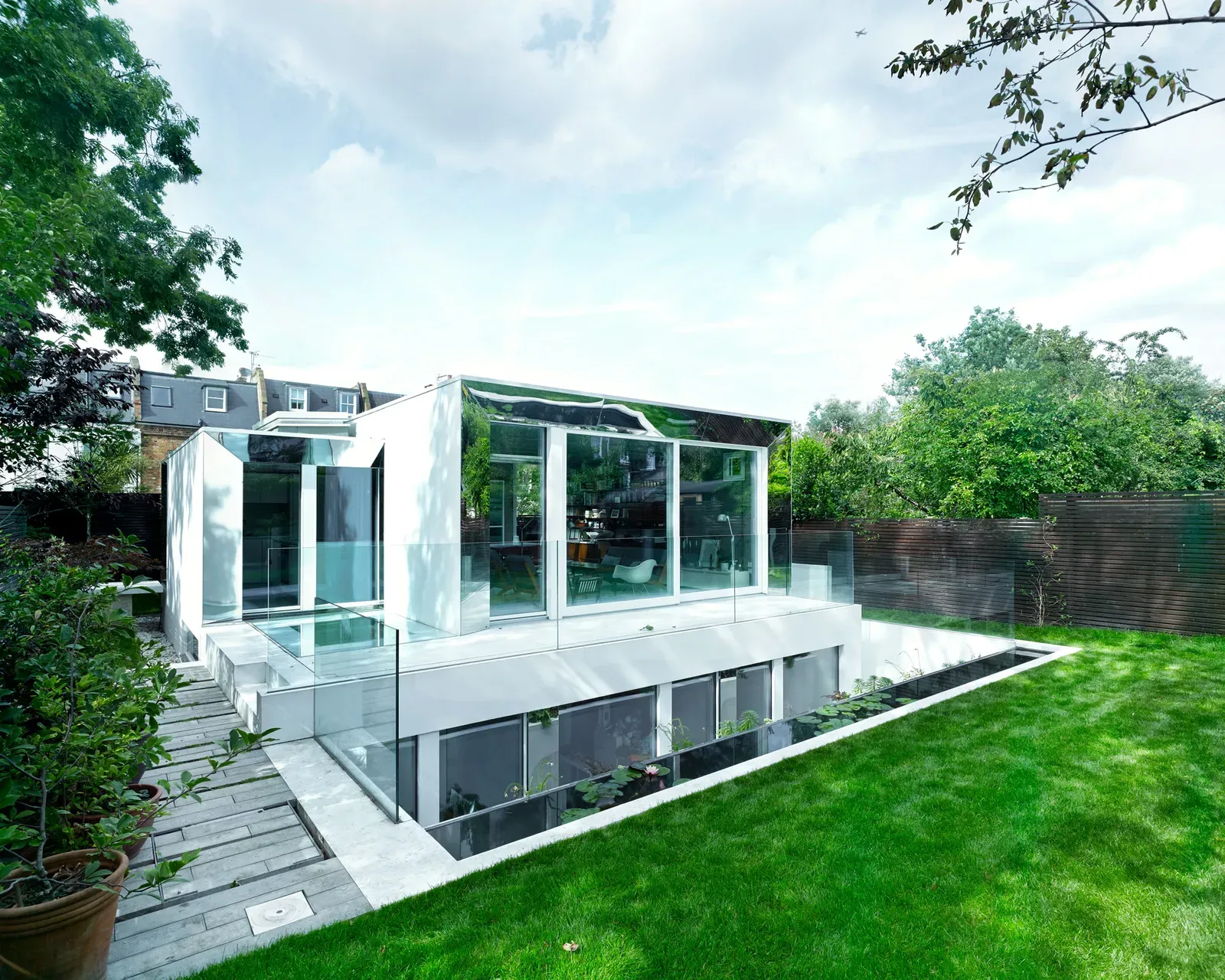
Designed by architect couple Deborah Saunt and David Hills of DSDHA, Covert House is a discreet yet radical response to London’s housing constraints. Tucked behind Clapham Old Town’s historic terraces, the house is invisible from the street, sinking partly below ground. Built on a speculative backland site, the project became both a family home and a testing ground for the architects’ broader ideas about urban living. Cast concrete defines the structure, alternating between raw and refined finishes, while large skylights and glazed façades flood the interior with daylight. The inverted layout places living spaces above and bedrooms below,. Reading a bit like a pavilion set within greenery, the house demonstrates how dense cities can accommodate inventive, sustainable architecture.
A Tbilisi apartment

In a historic art nouveau building in Tbilisi’s Sololaki district, designers Nino Nozadze and Eka Papamichail have reimagined an apartment for Georgian chef Tekuna Gachechiladze. Original parquet floors, tall ceilings and double doors preserve the building’s character, while new material interventions introduce warmth and clarity. Walnut furniture, plastered walls and a sculptural coffered ceiling shape the living spaces, anchored by a long dining table. The kitchen combines professional stainless-steel surfaces with generous daylight and garden views, functioning as both workspace and social hub. Throughout the apartment, muted ochres, greens and turquoise accents act as subtle architectural gestures, while bathrooms introduce marble and travertine tones.
A Canadian ranch

Daisy Ranch, designed by Olson Kundig for builder and fabricator Patrick Powers, is a home rooted in adventure, craft and landscape. Set on Salt Spring Island in British Columbia, the cabin-like residence responds to its rugged surroundings with durable materials and a straightforward architectural framework. Inspired partly by the brick farmhouse Powers grew up in, the house features expansive windows that forge a strong connection to nature. The interior acts as a living archive of family history, filled with found objects and personal artefacts, including a canoe suspended from the ceiling. Designed to withstand the energy of family life, Daisy Ranch is a robust home that celebrates making and memory.
A Richard Neutra landmark

Richard Neutra’s 1960 Sale House in Los Angeles was listed for sale this month, offering a rare opportunity to inhabit a meticulously restored modernist landmark. Originally commissioned by Robert and Elsa Sale, the single-storey home exemplifies Neutra’s signature glass-walled design, with fluid living spaces radiating from a central kitchen. Panoramic glazing frames views of protected greenbelt land, city lights and the Pacific Ocean, allowing the house to shift with the seasons. Original details – including built-in furniture and mosaic tile work by Elsa Sale – were preserved during a sensitive restoration completed in 2021. The house has always remained fully lived in rather than museum-like, embodying Neutra’s belief that architecture should enhance wellbeing.
A Czech chalet

Na Kukačkách is a contemporary reinterpretation of the traditional alpine chalet, designed by edit! architects in the Giant Mountains of the Czech Republic. While the exterior adheres strictly to local building codes – with a timber-clad form, gabled roof and stone plinth – the interior introduces a bold, vertically connected spatial experience. Built using prefabricated cross-laminated timber panels, the chalet maximises daylight and views through large-format glazing on its freer façades. The main living space occupies the first floor, where a soaring timber ceiling and expansive west-facing window frame the mountainous landscape. Bedrooms are tucked into the eaves above, linked by a gallery that overlooks the living area.
A calming Palma home

Casa Óculo, designed by OHLAB on the outskirts of Palma, is a contemporary Mediterranean home shaped by light and material ageing. Defined by a large flat roof stretching across the site, the house is organised beneath thick lime-rendered walls that rhythmically divide interior spaces. A circular oculus punctures the roof, functioning as a domestic sundial that tracks the sun’s movement throughout the day. Materials – lime mortar, stone floors, wood and brass – were chosen for their ability to weather gracefully, and a lush Mediterranean garden is treated as an extension of the house, merging interior and exterior life. Casa Óculo offers a calm, sensory environment where architecture quietly frames the passage of time.
A woodland retreat

What began as a simple weekend retreat for a New York City couple evolved into a lifestyle transformation anchored by architecture and farming. Designed by Desai Chia Architecture, this house sits atop an 86-acre site in Columbia County with sweeping views of the Catskill Mountains. The low, elongated structure is organised around a central glass-walled living space, with bedroom wings extending on either side. A sweeping curved roof, inspired by the silhouette of oak leaves, shapes light, directs rainwater and softens the building’s relationship to the land. As the project unfolded, a working farm emerged alongside the house, turning the retreat into an immersive, seasonal way of life deeply connected to place.
A London retrofit

Trace is a low-carbon retrofit project by Bureau de Change that reimagines a 1980s brick building in Euston as contemporary multi-family housing rooted in circular design principles. Rather than demolish the existing structure, the architects retained and extended it, adding two floors to create five new apartments. The most distinctive feature is the bespoke glass-reinforced concrete façade, made using crushed bricks salvaged from the original building. Inspired by Georgian proportions and arches, and ntegrated into the wider Euston Area Plan, Trace demonstrates how reuse, material innovation and architectural sensitivity can offer a compelling model for urban housing.