
If there’s one thing that Wallpaper* does well, it’s houses – spotlighting architecturally arresting gems from around the globe and spanning the spectrum of modern design. Our inboxes are overflowing with news of the world’s most boundary-pushing architectural projects, and we strive to bring you the very best.
To ensure you don’t miss a thing – and to showcase the scope of residential architecture today – we’ve launched a monthly series: The Architecture Edit. Each instalment will highlight our favourite houses of the month: buildings that demonstrate creative planning, innovative methods and, of course, aesthetic excellence. Here are the best new houses of March 2026.
A house between mountains

Set between Brazil’s Serra do Mar and Serra da Mantiqueira mountains, Valley House is architect Beatriz Meyer’s family home. Built on a rural plateau, the single-storey, horizontal structure is designed to blend into its landscape rather than dominate it. It’s divided into three volumes using glass, stone and carbonised timber, balancing transparency and solidity, while open-plan interiors emphasise light, airflow and connection to nature with pergolas and apertures framing views. The house embodies Meyer’s vision of calm, sustainable living, rooted in place.
Read about it here.
A Gujarat behemoth

Amaltash, a 12,000 sq ft home in Navsari, India, combines technical precision with cultural meaning. Designed by Veeram Shah, it embodies Le Corbusier’s idea of the home as both a ‘machine for living’ and a space rich in symbolic meaning. Climate-responsive design drives its form, with solar strategies shaping layout, patios cooling interiors, and large windows – the house operates as a micro-ecosystem, with rainwater harvesting and greenery replacing lawns. At the same time, it draws on Gujarati traditions. Crafted with local materials and artisan collaborations, Amaltash merges sustainability and heritage.
Read about it here.
A Canadian forest retreat

Nestled in British Columbia’s Coast Mountains, the Passive House Forest Retreat is a highly sustainable home designed to rigorous environmental standards. Its treehouse-like structure sits lightly on a forested slope, featuring a cantilevered volume that frames expansive views while creating a sheltered space below. Dark cladding and natural materials allow it to blend with its surroundings, while precise construction ensures top-tier energy performance. Interiors, meanwhile, complement the architecture with refined detailing and sculptural lighting.
Read about it here.
An unusual floorplan
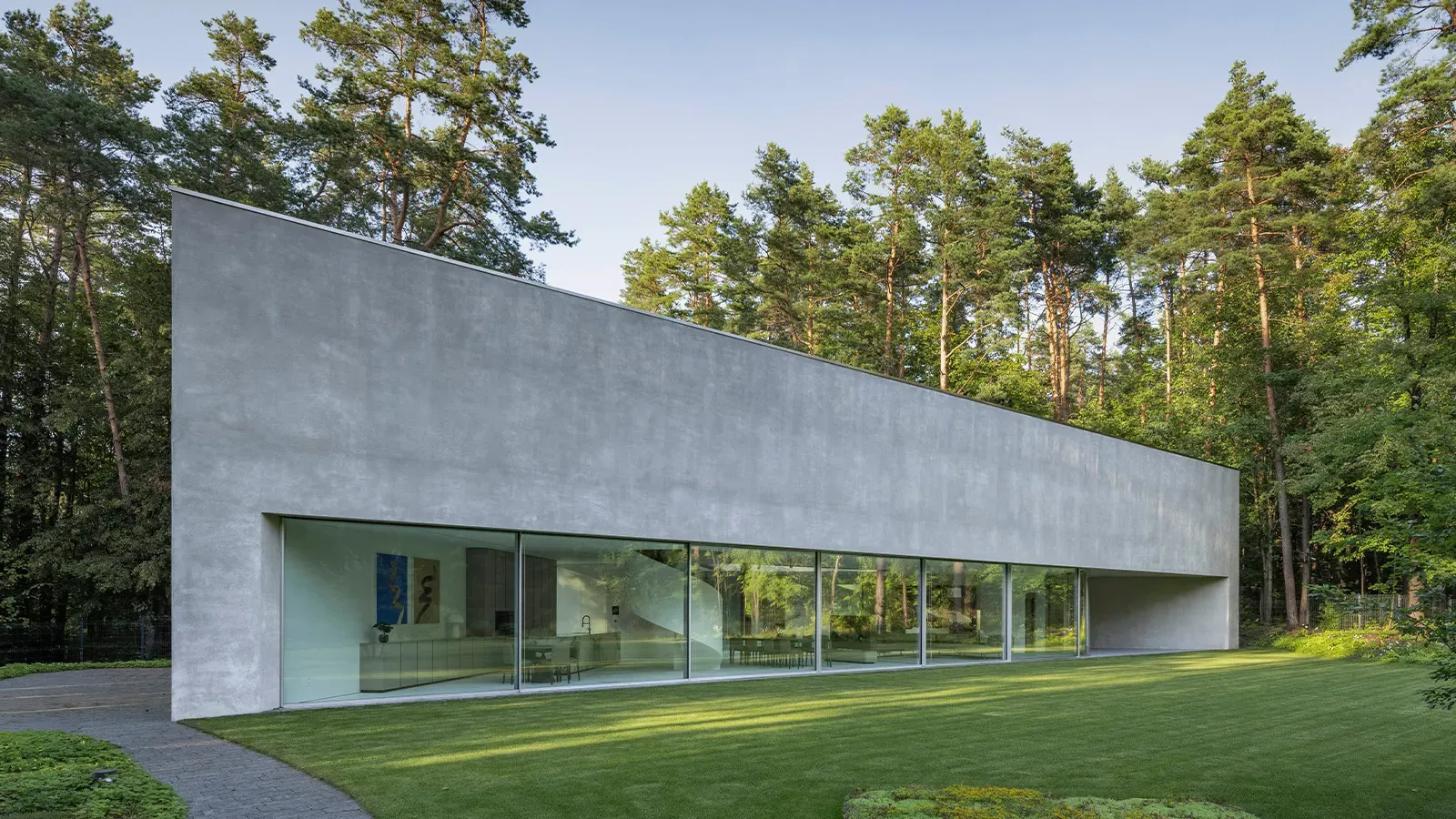
Trim House in Vilnius, Lithuania, is a striking triangular residence shaped by unexpected planning restrictions. Originally designed larger, the project was reduced by 40 per cent after new regulations limited building size. Rather than compromise, architect Robert Konieczny reimagined the design into a compact, angular form centred around a courtyard. A spiral staircase leads to upper-level bedrooms and a terrace, while expanded outdoor space improves daylight and connection to the surroundings. The enforced ‘trimming' ultimately enhanced the project, proving constraints can inspire innovative architectural solutions.
Read about it here.
A modernist landmark

Designed in 1946 by Rudolph Schindler, the Kallis-Sharlin Residence is a modernist hillside home in Los Angeles. Built into a slope overlooking the San Fernando Valley, its layered volumes, terraces and glass walls blur indoor and outdoor boundaries, and distinctive features include a butterfly roof, clerestory lighting and rich materials like mahogany and Douglas fir. Recently restored and listed for sale at $6.35 million, this cultural monument stands as a lasting example of a modernist architecture that harmonises innovation, landscape and human experience.
Read about it here.
A bright red villa

Villa Jevany in the Czech Republic boldly contrasts its forest setting with a vivid red façade. Designed by Architektura, the house intentionally stands out rather than blending in, creating a dialogue between man-made form and nature. Built into a sloping site, it appears single-storey from the road but reveals additional levels below. Inside, a central staircase leads to a spacious living area with forest views, while irregular windows reference abstract art. Divided into active and quiet zones, the home balances striking visual identity with functional, family-oriented design.
Read about it here.
A timber house

Orchard House in Cheshire exemplifies thoughtful rural architecture. Designed by Studio Bark under strict UK planning rules, the home demonstrates exceptional design quality while remaining modest and energy-efficient. Its S-shaped plan spans two levels, with living spaces elevated for views across a restored orchard. Timber construction, passive design strategies and local materials reduce environmental impact, including parquet flooring made from a tree on-site. Over time, the house has blended into its landscape, aided by weathered cladding and revived planting, now representing a balance between contemporary, sustainable living and deep connection to place.
Read about it here.
A traditional Kyoto residence

House in Narutaki is a sensitive renovation of a traditional Sukiya-style home in Kyoto by kooo architects. Respecting strict preservation norms, the design maintains the building’s historic character while adapting it for modern living. Original tatami spaces were reconfigured into three flowing zones, including a garden room and connecting passage, while natural materials, sliding doors and handcrafted details preserve cultural authenticity. The result is a calm, minimalist home that honours Japanese tradition while providing a refined, contemporary living experience.
Read about it here.
A Jacques Couëlle-designed home

This organic modernist home near Cannes, originally designed by Jacques Couëlle in the 1960s, has been carefully refreshed by Miriam Frowein Interiors. Distinctive for its sculptural, fluid forms, the house exemplifies Couëlle’s ‘architecture-sculpture’. The renovation respects his vision, using organic shapes, earthy tones and handcrafted elements throughout, as well as mid-century-inspired furnishings to complement rather than compete with the architecture. The design approach allows the building’s expressive form to remain central while enhancing comfort and livability for contemporary use.
Read about it here.
A hidden island escape

Euthea, a house on the Greek island of Meganisi, is designed to disappear into its landscape. Created by Ateno Architecture Studio, it is partially buried and covered by earth, making it nearly invisible from above. As the first structure on its peninsula, the project prioritises minimal environmental impact – built with local stone and earthy tones, it blends seamlessly with its surroundings. Interiors are arranged to frame sea views, enhancing the sense of isolation and immersion in nature. Even functional elements, like a brass drainage pipe, are treated poetically, reinforcing the home’s quiet, thoughtful integration.
Read about it here.