Lifestyle

The W* Library: flick through February's new titles


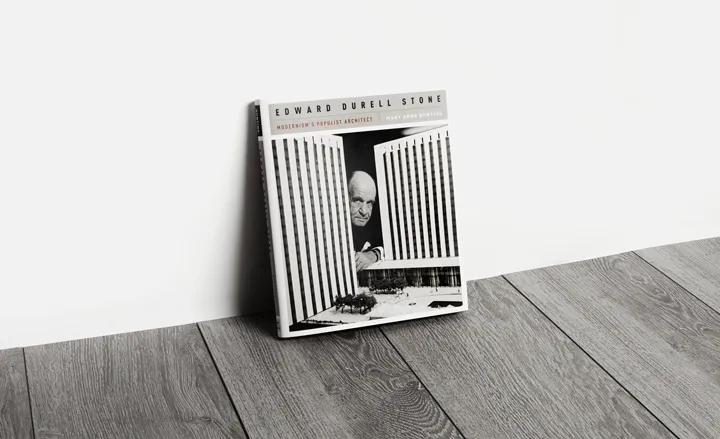
Edward Durrell Stone: Modernism's Populist Architect
By Mary Hunting

Perhaps the best-known building by maverick modernist Edward Durrell Stone is 2 Columbus Circle, a monolithic marble-clad slab that loomed over the eponymous New York junction and was loved and hated in equal measures before its comprehensive reconstruction by Allied Words Architects in 2008. Stone's idiosyncratic modernism is finally coming back in vogue, with the structures he designed for corporations, cultural institutions and government departments displaying a fusion of strict rigour and quirky detailing, marking him out as an individual talent in an era of strict architectural uniformity.

Published by W.W. Norton & Co.,  £35

Writer: Jonathan Bell

Stuhr Museum of the Prairie Pioneer, West Highway 34, Grand Island, Nebraska, 1962-67

Edward Durrell Stone: Modernism's Populist Architect
By Mary Hunting

Perhaps the best-known building by maverick modernist Edward Durrell Stone is 2 Columbus Circle, a monolithic marble-clad slab that loomed over the eponymous New York junction and was loved and hated in equal measures before its comprehensive reconstruction by Allied Words Architects in 2008. Stone's idiosyncratic modernism is finally coming back in vogue, with the structures he designed for corporations, cultural institutions and government departments displaying a fusion of strict rigour and quirky detailing, marking him out as an individual talent in an era of strict architectural uniformity.

Published by W.W. Norton & Co.,  £35

Writer: Jonathan Bell

Gallery of Modern Art. © Esto

Edward Durrell Stone: Modernism's Populist Architect
By Mary Hunting

Perhaps the best-known building by maverick modernist Edward Durrell Stone is 2 Columbus Circle, a monolithic marble-clad slab that loomed over the eponymous New York junction and was loved and hated in equal measures before its comprehensive reconstruction by Allied Words Architects in 2008. Stone's idiosyncratic modernism is finally coming back in vogue, with the structures he designed for corporations, cultural institutions and government departments displaying a fusion of strict rigour and quirky detailing, marking him out as an individual talent in an era of strict architectural uniformity.

Published by W.W. Norton & Co.,  £35

Writer: Jonathan Bell

Bruno and Josephine Graf house, Park Lane, Dallas, Texas, 1955-88
Photography: Vincent Lasanti


Edward Durrell Stone: Modernism's Populist Architect
By Mary Hunting

Perhaps the best-known building by maverick modernist Edward Durrell Stone is 2 Columbus Circle, a monolithic marble-clad slab that loomed over the eponymous New York junction and was loved and hated in equal measures before its comprehensive reconstruction by Allied Words Architects in 2008. Stone's idiosyncratic modernism is finally coming back in vogue, with the structures he designed for corporations, cultural institutions and government departments displaying a fusion of strict rigour and quirky detailing, marking him out as an individual talent in an era of strict architectural uniformity.

Published by W.W. Norton & Co.,  £35

Writer: Jonathan Bell

View from the playroom into the dining and living areas in the David and Virginia Stech house. © Esto

Edward Durrell Stone: Modernism's Populist Architect
By Mary Hunting

Perhaps the best-known building by maverick modernist Edward Durrell Stone is 2 Columbus Circle, a monolithic marble-clad slab that loomed over the eponymous New York junction and was loved and hated in equal measures before its comprehensive reconstruction by Allied Words Architects in 2008. Stone's idiosyncratic modernism is finally coming back in vogue, with the structures he designed for corporations, cultural institutions and government departments displaying a fusion of strict rigour and quirky detailing, marking him out as an individual talent in an era of strict architectural uniformity.

Published by W.W. Norton & Co.,  £35

Writer: Jonathan Bell


Carscapes: The Motor Car, Architecture and Landscape in England
By Kathryn A. Morrison and John Minnis

A hefty gazetteer of carchitectural style, Carscapes is one for the perennial architecture buff, the type of person who thinks nothing of an eight-hour pilgrimage to a rare surviving motorway service station with original 1960s décor. Compiled as a catalogue of the many, myriad and not all unpleasant ways the motorcar has re-shaped the architecture and environment of England, this book is a visual treat for fans of the off-beat and unusual.

Published by Yale University Press, £40

Writer: Jonathan Bell

From the book: Preston Bus Station and Car Park, 1969

Carscapes: The Motor Car, Architecture and Landscape in England
By Kathryn A. Morrison and John Minnis

A hefty gazetteer of carchitectural style, Carscapes is one for the perennial architecture buff, the type of person who thinks nothing of an eight-hour pilgrimage to a rare surviving motorway service station with original 1960s décor. Compiled as a catalogue of the many, myriad and not all unpleasant ways the motorcar has re-shaped the architecture and environment of England, this book is a visual treat for fans of the off-beat and unusual.

Published by Yale University Press, £40

Writer: Jonathan Bell

An aerial view of the complex Gravelly Hill Intersection, otherwise known as Spaghetti Junction, 1969-72. © English Heritage. NMR Damian Grady

Carscapes: The Motor Car, Architecture and Landscape in England
By Kathryn A. Morrison and John Minnis

A hefty gazetteer of carchitectural style, Carscapes is one for the perennial architecture buff, the type of person who thinks nothing of an eight-hour pilgrimage to a rare surviving motorway service station with original 60s décor. Compiled as a catalogue of the many, myriad and not all unpleasant ways the motorcar has re-shaped the architecture and environment of England, this book is a visual treat for fans of the off-beat and unusual.

Published by Yale University Press, £40

Writer: Jonathan Bell

Daimler Hire Garage, 1931-33. © English Heritage. Photography: H. Felton

Carscapes: The Motor Car, Architecture and Landscape in England
By Kathryn A. Morrison and John Minnis

A hefty gazetteer of carchitectural style, Carscapes is one for the perennial architecture buff, the type of person who thinks nothing of an eight-hour pilgrimage to a rare surviving motorway service station with original 1960s décor. Compiled as a catalogue of the many, myriad and not all unpleasant ways the motorcar has re-shaped the architecture and environment of England, this book is a visual treat for fans of the off-beat and unusual.

Published by Yale University Press, £40

Writer: Jonathan Bell

Trinity Square Car Park, Owen Luder. © English Heritage

Carscapes: The Motor Car, Architecture and Landscape in England
By Kathryn A. Morrison and John Minnis

A hefty gazetteer of carchitectural style, Carscapes is one for the perennial architecture buff, the type of person who thinks nothing of an eight-hour pilgrimage to a rare surviving motorway service station with original 1960s décor. Compiled as a catalogue of the many, myriad and not all unpleasant ways the motorcar has re-shaped the architecture and environment of England, this book is a visual treat for fans of the off-beat and unusual.

Published by Yale University Press, £40

Writer: Jonathan Bell


The Color Revolution
By Regina Lee Blaszcyck

Regina Lee Blaszcyck's scholarly monograph is actually the fascinating back story of how colour came to rule our life, tracing the chemical reactions, technological innovations and - most importantly of all - the advertising dollars that turned colour into the primary generator of consumerism. Companies like DuPont and General Motors poured millions into work-shopping colours and developing new hues, defining the shades in ways that still ring true today.

Published by MIT Press, £24.95

Writer: Jonathan Bell

Cover of Motor, October 1944. Reproduced courtesy of Motor

The Color Revolution
By Regina Lee Blaszcyck

Regina Lee Blaszcyck's scholarly monograph is actually the fascinating back story of how colour came to rule our life, tracing the chemical reactions, technological innovations and - most importantly of all - the advertising dollars that turned colour into the primary generator of consumerism. Companies like DuPont and General Motors poured millions into work-shopping colours and developing new hues, defining the shades in ways that still ring true today.

Published by MIT Press, £24.95

Writer: Jonathan Bell

Cercles chromatiques de M.E. Chevreul, by E. Thunot, Paris, 1855. Courtesy of Faber Birren Collection of Books on Color, Robert B. Haas Family Arts Library, Yale University

The Color Revolution
By Regina Lee Blaszcyck

Regina Lee Blaszcyck's scholarly monograph is actually the fascinating back story of how colour came to rule our life, tracing the chemical reactions, technological innovations and - most importantly of all - the advertising dollars that turned colour into the primary generator of consumerism. Companies like DuPont and General Motors poured millions into work-shopping colours and developing new hues, defining the shades in ways that still ring true today.

Published by MIT Press, £24.95

Writer: Jonathan Bell

Advertisement for brush Duco, Ladies' Home Journal, November 1927

The Color Revolution
By Regina Lee Blaszcyck

Regina Lee Blaszcyck's scholarly monograph is actually the fascinating back story of how colour came to rule our life, tracing the chemical reactions, technological innovations and - most importantly of all - the advertising dollars that turned colour into the primary generator of consumerism. Companies like DuPont and General Motors poured millions into work-shopping colours and developing new hues, defining the shades in ways that still ring true today.

Published by MIT Press, £24.95

Writer: Jonathan Bell


C Photo: Slow Motion

Slow Motion is part of the Ivory Press' ongoing C Photo series of curated photography monographs, lavish compilations of new work by emerging photographers. The fifth instalment in the ongoing series, overseen by Ivory Press founder Elena Ochoa Foster, includes work by Paul Graham, Rob Honstra, Zoe Leonard, Santu Mofokeng, Sophie Ristelhueber and Bertien van Manen and more, all of whom are described as artists who 'write time with images.'  

Published by Ivory Press, £36

Writer: Jonathan Bell

From the book: Vladislav, Guripsh Abkhazia, by Rob Hornstra, 2009. © Rob Hormstra. Courtesy of Flatland Gallery and Ivorypress

C Photo: Slow Motion

Slow Motion is part of the Ivory Press' ongoing C Photo series of curated photography monographs, lavish compilations of new work by emerging photographers. The fifth instalment in the ongoing series, overseen by Ivory Press founder Elena Ochoa Foster, includes work by Paul Graham, Rob Honstra, Zoe Leonard, Santu Mofokeng, Sophie Ristelhueber and Bertien van Manen and more, all of whom are described as artists who 'write time with images.'  

Published by Ivory Press, £36

Writer: Jonathan Bell

Untitled, from the series Let's sit down before we go, by Bertien van Mamen, 2011.
© Bertien van Mamen. Courtesy of Camera Galerie and Ivorypress


C Photo: Slow Motion

Slow Motion is part of the Ivory Press' ongoing C Photo series of curated photography monographs, lavish compilations of new work by emerging photographers. The fifth instalment in the ongoing series, overseen by Ivory Press founder Elena Ochoa Foster, includes work by Paul Graham, Rob Honstra, Zoe Leonard, Santu Mofokeng, Sophie Ristelhueber and Bertien van Manen and more, all of whom are described as artists who 'write time with images.'  

Published by Ivory Press, £36

Writer: Jonathan Bell

BMW 750i, from the series Car Crash Studies, by Raffael Waldner, 2006. © Raffael Waldner. Courtesy of Ivorypress

C Photo: Slow Motion

Slow Motion is part of the Ivory Press' ongoing C Photo series of curated photography monographs, lavish compilations of new work by emerging photographers. The fifth instalment in the ongoing series, overseen by Ivory Press founder Elena Ochoa Foster, includes work by Paul Graham, Rob Honstra, Zoe Leonard, Santu Mofokeng, Sophie Ristelhueber and Bertien van Manen and more, all of whom are described as artists who 'write time with images.'  

Published by Ivory Press, £36

Writer: Jonathan Bell


Caspar David Friedrich
By Johannes Grave

Friedrich is big picture romanticism, an artist whose fortune ebbs and flows according to fashion and taste. Perhaps fondness for this extreme nineteenth century foppishness is on the wane, but Friedrich's epic landscapes never lose their fascination - or quotability in everything from film to fine art. Grave's monumental monograph does the German Romantic proud, with a scale and quality that befits his most expansive paintings.

Published by Prestel, £80

Writer: Jonathan Bell

From the book: Monk by the Sea, 1808-10. Courtesy of Alte Nationalgalerie, Staatliche Museen, Berlin

Caspar David Friedrich
By Johannes Grave

Friedrich is big picture romanticism, an artist whose fortune ebbs and flows according to fashion and taste. Perhaps fondness for this extreme nineteenth century foppishness is on the wane, but Friedrich's epic landscapes never lose their fascination - or quotability in everything from film to fine art. Grave's monumental monograph does the German Romantic proud, with a scale and quality that befits his most expansive paintings.

Published by Prestel, £80

Writer: Jonathan Bell

Evening Landscape with Two Men, 1830-35. Courtesy of The State Hermitage Museum, St. Petersburg

Caspar David Friedrich
By Johannes Grave

Friedrich is big picture romanticism, an artist whose fortune ebbs and flows according to fashion and taste. Perhaps fondness for this extreme nineteenth century foppishness is on the wane, but Friedrich's epic landscapes never lose their fascination - or quotability in everything from film to fine art. Grave's monumental monograph does the German Romantic proud, with a scale and quality that befits his most expansive paintings.

Published by Prestel, £80

Writer: Jonathan Bell

Village Landscape in Morning Light (The Lone Tree), 1822. Courtesy of Alte Nationalgalerie, Staatliche Museen, Berlin

Caspar David Friedrich
By Johannes Grave

Friedrich is big picture romanticism, an artist whose fortune ebbs and flows according to fashion and taste. Perhaps fondness for this extreme nineteenth century foppishness is on the wane, but Friedrich's epic landscapes never lose their fascination - or quotability in everything from film to fine art. Grave's monumental monograph does the German Romantic proud, with a scale and quality that befits his most expansive paintings.

Published by Prestel, £80

Writer: Jonathan Bell

Chalk Cliffs On Rügen, 1818-22. Courtesy of Museum Oskar Reinhart am Stadtgarten, Winterthur

Caspar David Friedrich
By Johannes Grave

Friedrich is big picture romanticism, an artist whose fortune ebbs and flows according to fashion and taste. Perhaps fondness for this extreme nineteenth century foppishness is on the wane, but Friedrich's epic landscapes never lose their fascination - or quotability in everything from film to fine art. Grave's monumental monograph does the German Romantic proud, with a scale and quality that befits his most expansive paintings.

Published by Prestel, £80

Writer: Jonathan Bell


The Impossible Museum: The Best Art You'll Never See
By Céline Delavaux

This is a fascinating conceit - a monograph of world famous art that has, for whatever reason, been permanently removed from public view. The Impossible Museum is ultimately a rather sad book, part art history, part real history lesson, chronicling those works that have somehow slipped off the cultural radar and into some private collection - either legimately or stolen to order - and other works that are known to have perished through war, decay or deliberate destruction. Either way, you'll be left with a little hole in your heart for things you never knew existed.

Published by Prestel, £16.99

Writer: Jonathan Bell

From the book: The Concert, by Jan Vermeer, 1664. Stolen 18 March 1990, from the Isabella Stewart Gardner Museum, Boston, USA

The Impossible Museum: The Best Art You'll Never See
By Céline Delavaux

This is a fascinating conceit - a monograph of world famous art that has, for whatever reason, been permanently removed from public view. The Impossible Museum is ultimately a rather sad book, part art history, part real history lesson, chronicling those works that have somehow slipped off the cultural radar and into some private collection - either legimately or stolen to order - and other works that are known to have perished through war, decay or deliberate destruction. Either way, you'll be left with a little hole in your heart for things you never knew existed.

Published by Prestel, £16.99

Writer: Jonathan Bell

The Council of Constantinople, 1854. © Hervé Champollion/akg-images

The Impossible Museum: The Best Art You'll Never See
By Céline Delavaux

This is a fascinating conceit - a monograph of world famous art that has, for whatever reason, been permanently removed from public view. The Impossible Museum is ultimately a rather sad book, part art history, part real history lesson, chronicling those works that have somehow slipped off the cultural radar and into some private collection - either legimately or stolen to order - and other works that are known to have perished through war, decay or deliberate destruction. Either way, you'll be left with a little hole in your heart for things you never knew existed.

Published by Prestel, £16.99

Writer: Jonathan Bell


Terence Donovan: Fashion
Edited by Diana Donovan and David Hillman with a text by Robin Muir and foreword by Grace Coddington

Terence Donovan's influence on fashion photography - and visual culture in general - can't be underestimated. Donovan, along with his contemporaries Bailey and Brian Duffy, brought fashion out of formal studio settings and stylised glamour locations and set it against a backdrop of real life, albeit a carefully stage-managed vision of urban grit and motion. Ushering in an era of experimentation and adventurousness, Donovan worked hard, combining huge technical proficiency and rigorous professionalism with a larger than life character. This monograph is the first full collection of his fashion work.

Published by Art/Books, £60

Writer: Jonathan Bell

Ika (model), Nova, Deptford, London, March 1974. © Terence Donovan Archive

Terence Donovan: Fashion
Edited by Diana Donovan and David Hillman with a text by Robin Muir and foreword by Grace Coddington

Terence Donovan's influence on fashion photography - and visual culture in general - can't be underestimated. Donovan, along with his contemporaries Bailey and Brian Duffy, brought fashion out of formal studio settings and stylised glamour locations and set it against a backdrop of real life, albeit a carefully stage-managed vision of urban grit and motion. Ushering in an era of experimentation and adventurousness, Donovan worked hard, combining huge technical proficiency and rigorous professionalism with a larger than life character. This monograph is the first full collection of his fashion work.

Published by Art/Books, £60

Writer: Jonathan Bell

Du Nouveau sous le nouveau tunnel, French Elle, September 1966. © Terence Donovan Archive

Terence Donovan: Fashion
Edited by Diana Donovan and David Hillman with a text by Robin Muir and foreword by Grace Coddington

Terence Donovan's influence on fashion photography - and visual culture in general - can't be underestimated. Donovan, along with his contemporaries Bailey and Brian Duffy, brought fashion out of formal studio settings and stylised glamour locations and set it against a backdrop of real life, albeit a carefully stage-managed vision of urban grit and motion. Ushering in an era of experimentation and adventurousness, Donovan worked hard, combining huge technical proficiency and rigorous professionalism with a larger than life character. This monograph is the first full collection of his fashion work.

Published by Art/Books, £60

Writer: Jonathan Bell

Du Cardin pour Junior, French Elle, September 1966. © Terence Donovan Archive

Terence Donovan: Fashion
Edited by Diana Donovan and David Hillman with a text by Robin Muir and foreword by Grace Coddington

Terence Donovan's influence on fashion photography - and visual culture in general - can't be underestimated. Donovan, along with his contemporaries Bailey and Brian Duffy, brought fashion out of formal studio settings and stylised glamour locations and set it against a backdrop of real life, albeit a carefully stage-managed vision of urban grit and motion. Ushering in an era of experimentation and adventurousness, Donovan worked hard, combining huge technical proficiency and rigorous professionalism with a larger than life character. This monograph is the first full collection of his fashion work.

Published by Art/Books, £60

Writer: Jonathan Bell

Twiggy Collection 67, French Elle, September 1966. © Terence Donovan Archive

Terence Donovan: Fashion
Edited by Diana Donovan and David Hillman with a text by Robin Muir and foreword by Grace Coddington

Terence Donovan's influence on fashion photography - and visual culture in general - can't be underestimated. Donovan, along with his contemporaries Bailey and Brian Duffy, brought fashion out of formal studio settings and stylised glamour locations and set it against a backdrop of real life, albeit a carefully stage-managed vision of urban grit and motion. Ushering in an era of experimentation and adventurousness, Donovan worked hard, combining huge technical proficiency and rigorous professionalism with a larger than life character. This monograph is the first full collection of his fashion work.

Published by Art/Books, £60

Writer: Jonathan Bell


Edward Durrell Stone: Modernism's Populist Architect
By Mary Hunting

Perhaps the best-known building by maverick modernist Edward Durrell Stone is 2 Columbus Circle, a monolithic marble-clad slab that loomed over the eponymous New York junction and was loved and hated in equal measures before its comprehensive reconstruction by Allied Words Architects in 2008. Stone's idiosyncratic modernism is finally coming back in vogue, with the structures he designed for corporations, cultural institutions and government departments displaying a fusion of strict rigour and quirky detailing, marking him out as an individual talent in an era of strict architectural uniformity.

Published by W.W. Norton & Co.,  £35

Writer: Jonathan Bell

Tudor: Style File Atelier

Wallpaper* Tudor Style File is back for another year-long season

Bespoke promotion

Join us on Facebook Follow us on Twitter