
-
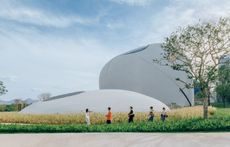 MAD’s Shenzhen Bay Culture Square encourages you not to look up, but to wander through
The Chinese city’s newest open public space, designed by architecture studio MAD, blends the ancient and the futuristic
-
 A Chinese house by Various Associates is a delicate balance of beautiful cross-generational living
Various Associates, a young practice based in China, features in the Wallpaper* Architects Directory 2026 - we highlight its residential project, Gong's House
-
 This sophisticated skyscraper hotel brings old Shanghai into the future
Set inside Xujiahui’s new ITC complex, Andaz Shanghai ITC finds warmth, wit and old-Shanghai character above the city rush
-
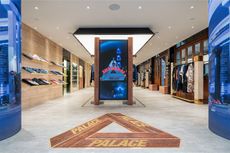 Inside Palace’s new Shanghai store, a play on the traditional Chinese garden
Opening in the historic Zhangyuan district, the skate brand’s first China store reimagines the Shanghai garden in Palace’s irreverent, contemporary style. Co-founder Gareth Skewis gives Wallpaper* a tour
-
 MAD completes the Hainan Science Museum, which ‘floats’ against the skyline
‘A science museum's job is no longer to deliver facts. It is to teach children how to question them,’ says Ma Yansong, founder of the firm
-
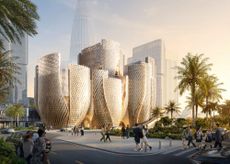 Inside the Róng Museum of Art building site, where different volumes ‘grow together’
We visit the museum, currently under construction in Shenzhen, China and speak to its architect, Ole Scheeren
-
 Our highlights of Design Shanghai 2026, Asia’s leading design showcase
At Design Shanghai 2026 (19-22 March 2026), Wallpaper’s head of interiors is on the ground, reporting back on the standout presentations defining Asia’s contemporary design language
-
 Geely Starray EM-i epitomises the Chinese brand’s no-nonsense, high-value approach
Heavy on spec but low on design distinction, the Geely Starray EM-i prioritises tech, value and simplicity over status
-
 A Diageo distillery mesmerises with monolithic architecture in the Chinese Dali valley
The new distillery, courtesy of New York-based Oli Architecture, mixes whisky production, visitor experience and captivating architecture in Yunnan Province
-
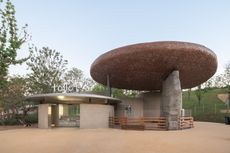 Tour this Chinese eco-farm, an imaginative wonderland connecting visitors with nature
LuxeIsland Farm by Various Associates is an eco-farm and visitor attraction in China’s picturesque Wuhan region; take a stroll across its fantastical landscape
-
 Tour the world’s best libraries in this new book
Author Léa Teuscher takes us on a tour of some of the world's best libraries, from architect-designed temples of culture to local grassroots initiatives
-
 A discreet bolthole adds historic charm to Chongqing’s skyscraper jumble
With a landscape bristling with gleaming towers, Sunyata Ren’ai Hall Hotel quietly emerges as the Chinese city’s most design-forward stay
-
 Honouring visionary landscape architect Kongjian Yu (1963-2025)
Kongjian Yu, the renowned landscape architect and founder of Turenscape, has died; we honour the multi-award-winning creative’s life and work
-
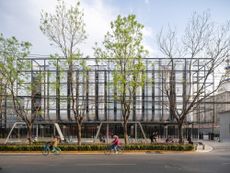 A new AI data centre in Beijing is designed to evolve and adapt, just like the technology within
Specialised data centre Spark 761, designed by llLab, is conceived as a physical space where humans and AI technology can coexist
-
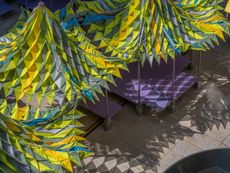 Shanghai’s biennial, RAMa 2025, takes architectural exploration outside
RAMa 2025, the architecture biennial at Rockbund Art Museum in Shanghai, launches, taking visitors on a journey through a historic city neighbourhood – and what it needs
-
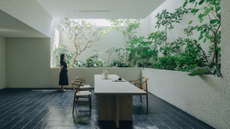 Atelier About Architecture’s ‘house within a house, and garden within a garden’
House J in Beijing, by Atelier About Architecture, is an intricate remodelling complete with a hidden indoor garden and surprising sight lines
-
 Discover a futuristic bar in Shanghai with mad-scientist energy
Penicillin opens in Shanghai with a clinical steel and concrete design by LC Studio alongside trailblazing, sustainable cocktails
-
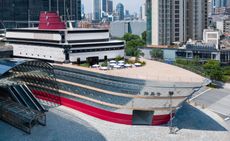 A colossal ‘ship’ in Shanghai honours Louis Vuitton’s travel legacy
Louis Vuitton’s The Louis is an OMA-designed hub combining retail, culture and dining in the heart of Nanjing West Road
-
 The newest car brand to arrive from China, Omoda is aimed squarely at the luxury sector
The Omoda 9 brings Chery’s Super Hybrid System to Europe’s roads, a smart but affordable luxury SUV with a long-legged range and a very high specification
-
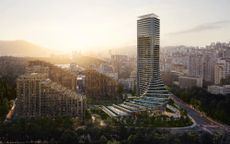 The upcoming Zaha Hadid Architects projects set to transform the horizon
A peek at Zaha Hadid Architects’ future projects, which will comprise some of the most innovative and intriguing structures in the world
-
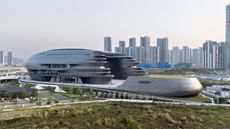 Zaha Hadid Architects’ spaceship-like Shenzhen Science and Technology Museum is now open
Last week, ZHA announced the opening of its latest project: a museum in Shenzhen, China, dedicated to the power of technological advancements. It was only fitting, therefore, that the building design should embrace innovation
-
 Tour the best contemporary tea houses around the world
Celebrate the world’s most unique tea houses, from Melbourne to Stockholm, with a new book by Wallpaper’s Léa Teuscher
-
 A Xingfa cement factory’s reimagining breathes new life into an abandoned industrial site
We tour the Xingfa cement factory in China, where a redesign by landscape architecture firm SWA completely transforms an old industrial site into a lush park
-
 Prada and Wong Kar-wai dream up a cinematic restaurant in Shanghai
Prada partners with Wong Kar-wai to bring Mi Shang Rong Zhai to life, a dining experience influenced by the arthouse director’s seminal oeuvre
-
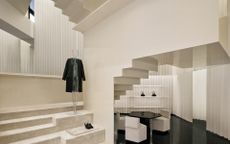 Bold, geometric minimalism rules at Toteme’s new store by Herzog & de Meuron in China
Toteme launches a bold, monochromatic new store in Beijing – the brand’s first in China – created by Swiss architecture masters Herzog & de Meuron
-
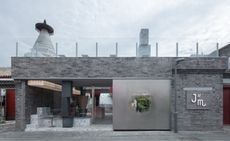 Enjoy heritage views and contemporary brews at a new Beijing café
JM Café, White Pagoda Temple by B.L.U.E. Architecture Studio nods to the history of the Xicheng District while injecting a shot of vitality
-
 We take the new Jaecoo 7 SUV along South Africa’s famous Garden Route
Endurance, efficiency and economic soft power, Wallpaper* experiences China’s new SUV challenger on a gentle safari across South Africa


