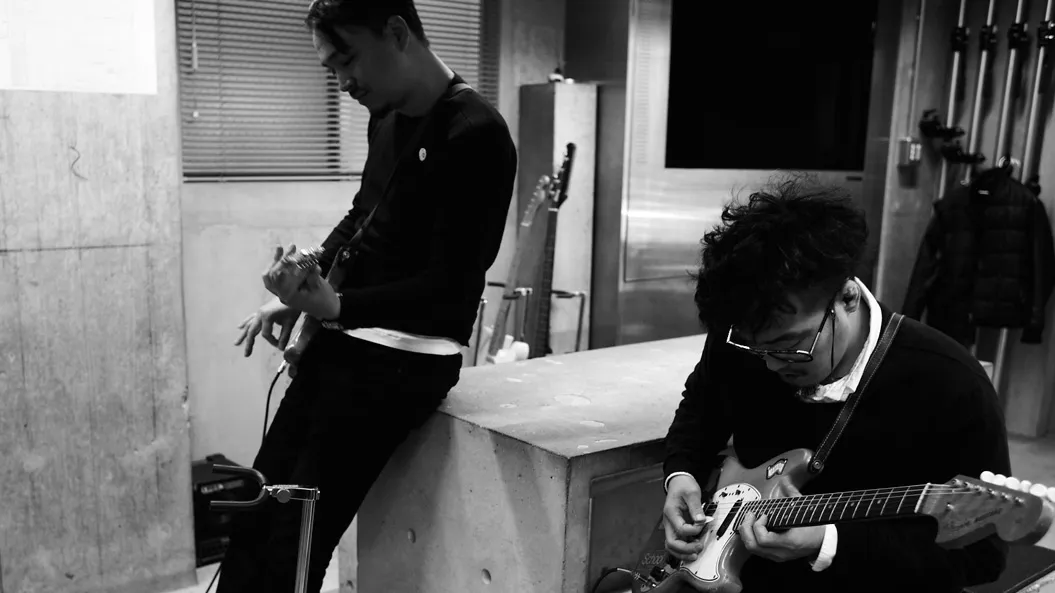
Fukuoka-born, self-styled ‘haute couture florist’ Azuma Makoto arrived in Tokyo intending to become a grunge musician, taking a part-time job as trader at a flower market to supplement his income. Little by little his interest in flowers grew into an obsession. He opened his Jardins des Fleurs store in 2002 in Ginza, later moving to Minami-Aoyama, and also ran a floral gallery, AMPG, in Kiyosumi-Shirakawa, exhibiting his extraordinary private work. In 2009, he founded an experimental laboratory, AMKK (Azuma Makoto Botanical Research Institute), to ‘expand his art activities and pursue the infinite potential of plants’.
Makoto is not your average, vase-based gypsophila arranger – he’s worked with Dior, Helmut Lang, Hermès and even Lego. One large-scale work is called Green Dog House. Another is Botanical Ashtray. ‘I’m focused on elevating the value of flowers and plants by expressing their unique forms. I convert the beauty of nature into artwork.’
The simple act of being among flowers and plants provides endless inspiration for Makoto. ‘The life of flowers and plants is much more transient than ours,’ he reflects. ‘You need to be sensitive to their tiny changes, such as moments of blooming… and also withering. By keeping attuned to these, I’m able to capture their moments of beauty.’

Makoto's interest in plants soon became a healthy obsession. He says, 'I like being in touch with plants all the time, to enrich their value. I face plants and flowers every day, and this doesn't feel like work to me'

The simple act of being among flowers and plants provides endless inspiration for Makoto. 'The life of flowers and plants is much more transient than ours,' he says. 'You need to be sensitive to their tiny changes, such as moments of blooming - and also withering. By staying attuned to these, I'm able to capture their moments of beauty'

Makoto says that he often finds inspiration while taking a daily walk near his office and atelier: 'I take in subtle changes, seasonal transitions and the air of that day. I like to find new expressions for flowers and plants, to stimulate creativity, to pursue new possibilities'

When asked how his inspiration becomes the finished product, Makoto explains, '[Everything] is made to order. I take the order from the customer - the theme and colouring - then I choose the flowers myself, make it, then present the work'

Makoto aims to 'elevate the value of flowers and plants by expressing their unique forms' and 'convert the beauty of nature into artwork'

Floral artistry is not only a full-time job but a way of life for Makoto. 'I don't take time off; I don't really believe in the notion of personal time,' says Makoto, 'I believe it is my mission to heighten the value of existence by "planting" flowers and plants into people's minds'