
And now, a commercial break.
Starting this week, Outernet London is celebrating the best television adverts from the last half century. On the four-storey-high, surround-vision, 7000 immersive metres of screens, 68 of the most memorable, groundbreaking, influential and/or weird (we’re looking at you, Cadbury’s Phil Collins-loving gorilla) are now playing until 22nd February.
The Ads of the Years exhibition at the free-to-visit site in the centre of the capital features commercials from the archives of the British Arrows, one of the world’s most-respected advertising awards bodies, carefully curated to mark their 50th anniversary. Brands from the worlds of fashion, cars, sports, music, alcohol, food, charity, gaming, tech, communication, TV and, yes, chocolate are all represented. And it all starts in 1976, with the swish of a pen, a deathless Penelope Keith performance and a creative flourish from one of Britain’s all-time great directors, Alan Parker…
Here are W*’s personally selected highlights from the – in every sense – towering exhibition, with accompanying recollections from the creatives who made them. Do not adjust your set.
Parker Pens, Finishing School, 1976
In which Alan Parker directs Penelope Keith’s porcelain-accented tutor as she wishes bon voyage to her young debs at the (fictional) Zermatt School for Young Ladies. Their final 'and most important' lesson: 'How to spend daddy’s lovely money. Chequebooks open, girls. Pens at the ready.' And of course, only The Parker Lady, 'in white rolled gold, £9.95,' will do.
'A success with many fathers…' begins chapter 11 in copywriter Mike Everett’s 2022 book Methods of the Madmen. Here’s what he wrote about the creation of this advert by Collett Dickenson Pearce, the agency commonly known as 'Britain’s most awarded.'
'Even to this day, who did what to create the famous Parker Pen Finishing School commercial remains in dispute… ‘The Parker Lady’ suggested a female target market. This, to coin a phrase, set the ballpoint rolling. Everyone began throwing in funny lines. After an hour or so [creative director] David Brown, who was furiously scribbling everyone’s contributions onto his layout pad, had more than enough from which to write a script… He even had an end line, where one student asks the teacher: ‘Madam, does one spell pence with a 'c' or an 's'?’ To which the teacher replies: ‘I don’t think you need worry about that, my dear.’ This end line has been credited to both [art director] Pete Ibbotson and [copywriter] Pete Matthews but could just as easily have been written by anyone in the room that day.
Levi’s Jeans, Creek, 1994
In the Eighties and Nineties, Bartle Bogle Hegarty’s adverts for Levi’s Jeans made the denims sexy must-haves for a new generation. They did this with a brace of canonical advertisements that, by leaning into nostalgia, made them feel cutting-edge and hip. Think 1985’s Launderette: Nick Kamen, stripping to his undies to Marvin Gaye’s I Heard It Through the Grapevine. Think 1992’s Swimmer: inspired by near namesake The Swimmer, the 1968 film (adapted from John Cheever’s short story) starring Burt Lancaster; directed by pop video/commercial/movie auteur Tarsem; and soundtracked by Dinah Washington’s take on ‘Mad About the Boy’.
And think 1994’s Creek: an Ansel Adams-inspired, pioneer-spirit fantasia directed by Vaughan Arnell that made one-hit wonders of Scottish grunge-alikes Stiltskin. And remember: in 1873, Levi’s Jeans only came shrink-to-fit.
Here's what Sir John Hegarty, co-founder of BBH, wrote in his book Hegarty on Advertising: Turning Intelligence into Magic (2011), of the agency’s approach at the start of their long and fruitful relationship with Levi’s:
'Levi Strauss realised they had lost touch with their audience and they somehow had to reconnect. In fact, their initial brief to the agency was: do something we won’t like… You could see their logic, but to us it just didn’t add up. How could you present an idea that was going to be judged on how unacceptable it was…? This was wrong. This was anarchy. It would never work…
'The solution to their problem had to live in something they believed in. Their problem, confidence in who they were, where they’d come from and what they stood for. What made the brand famous, what gave it credibility and what was at the heart of the brand. Why did people, especially youth, adopt the brand in the past? They should not apologise for who they were but celebrate it in a way that was relevant.'
Guinness, Surfer, 2000
The year before he made his film debut with Sexy Beast – and a quarter-century before he made the Oscar-winning The Zone of Interest – filmmaker Jonathan Glazer shot this thunderously impactful commercial for the black-hearted stout. Galloping horses emerge from foaming whitecaps, racing surfers to Hawaiian shores as Leftfield’s ‘Phat Planet’ throbs and surges. The ad industry awards for Surfer came as thick and fast as those waves.
'We went to Hawaii without having cast the lead,' remembered Jonathan Glazer in Academy Films’ recent book Short Form: 40 Years of Music Videos, Ads, and the Art of Moving Images. “I’m often on set, still casting. I need to see a lot of people to find the right one. Hundreds sometimes. It’s a process…
'One guy we cast, Rusty Keaulana, was a professional surfer, but the lead, Dino [Chadwick ‘Dino’ Lanakila Ching], was just a guy we found sitting under a palm tree chatting up tourists. He surfed of course, but not to Rusty’s level. He’s scared, no wonder. These were huge waves. That’s why the film works so well, because there’s peril there. Had we used Rusty as the lead, it would have had a different impact.
“The joy and relief on Dino’s face is real because of that.'
Cadbury, Gorilla, 2008
Chocolate? What chocolate? A gorilla – OK, a human in a gorilla suit – sits at a drumkit, playing along to Phil Collins’ ‘In the Air Tonight’. No dialogue. No 'plot', other than Collins’ lyrics and the drama of his drums – yes, arguably the most iconic drumfill ever. But no, no chocolate. Such is the monkey-magic of Gorilla.
'Gorilla can be perceived as a bit surreal,' creative director and director Juan Cabral tells W*. 'But for me, above all, [it] is confident. That attitude comes from a deep place that’s hard to put into words. I reckon it comes from: ‘I have a feeling that this trick has a chance of landing.’ Like a personal bet somehow. One you envision something that excites you in your head, you know there’s something powerful there you need to prove. And usually you have to come up with slides and charts to back it up – which is sort of impossible. So I just tried to transmit the excitement to other people: ‘Wouldn’t it be great to do this?’
'I can’t remember the brief to be honest. But what I recall clearly was: ‘We need to bring back the love for the brand’. This opened up a more visceral approach. At least that’s how I remember it. When a brand is vulnerable, you make the most of that weakness to explore a more radical approach. You just got to make sure you land the thing, otherwise it’s gonna look pretty bad.
'Gorilla also, was the first advert I directed, so I had to land it.
'Visually, it’s not demanding overt attention. But at the same time, it’s simply unavoidably there. Played seriously, like a deadpan joke. There’s a belief that there’s something bigger at stake. It was born with confident desperation and specially, with genuine excitement for an idea. An all-in bet.'
Nike, Nothing Beats a Londoner, 2019
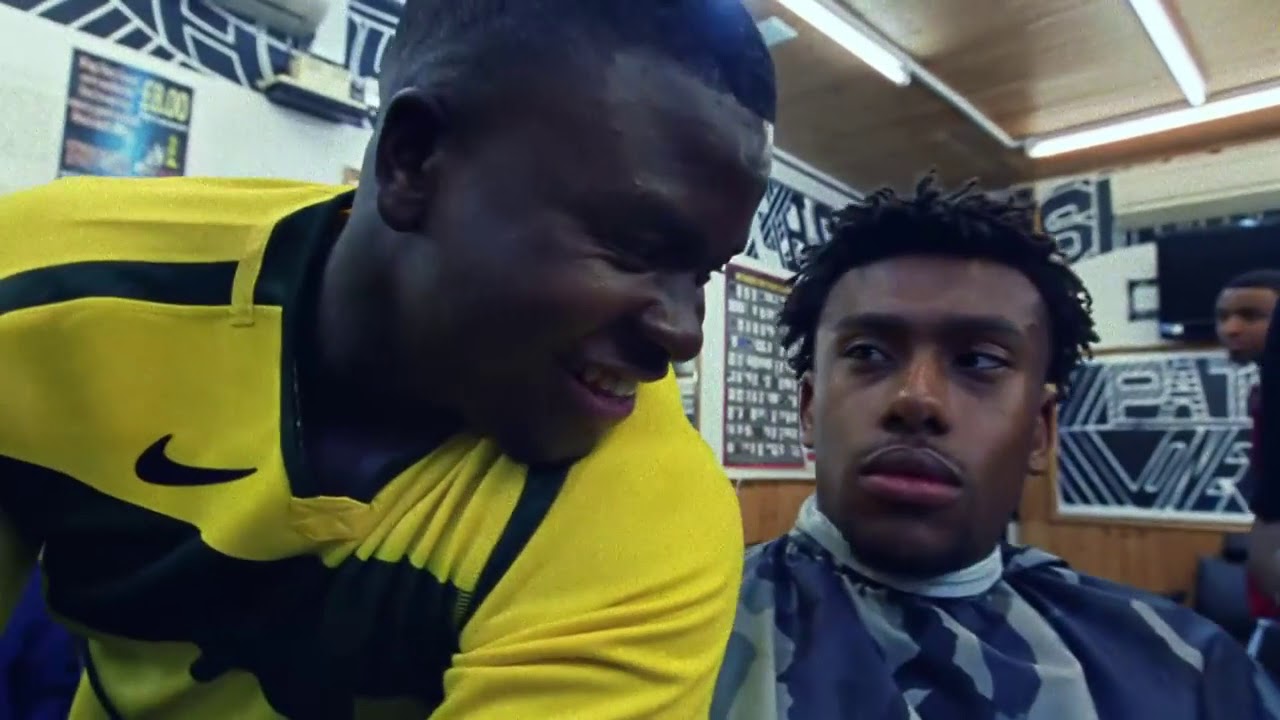
'Create a London-centric campaign for Nike' was the brief to agency Wieden + Kennedy. The results were jaw-dropping and grin-bringing: a kinetic, kaleidoscopic, cameo-stuffed race round the streets and beats of the city in the company of athletes, musicians and neighbourhood sports enthusiasts. It starts, brilliantly, with Skepta and his track ‘Shutdown’. Then it ducks and weaves, over 188 thrilling seconds, through the lives and loves of Peckham/Dalston/Brixton kid stars and superstars alike, from Harry Kane to Kano, Giggs to Gareth (Southgate), Dina Asher-Smith to Mo Farah to Alex Iwobi.
'The overall aim of the campaign was for Nike to show in London in a way they hadn’t done for quite some time,' says co-creative director Mark Shanley. 'And to portray young Londoners like Nike superstars, building up their confidence and self-belief so that they could thrive in a city that can be a tough place to grow up.'
The most challenging element: casting 258 'real' London kids. All were picked, from schools and sports clubs, for their sporting ability. As for the professionals: “There were so many great athletes and musicians in the spot. But for me Michael Dapaah [aka actor/rapper Big Shaq] makes it. He was really blowing up at that moment and he’s so, so good in it. I don’t think anyone else could have done it the way he did.
'The entire experience was deeply rewarding,' Shanley concludes. 'More than once people have told me they got into advertising because of it. Not the intended result. Nice, though, isn’t it?'
The other end-result: a sign of the times, a statement of intent, true social media virality and multiple wins for the creative team at Cannes Lions and D&AD Awards.
Channel 4 Paralympics, We're the Superhumans, 2017
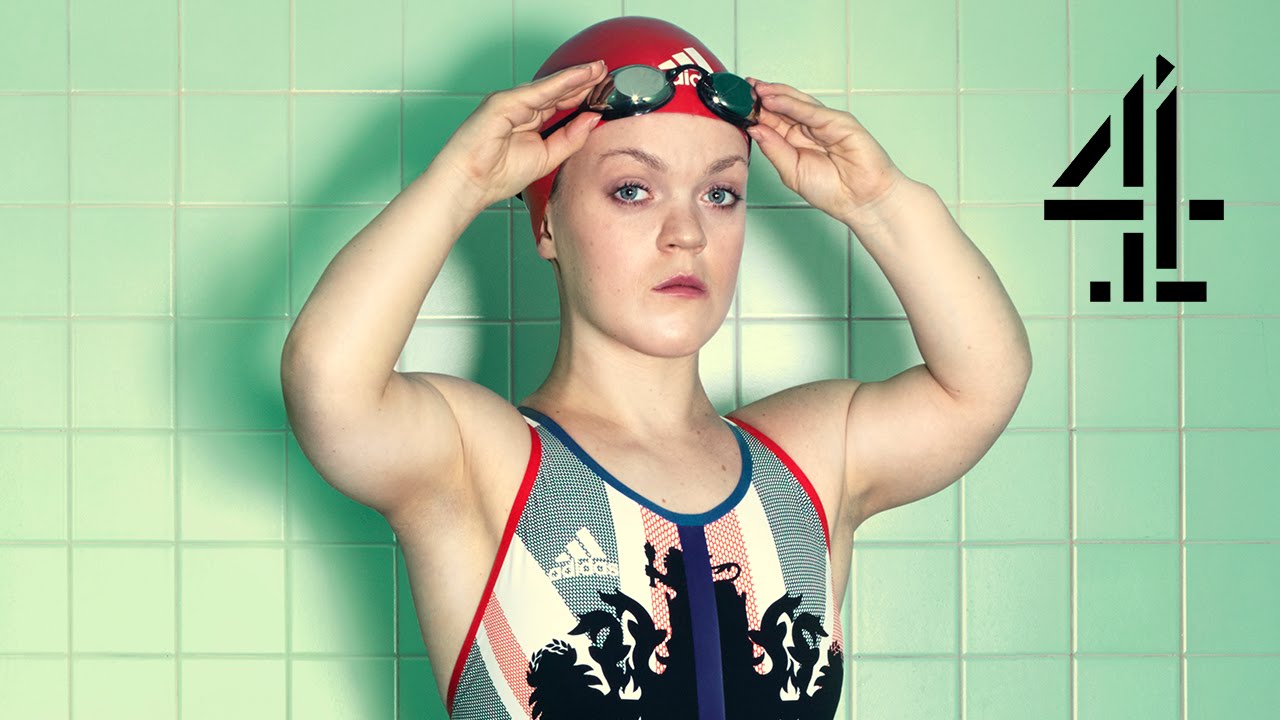
A brief oral history of the glorious commercial – a three-minute short, really – for the 2016 Rio Paralympics, games for which Channel 4 was the official broadcaster for the second time. The creative challenge: promoting the Paralympics while also championing disability and engaging with the cultural conversation of the time.
Alice Tonge (creative director):
'We set out to make more than a sports promo. We wanted to use the opportunity to challenge perceptions and shine a new light on disability. The dictionary definition of disability is ‘a physical or mental condition that limits a person's movements, senses or activities’. Which didn’t reflect the athletes competing in the Games.
'The response of Chris [Bovill] and John [Allison, executive creative directors] was: ‘Fuck dis.’ Which I love to this day. From then on, we focused on celebrating ability beyond disability and challenge the dictionary definition. We also decided to broaden the term superhuman to include non-athletes. Whether you’re a Paralympics sprinter or a mum with no arms raising a child, being superhuman is a state of mind.'
Shananne Lane (executive producer):
'After we awarded the job to [director] Dougal [Wilson] he worked with [music supervisor] Abi Leland to find the right track and she discovered 'Yes I Can’, a little-known track by Sammy Davis Jnr.'
Tonge:
'We’re the Superhumans was a big, all-singing celebration of super-ability involving 140 disabled stars. At the time, that was more disabled people in one ad than in the history of British advertising. We wanted to cast real people and we spent a lot of time casting our net wide to find a diverse range of disabilities/abilities.'
Lane:
'Casting was done by Rose Waite and she reached out in every way she could looking for disabled musicians and people with super abilities. And they came from all over the world. Bearing in mind this was 2015/16, it was an amazing feat as the internet did not reach as many people as [we needed].
'For instance: for the lead character we were looking for a wheelchair user with high mobility who could sing swing. Rose found a post on Facebook that Tony [Dee's] wife had uploaded of him singing on a tiny stage at the Brisbane country show! And she found Jonathan the piano player in Brazil and the trumpeter in Haiti!'
Tonge:
'The most rewarding part of making this work was re-recording ‘Yes I Can’ with our disabled band. We did this at Abbey Road in Studio 2. It was a magical day. The insane talent in the room [meant] the lyrics took on a whole different meaning.'
Lane:
'The most challenging shot was [extreme wheelchair athlete Aaron Fotheringham] Wheelz, who does the big stunt at the end – there were six ambulances onsite. It was also difficult with athletes as we were asking them to do multiple takes, but we didn't want to obviously cause anyone injury whilst at the peak of their training. Richard Whitehead, the sprinter with two prosthetics, had to stop in the end as his stumps were too sore.
'Most rewarding for me? The shot of the little boy with the blade as I heard a passing little boy say to his dad: ‘Look at that boy, he is so cool!’ I don't think that would have happened 10 years before!'
Lou Oliver (senior producer):
'Everyone involved delivered at the absolute the top of their craft to ensure the film never missed a beat and truly honoured all the amazing (super)humans featured in it. It’s one of the jobs I’m most proud of in both scale and heart.'
A gold medal for all: the film was adopted by the United Nations as a worldwide disability aid, as well as becoming part of the National Curriculum in UK schools.
Vote for the Favourite TV Commercial on the British Arrows website. The adverts are also available to view on the British Arrows YouTube channel

The Outernet screens showing the adverts