
The Victoria & Albert Museum is having a moment at the crest of the cultural zeitgeist. Not content with opening up some of its vast archive of objects to public scrutiny, courtesy of the newly opened V&A East Storehouse, the august institution is now venturing into another field of curation; online.

The V&A's Design 1900 - Now gallery in South Kensington
Today marks the acquisition of the museum’s most nebulous accession to date: YouTube. On the face of it, the global video platform is an ever-mutating, impossible-to-bottle snapshot of modern culture, used by some 2.5 billion around the world – making it the world’s second-most visited website (after its parent company, Google, which acquired YouTube less than two years after it debuted for around $1.65bn).

The YouTube exhibit at the V&A South Kensington
According to the platform, around 20 million videos get uploaded to YouTube every day, petabytes’ worth of content (1,000,000 gigabytes) that either contribute to an invaluable archive of humanity or represent a tidal wave of cultural cruft, awash with slop, trivia, the morally dubious and constant, relentless copyright infringement.
But that’s the modern day. Where did it all start? Digital media might be incredibly transient – and a curatorial headache – but YouTube’s origin story is fairly well documented. The new acquisition takes you back in time nearly 20 years to one of the earliest iterations of the website, presenting it as a snapshot of the early platform, along with the very first video ever uploaded to the platform.
This artefact – 'Me at the zoo' – features and was uploaded by YouTube co-founder Jawed Karim, then 25, following a visit to San Diego Zoo. Just 19 seconds long, it’s the internet’s equivalent of the first cave painting, the first vinyl record or the first ever fax. Those 19 seconds have endured however, remaining in the public realm ever since, viewed nearly 380 million times (and given 18 million likes) since it debuted on YouTube on 23 April 2005.

'Me at the Zoo', the first video on YouTube
It’s grainy, low-res and low-fi, an indication of just how quickly the quality of portable technology has evolved (it was shot on a digital camera, not a phone). Me at the zoo is important for all sorts of reasons; it’s the first piece of user-generated media, marking the start of the inexorable shift towards content creation, the rise of the influencer, the permanently online and the digital economy that has come with it.

YouTube today: prompts, AI-assistance along the route to marketing yourself
Naturally, YouTube has driven, supported, and promoted this economy every step of the way, enabling the monetisation of content through a slick, algorithmically generated advertising system that turns your viewing habits into a stream of purchasing opportunities.
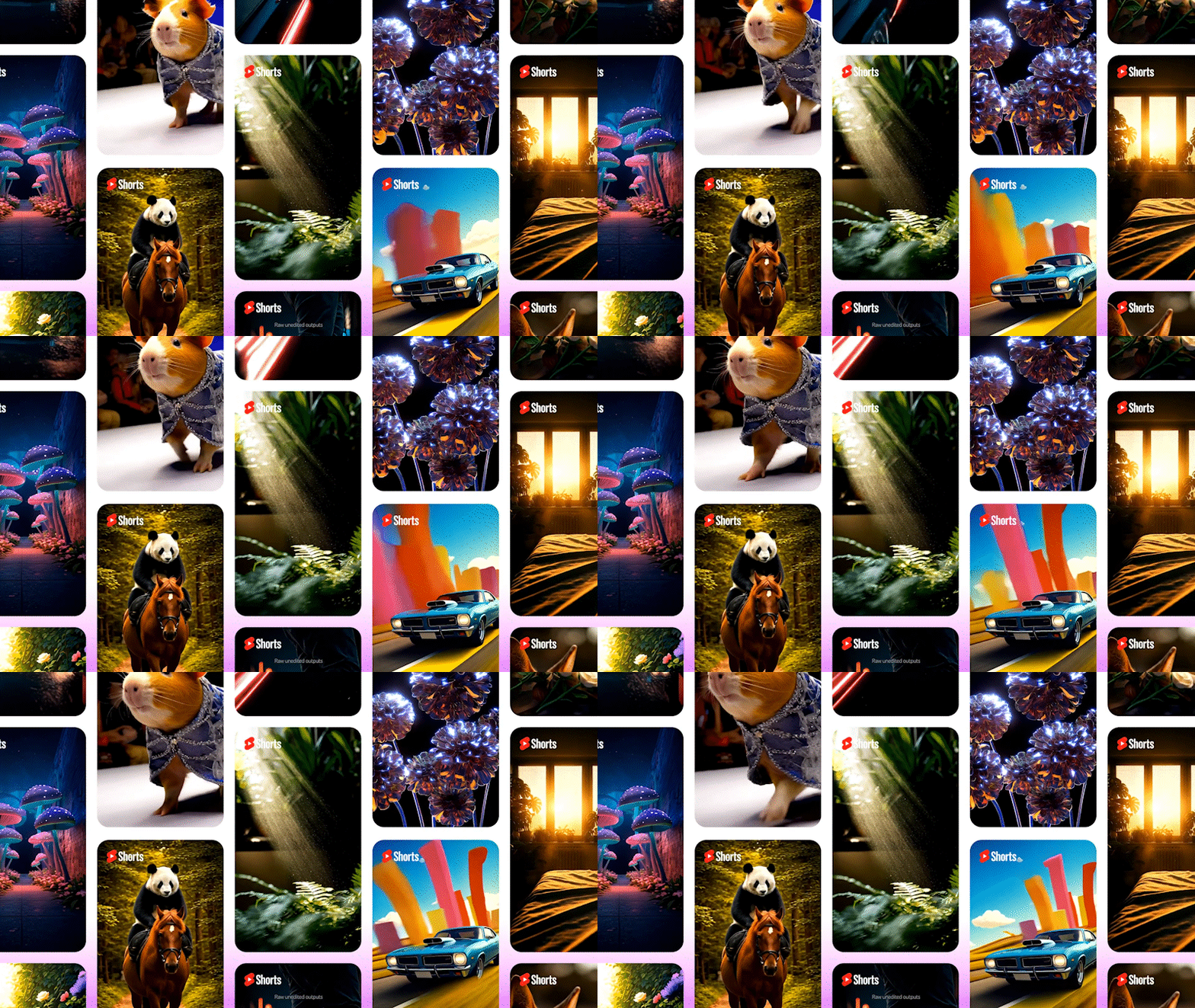
YouTube is deeply entangled with Google's VEO video creation AI
With this cultural shift has come a necessary shift in the role of a museum like the V&A, originally founded in 1852 ‘to educate designers, manufacturers and the public in art and design’. With some 2.8 million objects in its collection, the V&A has long championed the value of the esoteric and the ephemeral, whether it’s trawling high streets for pizza flyers or acquiring chunks of lost brutalist masterpieces.

A segment of Robin Hood Gardens at V&A Storehouse
The digital collection already include items as diverse as the Chinese social platform WeChat, the deliberately infuriating mobile game Flappy Bird, the EUKI app, and the illustrator Aphelandra Messer’s design for the mosquito emoji.
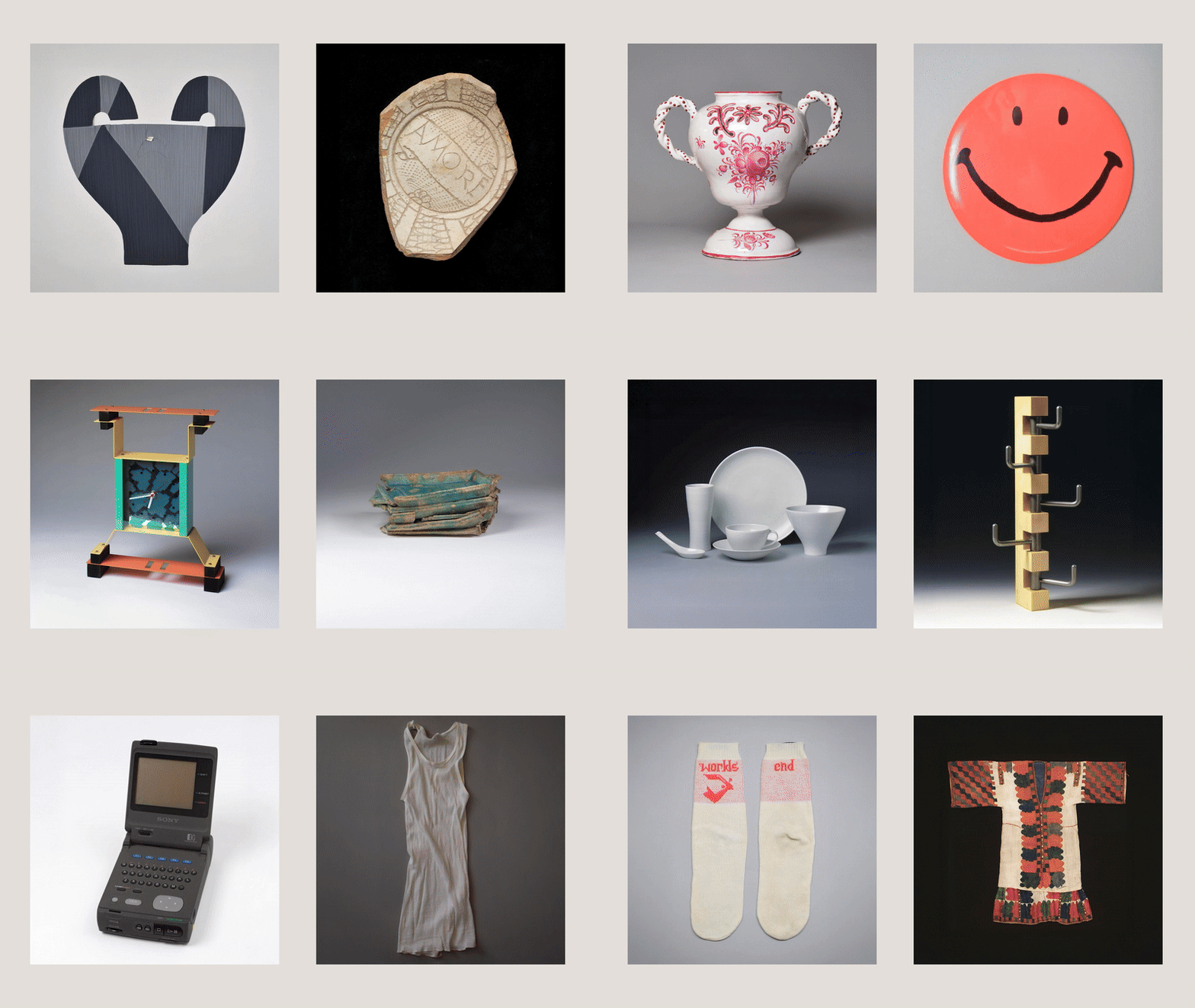
Objects from the V&A Storehouse
YouTube 2006 will sit in the Design 1900 – Now gallery at V&A South Kensington. According to Corinna Gardner, Senior Curator of Design and Digital at the V&A, ‘these galleries are full of objects that we use to navigate our place within the world, be it watches, be it chairs… Our everyday world is digital devices, smartphones and the internet platforms. They're all part of that designed environment that makes up how we live our lives. For a museum like the V&A, it is important to bring these types of objects into the collection. It enables a critical curiosity about how these things are created and designed.’
In 2014, Gardner launched the V&A’s Rapid Response Collecting programme, acquiring contemporary objects ‘in response to major moments in recent history that touch the world of design and manufacturing’. It’s taken 18 months to bring this display to life, working with YouTube’s own User Experience team and oio, an interaction design company founded by designers Matteo Loglio and Simone Rebaudengo.
The reconstructed watch page also highlights the innovations YouTube brought to the web, with the ability to share, like and recommend content; the building blocks of the modern internet. The page is dated 8 December 2006 – this is the oldest archived version of the YouTube page on The Internet Archive. Technical challenges included working around the now-defunct Adobe Flash Player.
‘The reconstructed watch page also has ads that are of the time,’ says Gardner, ‘The original video player was built to run on Adobe Flash, but today it’s being emulated with an open source project called Ruffle. So it shows the original video, with the documented comments from that underneath it.’
For YouTube itself, the inclusion of their history in the V&A is something of a fillip. Unsurprisingly, Neal Mohan, YouTube’s CEO, called the museum’s decision ‘wonderful’, adding ‘by reconstructing the original 2005 watch page, we aren't just showing a video; we are inviting the public to step back in time to the beginning of a global, cultural phenomenon.’