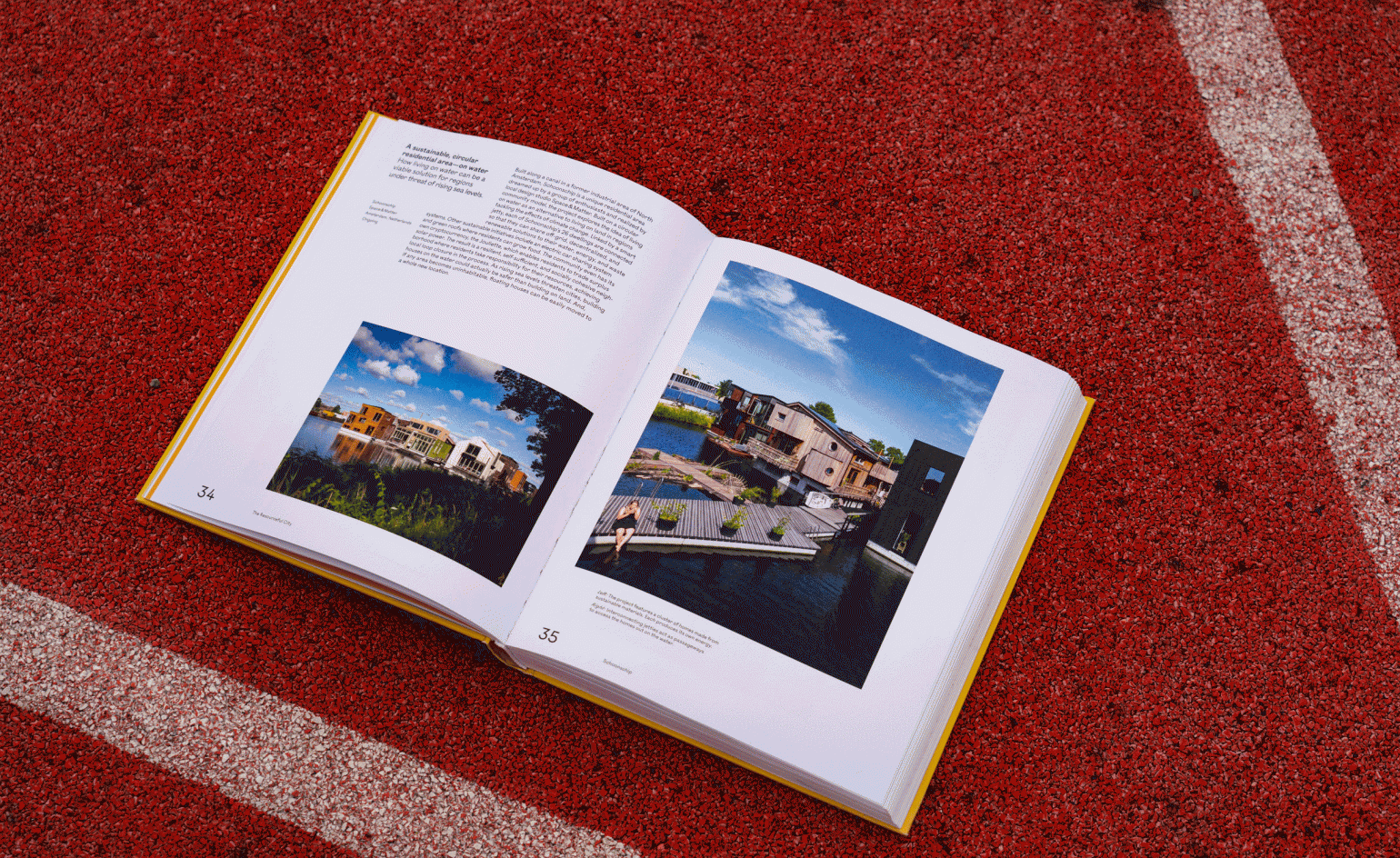
The Ideal City is a new architecture book from Space10, the Swedish furniture giant Ikea’s own R&D lab, based in Copenhagen. A compilation of best practice from around the world – 53 cities in 30 countries – the thrust of the book is to capture urban projects that are striving to make a difference, gently but inexorably steering towards the impossible goal of ‘utopia’. As a result, there’s a welcome thread of positivity running through the pages, perhaps unsurprising when you consider how much of a positive spin Ikea has managed to place on the prosaic art of furniture making.
The project run from public toilets to new parks, urban farms, food provision, even prisons and wholescale city district regeneration. Divided into five focal areas – The Resourceful City, The Accessible City, The Shared City, The Safe City and The Desirable City – the book includes projects and proposals from featured architects such as SelgasCano, Naruse Inokuma Architects, Gustafson Porter + Bowman, and Urban-Think Tank, along with a host of thinkers and theorists.

The topics cover all the key talking points of our age, from closed-loop energy systems to more walkable, accessible and diverse urban spaces. As architect Bjarke Ingels describes it, true utopia might be impossible, but that doesn’t stop designers from ensuring that each time they design a ‘little fragment of the world [you have to make it] more like the way you wish the world to be’.
Many of the featured projects follow the now-familiar format of a focal point designed to act as an exemplar and generator of socially progressive ideas, whether it’s a place of worship, a community market, a bike park or public seating.
The book goes further by talking to planners and entrepreneurs, highlighting the uneasy relationship between public and private that makes progress so unpredictable. You’ll come away from these pages realising that although design leadership is never in question, what’s needed most is political will. Without economic and legislative building blocks, a new social contract will struggle to take shape.

Fábrica de Cultura: Grotão, Brazil by Urban-Think Tank.

Tapis Rouge, Haiti, by EVA Studio.

Parking House + Konditaget Lüders, Copenhagen, by JAJA Architects.

Three Generation House, Amsterdam, by BETA.

Regional Market, Dandaji, by Atelier Masomi

Superkilen park, Copenhagen, by BIG, Topotek1 and Superflex.
INFORMATION
The Ideal City, SPACE10 & gestalten, €35.