Be careful – women photographers are dangerous, says a new art book
'Women Photographers Are Dangerous,' published by ACC Art Books, aims to give female photographers their time in the spotlight
In 1831, Louis Daguerre created the first camera, marking the beginning of a new creative era for photographers – albeit mostly male ones.
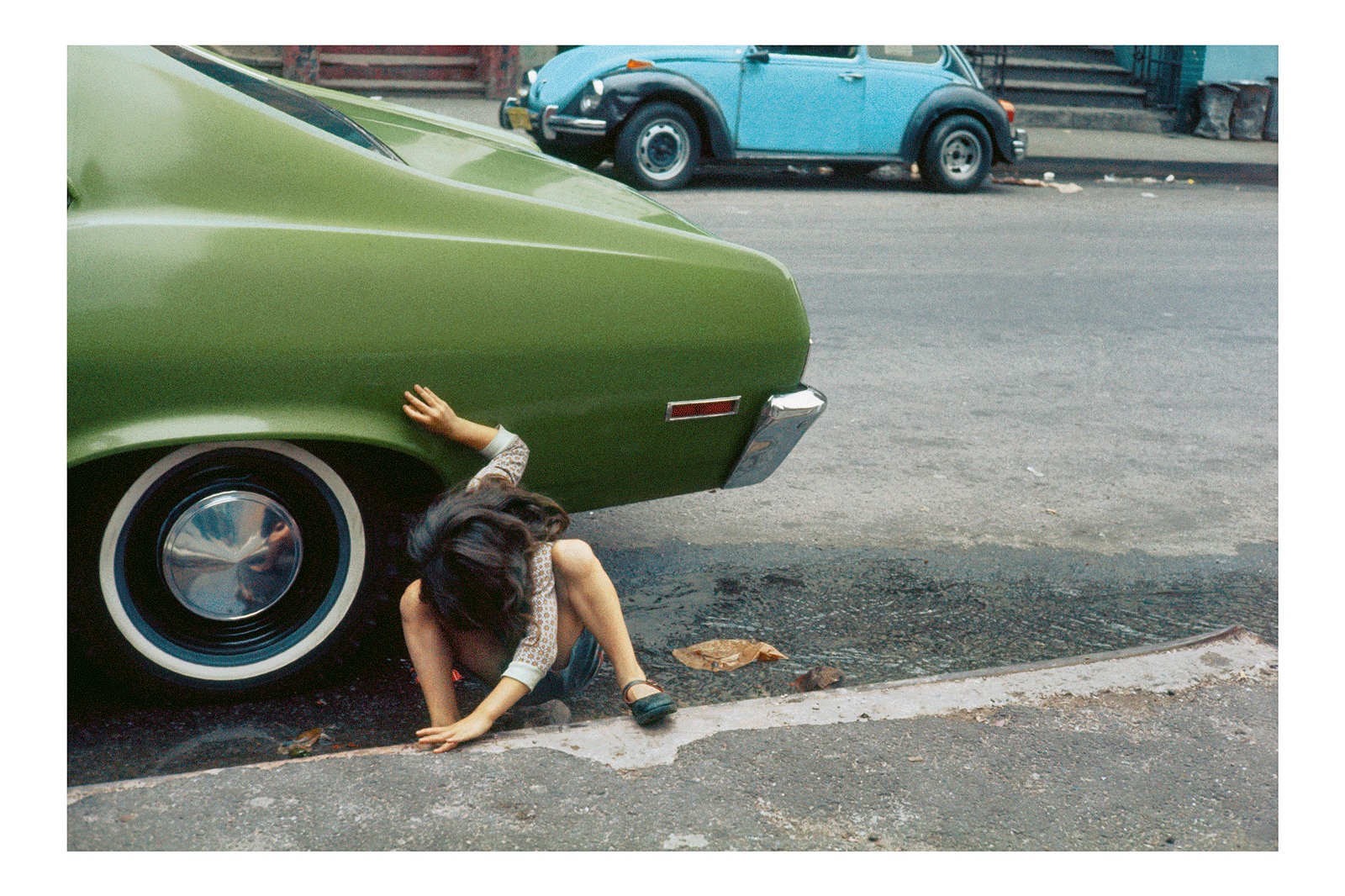
It is an anomaly that the new book, Women Photographers are Dangerous, aims to rectify, spotlighting over 60 female photographers who have taken physical and creative risks in their work, spanning scenes from war zones to protests, and fields from journalism to science and advertising.

‘We deliberately did not want to tell a supposedly ‘beautiful’ or idealised story of women in photography,’ says co-author and historian Laure Adler. ‘Instead, we wanted to tell a story grounded in historical and artistic research, bringing unknown figures to light while also paying tribute to those who are better known. It is an uneven and turbulent history, much like the history of women themselves.’ Included here are visual activist Zanele Muholi’s striking portraits, Eve Arnold’s photographs of Marilyn Monroe and the work of Anne Atkins, who was widely believed to have created the first photograph.

Virginia Oldoini, Countess of Castiglione, with the collaboration of Pierre-Louis Pierson, ‘Scherzo di Follia’ [Joke of Madness], circa 1863-1866, albumen print from a collodion glass negative, 18,8 x 12,5 cm, New York, Metropolitan Museum of Art.
For Adler, it was key above all when making the selection to acknowledge the major contribution women made to developing photography’s technical process. ‘As the medium became increasingly successful, men gradually took over the field,’ she adds. ‘This did not stop women from continuing to practice photography, but this history of appropriation is important in understanding how little space has been given to women artists in the broader history of art.’

Dorothea LANGE ‘Migrant Mother’, Nipomo, California, March 1936, digital file of original negative, retouched in the 1930s, 10.2 × 12.7 cm, Washington, Library of Congress.

Frances Benjamin Johnston, ‘Full-Length Self-Portrait Dressed as a Man with a False Moustache, Posing with a Bicycle, Facing Left’, circa 1890, albumen print, 20.9 × 14.9 cm, Washington, Library of Congress.
It is a reality which can be unnerving for the status quo, hence the title of the book. ‘These women are dangerous because they inspire hope, confidence, and ambition in other women who may not yet dare to take that step,’ Ader adds. ‘They are also dangerous to their male colleagues because they are just as talented, sometimes even more talented, than their male peers and partners, and often more courageous.’
Women Photographers are Dangerous is published by ACC Art Books

Julia Margaret Cameron, Study for a Holy Family [Étude pour une Sainte Famille], 1866-1870, silver albumen print, 33.3 x 26.2 cm, Los Angeles, J. Paul Getty Museum.