After working with Virgil Abloh and Pharrell Williams, Alix Ferracci branches out on her own. Discover her darkly playful jewellery
In her jewellery brand Alf, Alix Ferracci subverts classic symbols of childhood for seductive and playful pieces
Jeweller Alix Ferracci honed a subversive design aesthetic while working alongside John Galliano at Maison Margiela, where she landed after graduating from Central Saint Martins. Upon later joining Virgil Abloh at Louis Vuitton as Head of the Men’s Jewelry Department, Ferracci reconsidered jewellery’s contextual orbit, continuing to place it as part of a wider cultural conversation in her current work at Louis Vuitton alongside Pharrell Williams.

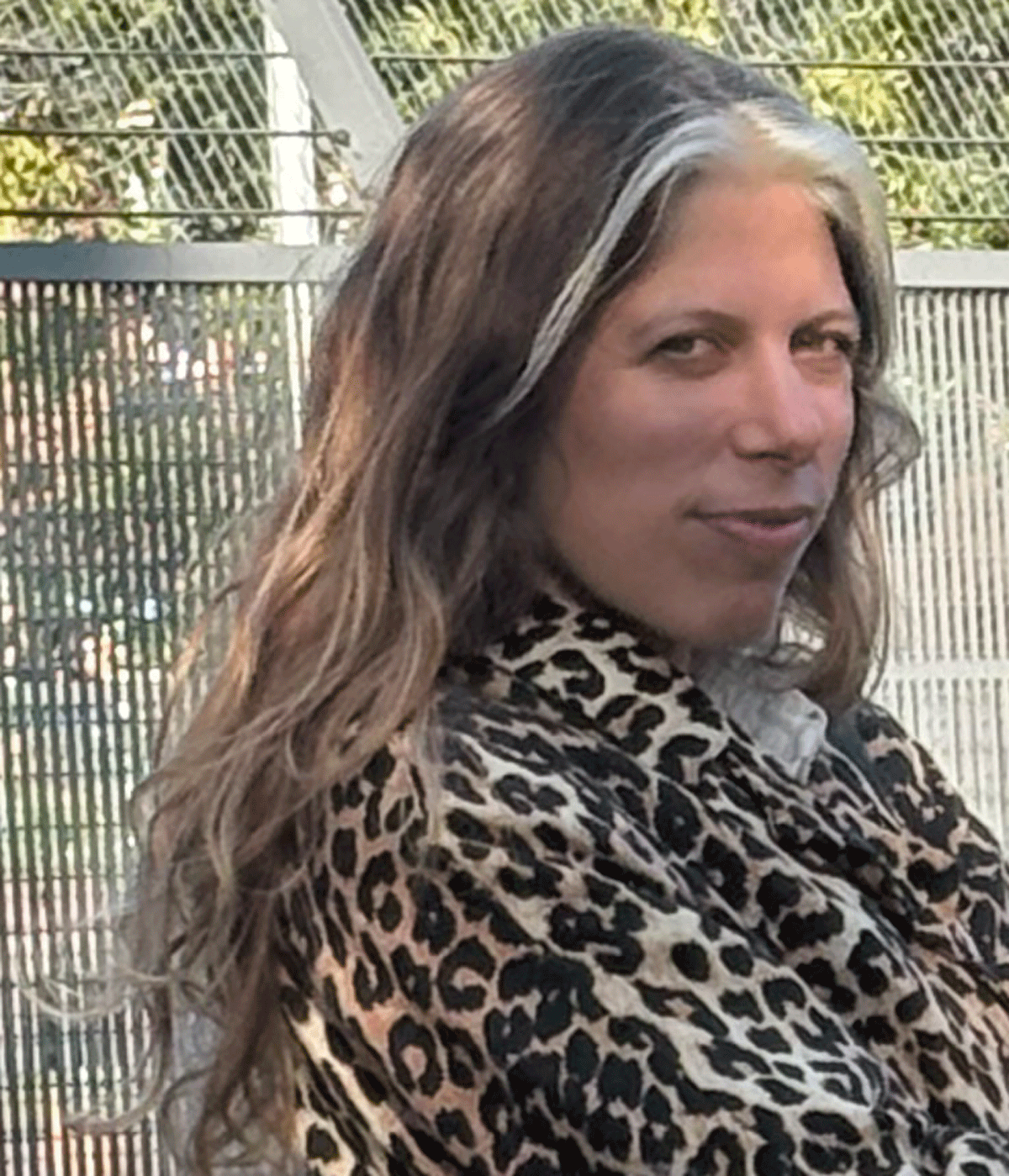
Portrait of Alix Ferracci
‘Working with larger luxury houses early on gave me a rare opportunity to observe how a fashion house functions from the inside,’ says Alix Ferracci. ‘Designing is a process of constant trial and error, of starting over again and again. Having the chance to witness and experience this in fashion houses made me aware of how much time was being spent on details no one would ever consciously notice, yet details that would be immediately felt if they were wrong. It also showed me how to design real pieces that are meant to be worn, lived with, and sold.’
Working with major brands encouraged Ferracci to consider feasibility alongside creativity, navigating challenges of timing, materials and costs in ways which supported, rather than limited, creative possibilities.

Baby heads necklace, £489
Her experiences were key when launching her own brand in 2025. At the core of Alf is an eschewing of trends and fast-fashion fixes – Ferracci considers what a timeless piece of jewellery is, referencing early adornments worn by our ancestors in jewellery rooted in birth and renewal.
‘When I started, I think that I was unconsciously looking for discomfort,’ Ferracci adds. ‘Having to make decisions without external validation is most of the time hard, but also challenging - it keeps me sharp. I’m interested in objects that feel playful at first glance, but slightly unsettling the longer you look at them. I would describe my style as quite eclectic. It’s often colourful, but there’s always something slightly darker underneath. I love pieces that remain a bit ambiguous and hard to place. In fact, I enjoy the idea that my work might seem to belong to one world one day, and then surprise you the next.’
‘When I started, I was unconsciously looking for discomfort,’
Alix Ferracci

The molar necklace, priced £1,860 alfjewelry.com
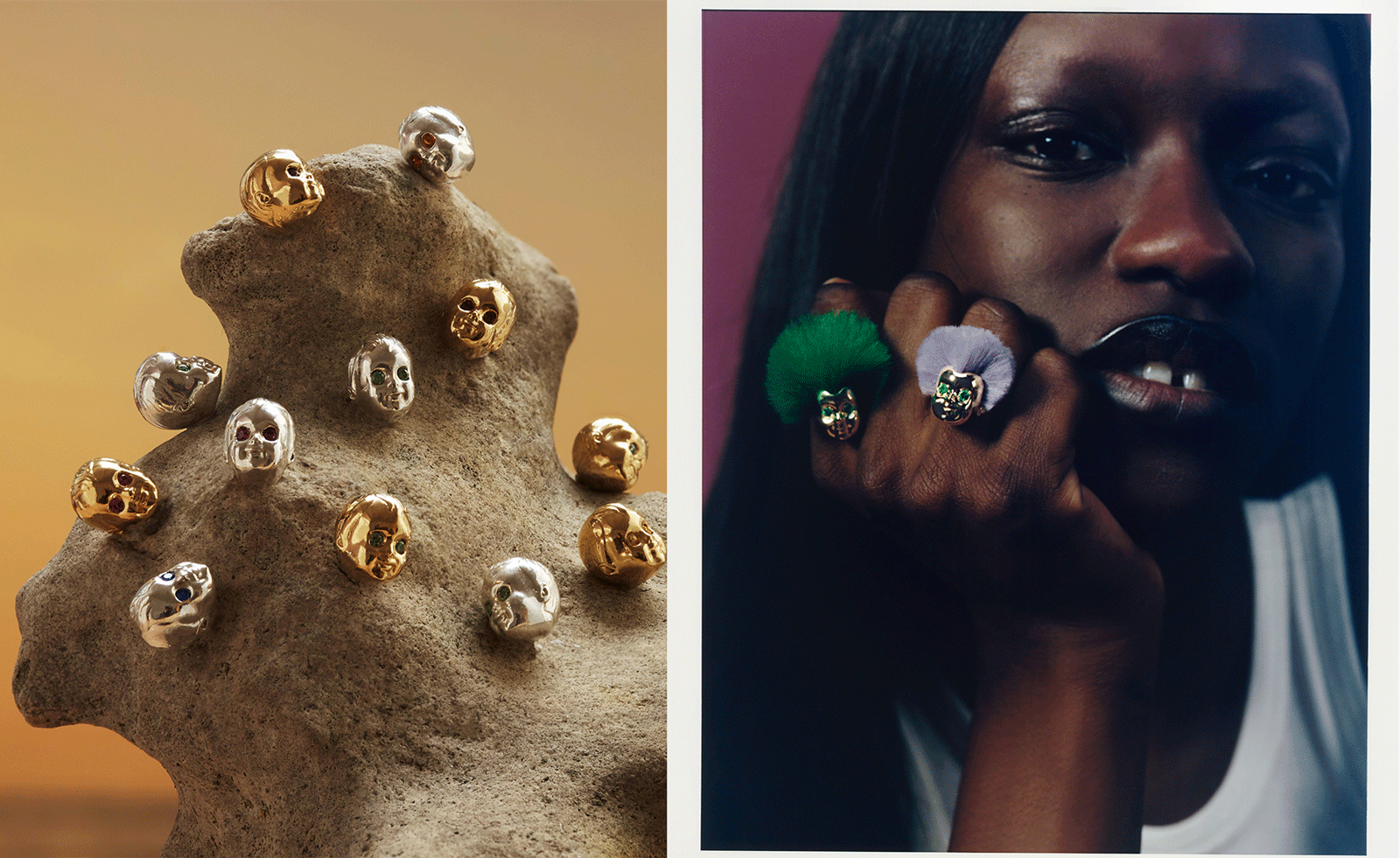
Childhood themes run throughout. There are teeth, in gold vermeil and sterling silver, strung on chains interspersed with enamel beads. In earrings, preciously rethought molars are studded with green tsavorites or amethysts; in bracelets, they dangle from nylon cords which loop around the wrist. Elsewhere, the figure of the baby itself hangs from an oversized chain. Babies’ heads, their eyes specks of golden or orange citrine, aquamarine or red garnet, are piled up on necklaces of gold or silver.

Baby necklace, £853
‘I’m also very drawn to the aesthetic of toys, things that look artificial, almost fake, like plastic objects,’ Ferracci says. ‘I like the irony of that language, and what it says about our relationship to objects and consumption today. And to me, this is what jewellery should be: a mirror of our identity, a symbol of what shapes our culture. That interest connects to a certain 90s/2000s visual culture, which I find both playful and slightly unsettling.’

Tooth bracelet, £311
When thinking about a new piece, she begins with familiar and conventional symbols, before given them an ironic, or darker, spin. ‘For example, skull necklaces are usually associated with biker culture, so I like replacing them with baby heads,’ says Ferracci. ‘In the same way, surfer tooth necklaces, often made from shark teeth worn on the beach, become a starting point for me. I reinterpret them in metal, in a less expected way, playing with refinement and craftsmanship. I enjoy working with symbols that feel standard or widely recognised, and twisting them just enough to make them feel unfamiliar again.
‘There’s a spiritual layer to the symbols I use – something tied to innocence, childhood, and the unspoken. I want my jewellery to hold meanings that resist being fully explained, but that people can relate to and understand instantly.’

Baby heads necklace, from £489

Molar bracelet, from £889

Baby heads earrings, from £249