‘Tracey Emin: A Second Life’ is tough, honest and life-affirming
With 100 works drawn from her 40-year career on show at London’s Tate Modern, the artist offers an unflinching and moving look at the gritty, bloody but also beautiful reality of living
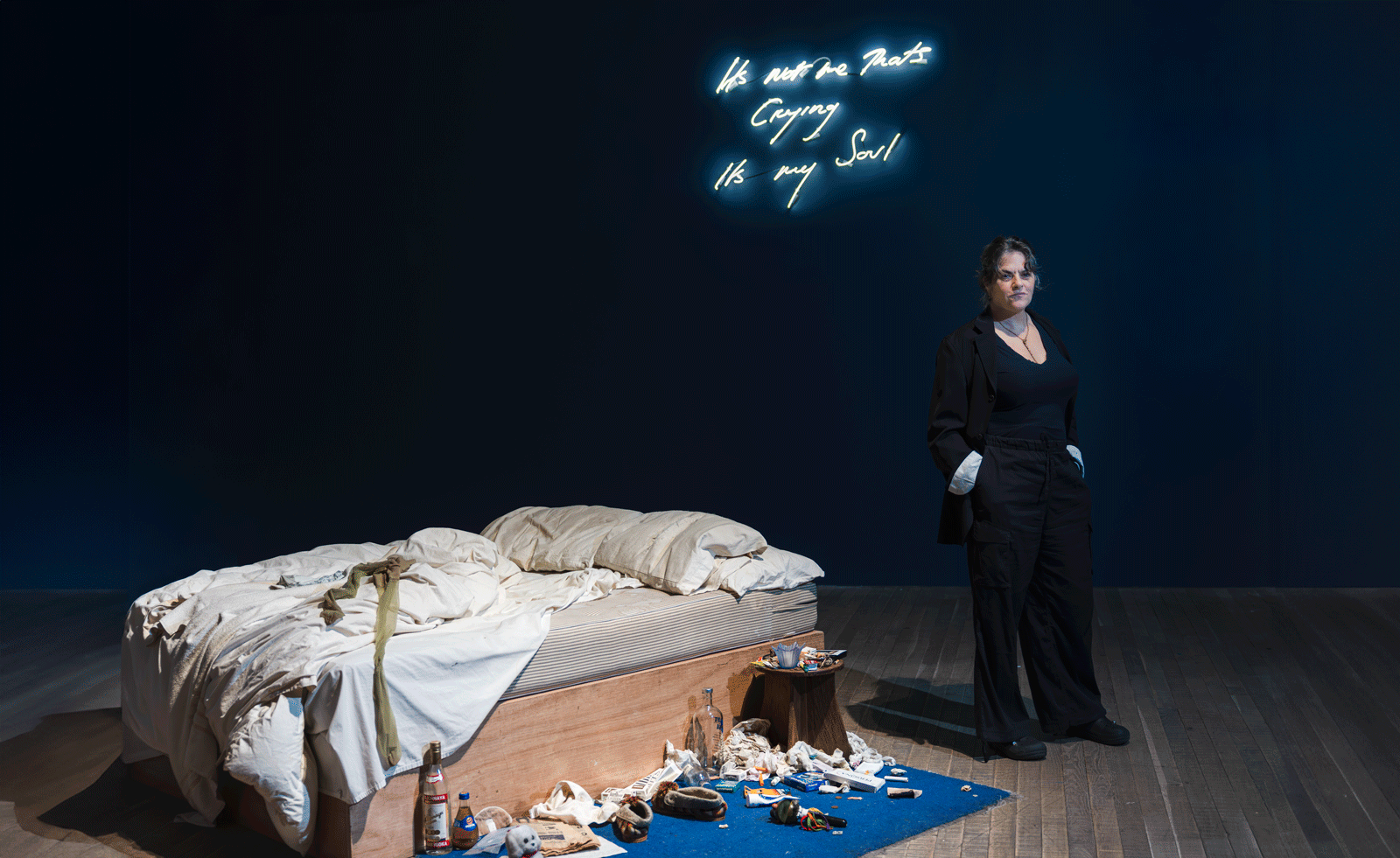
‘At the age of 13 I realised there was a danger in beauty and innocence – I could not have both,’ wrote Tracey Emin (born 1963) in her 1999 short story, Exploration of the Soul. Now these words, framed, hanging in the Tate Modern as part of her largest-ever exhibition, ‘Tracey Emin: A Second Life’, strike a prophetical tone.
Emin’s influence on contemporary art has been such as to redraw the landscape, yet her works challenge this aura that could have been in danger of eclipsing them. Finally, Emin speaks to us directly through 100 works united here, drawn from throughout her 40-year career. The show is epic in scale. Throughout the mix of media – there is painting, textiles, video, sculptures, neon and installation – Emin returns frequently to the incongruency she noted early on between beauty and innocence, with raw subjects translated into childlike symbols, delicate drawings and joyful colours, or scrawls in neon (‘I could have loved my innocence’).

Tracey Emin, Mad Tracey from Margate. Everyone's been there, 1997
Emin is ferocious in documenting her life, with a rawness and honesty, going back to her first abortion in 1990, an event she later referred to as an ‘emotional suicide’. It made her realise, she says, that her work before then was a ‘big bunch of crap’. She destroyed it all immediately. It is extraordinary to see, then, a recreation of this early work opening the show. Small photographs of her art-school paintings, framed on stitched fabric, offer a rare glimpse into an artist finding her way.
It’s moving and it’s tough to watch Emin processing her abortion. She is making sense of the jumble of conflicting emotions, as well as its everyday reality. In the 1996 film, How it feels, Emin documents how it feels to have an abortion – useful, she says, for women who are having one, then going into work the next morning, before the fact of it catches up with them. In the film, she stands in the street and discusses her own, turbulent experience. There’s the mundane – getting a cab, choosing what to wear – and the harrowing; the sickness and the fact that, horribly, it doesn’t go to plan.

Tracey Emin, I whisper to My Past Do I have Another Choice, 2010
Mediums are eclectic. Emin writes her CV on paper and documents her year on blankets (‘At the age of 13 why the hell should I trust anyone’ she appliqués in 1999). In 1994, she embroiders: ‘There’s a lot of money in chairs’ on the armchair she inherited from her great-grandmother, after her nan made the comment. Her nan meant that people stuffed money down the back of them.
In her blankets and armchairs, Emin questions the artistic integrity of quilt-making, imbuing the medium in her compositions with the gravity of paintings. The layered, textured quilts, with their bright colours and spontaneous thoughts, are the most joyful part of the show. Elsewhere, she looks beyond the expected for her next canvas; famously, it is on a bed where Emin documents her recovery from an alcohol-fuelled breakdown, with the Turner Prize-nominated My Bed, from 1998, closing the chapter of Emin’s ‘first life’.
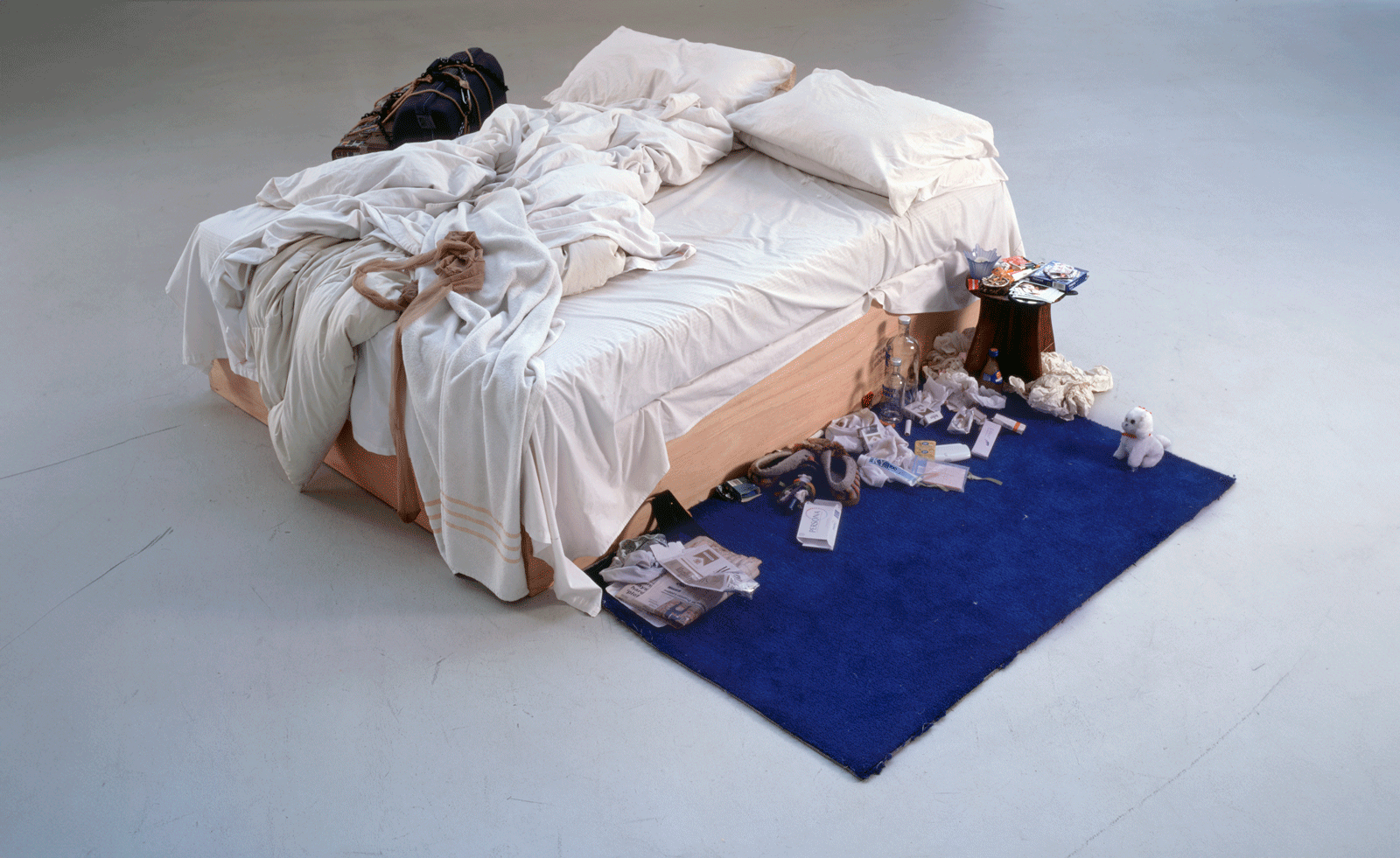
Tracey Emin My Bed, 1998
Emin’s second life begins with her documenting cancer, surgery and disability. Seen for the first time here are new photographs of her stoma, following her major surgery for bladder cancer. Emin’s unflinching photographs of herself after her operation are vital works, an urgent dismissal of the coy and occasionally dangerous secrecy with which the body is handled. It's hard not to look away, but it's important you don't.
To follow these raw photographs with the series of beautiful, spiritual, large-scale paintings Emin created after her operation, as well as the monumental bronze outside, I Followed You Until The End, 2023, serves to anchor the exhibition, and Emin, in the present. Juxtapositions still reign, but in the gritty, bloody reality of living, Emin celebrates the beauty of being alive.
‘Tracey Emin: A Second Life’ at the Tate Modern, in partnership with Gucci, from 26 February – 30 August 2026, tate.org.uk

Tracey Emin, The End of Love, 2024

Tracey Emin, Ascension, 2024