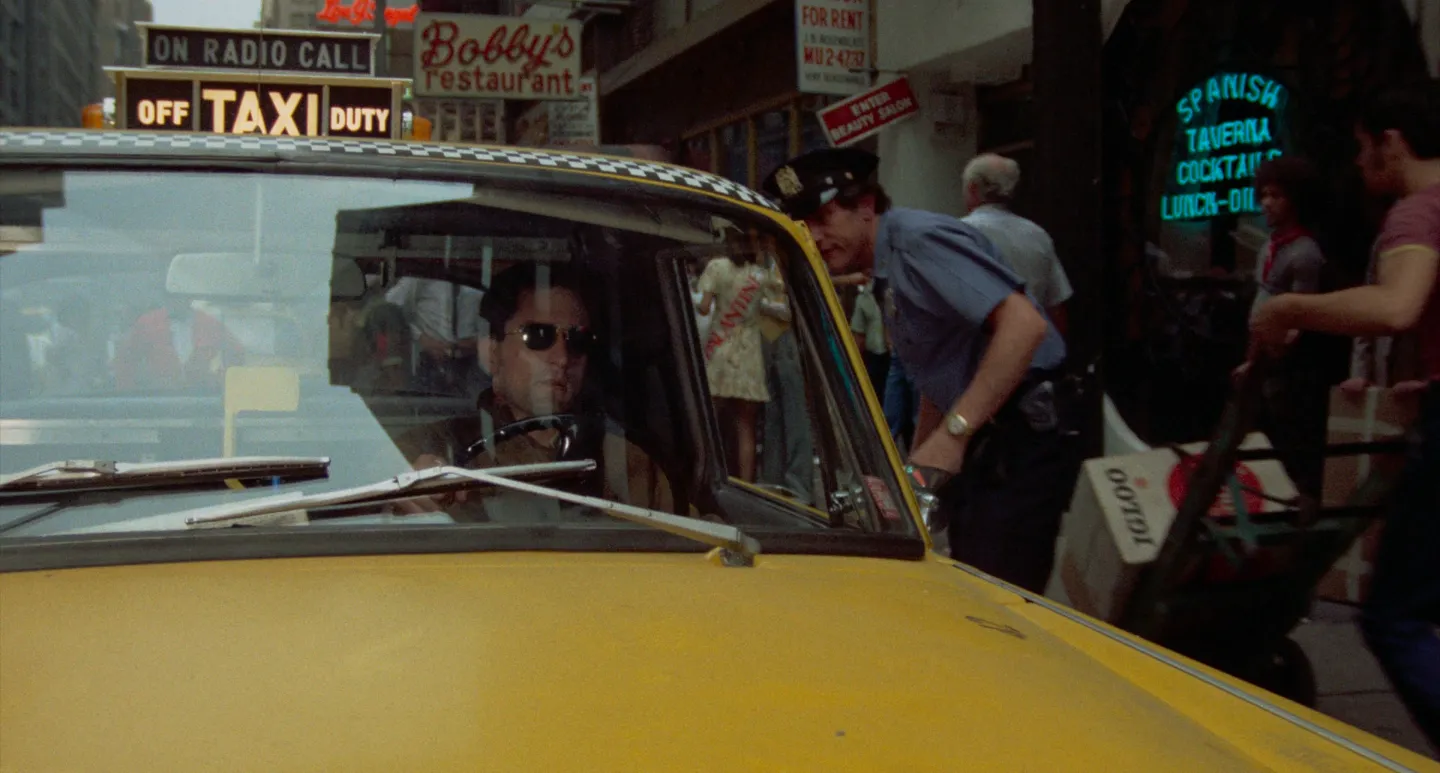
There are cities that appear in films, and then there is New York, which has a way of making films appear inside it. A24’s On Location in New York City is built around that premise: a movie lover’s guide to 179 places across the five boroughs that have conquered the silver screen and are still open to this day. Much like our own Wallpaper* Travel Guide series, the volume exudes the charm of pre-internet travel publishing.
There are maps, categories, addresses, telephone numbers, symbols (for cash only, adults only, open late, landmark, and so forth) and an index of all the locations and films mentioned, making it easy to navigate. This is New York, scene by scene.
A24 turns New York into a cinephile itinerary

Celine Song, whose Past Lives (2023) and Materialists (2025) both star the city as itself, opens the tome with a love letter to New York City and to the film crews who make shooting there possible. ‘I love New York. I am in love,’ she writes. ‘I love the parks and the restaurants and the stores and the piers and the sidewalks and the piles of trash and the corners that turn gold with the sunset once a day.’ For Song, the city is ‘ugly, brutal, messy’ as much as it is beautiful, and that is precisely why filmmakers keep returning to it.
The guide spans six categories. Entertainment & Sightseeing covers the city’s monuments, museums, cinemas and theatres, from big-ticket New York fixtures such as the Empire State Building, Radio City Music Hall and Grand Central Terminal – where Terry Gilliam staged 1,000 extras waltzing beneath the concourse’s celestial ceiling for The Fisher King (1991) – to more particular inclusions, such as the Judd Foundation, whose SoHo interiors Adrian Lyne used in 9½ Weeks (1986).

The Shopping section turns the city into a retail set: department stores, bookshops, toy stores, tattoo parlours and diamond dealers. Toy shop FAO Schwarz is the obvious pilgrimage, with Tom Hanks’ giant ‘Walking Piano’ from Big (1988) still in residence after the store’s move to Rockefeller Plaza; the Diamond District brings the more frantic cadence of Uncut Gems (2019), all upstairs rooms and handshake deals. Bergdorf Goodman, meanwhile, gets its own mythology: ‘Unlike Saks Fifth Avenue, Bloomingdale’s and Printemps,’ the book notes, ‘there is only one Bergdorf’s, and it can only be experienced in New York.’

The Eating chapter gives restaurants their due as New York cinema’s great supporting characters. For pop-culture pilgrims, Bubby’s in Tribeca appears in The Devil Wears Prada (2006) as the workplace of Andy’s boyfriend Nate, while Raoul’s in SoHo brings oysters, steak frites and Valentine’s Day melodrama via Sex and the City: The Movie (2008). A must-visit for its pastrami on rye as much as its cinematic credentials, Katz’s Delicatessen made cameos in three films released in 2007 alone, and has its own sign – ‘Where Harry met Sally… hope you have what she had!’ – hanging above the table where Meg Ryan performed the sultry scene. There is also a section for that most democratic of New York film props: the hot dog cart.

For those seeking to extend the night, Nightlife takes the guide to a darker and after-hours territory, moving from old pubs and hotel bars to club rooms built for bad decisions. Basement in Queens, seen in Babygirl (2024), is a concrete techno club beneath Knockdown Center, with a no-photo policy. Sitting on a corner across the street from Tompkins Square Park, 7B (known locally as Horseshoe Bar, for its U-shaped counter, or Vazac’s, from its past as a Polish catering hall) offers the kind of timeless, grimy ambience that is hard to resist.

Parks & Recreation opens up the city’s green spaces, skating rinks, pools, ballfields and strange pockets of leisure. Naturally, Central Park gets the full treatment as New York’s great outdoor set. The book closes with Photo Opportunities: a section for striking the pose where the movies already did. There is the operational Tribeca firehouse from Ghostbusters (1984), Mick Dundee’s lamppost on Fifth Avenue, the Queensboro Bridge view from Manhattan (1979), Times Square as emptied at great expense for Vanilla Sky (2001), and the Statue of Liberty, because even disaster movies need an icon.

As Song puts it, ‘New York City is probably the most photographed city in the world, and for good reason. It is a stunner! Ever-changing, always perfect, endlessly-inspiring, one hell of a city.’

‘On Location in New York City’, available for $36 via A24 or for £28 via Mack Books