In the Arab world, Furusiyya is a knightly discipline and ethical code developed in the Middle Ages and rooted in equestrianism. Traditionally, it encompassed not only riding and training horses, but also strategy, craftsmanship and the moral conduct expected of a warrior. It’s a topic that Milan-based Lebanese design studio David/Nicolas have spent much of this year immersed in as they created two spaces for ADREA – Abu Dhabi Royal Equestrian Arts – the world’s fifth school of classical horsemanship and the first to rise beyond Europe. Opened in November 2025, ADREA represents an Emirati interpretation of Furusiyya that unites heritage, discipline and artistry. At its heart are equestrian performances, the preservation of knowledge and immersive learning experiences.
Inside ADREA by David/Nicolas

Within this large initiative, David/Nicolas, originally from Beirut, were tasked with designing two spaces: the Equestrian Library and the Saddle Workshop. ‘From the start, we understood that this was not just about designing a space, but about articulating an entire cultural narrative,’ says David Raffoul, co-founder of the studio alongside Nicolas Moussallem.
‘Our research focused on classical horsemanship in the Arab world, Emirati identity, and the deep roots of Furusiyya. We also spent time understanding ADREA’s contemporary vision, which is about preservation, yes, but also about projecting heritage into the future.’
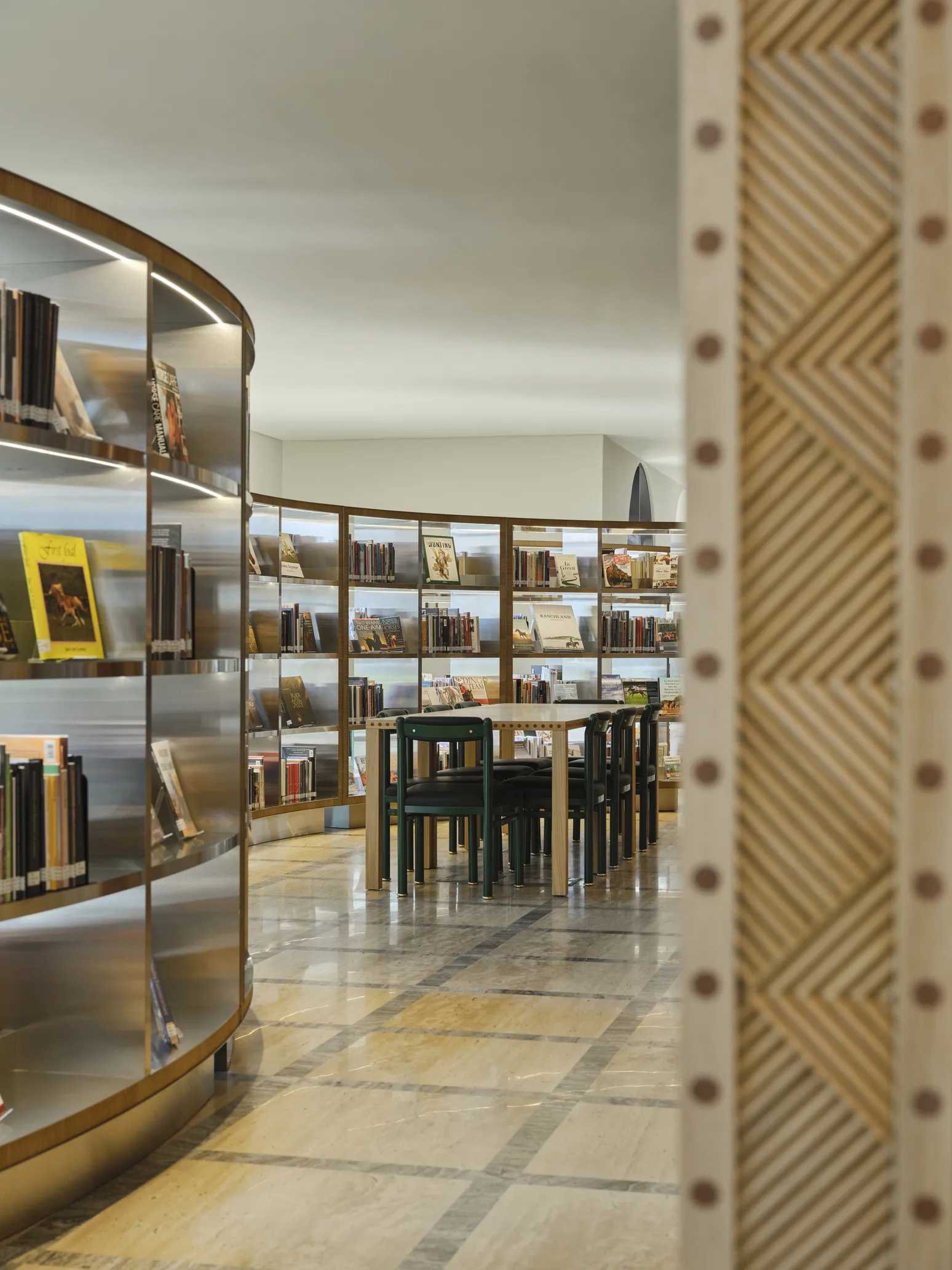
From here, two carefully proportioned spaces that balance tradition and modernity evolved. In the Library, everything revolves around an intimate central core – a solid wooden volume, hand-carved inside and out in Lebanon. Around it, David/Nicolas placed a series of clean, contemporary bookshelves made from curved steel, creating a continuous rhythm that subtly evokes the movement and posture of a horse. The idea, the designers say, was to create a contrast between the sculptural core and the more minimal perimeter.
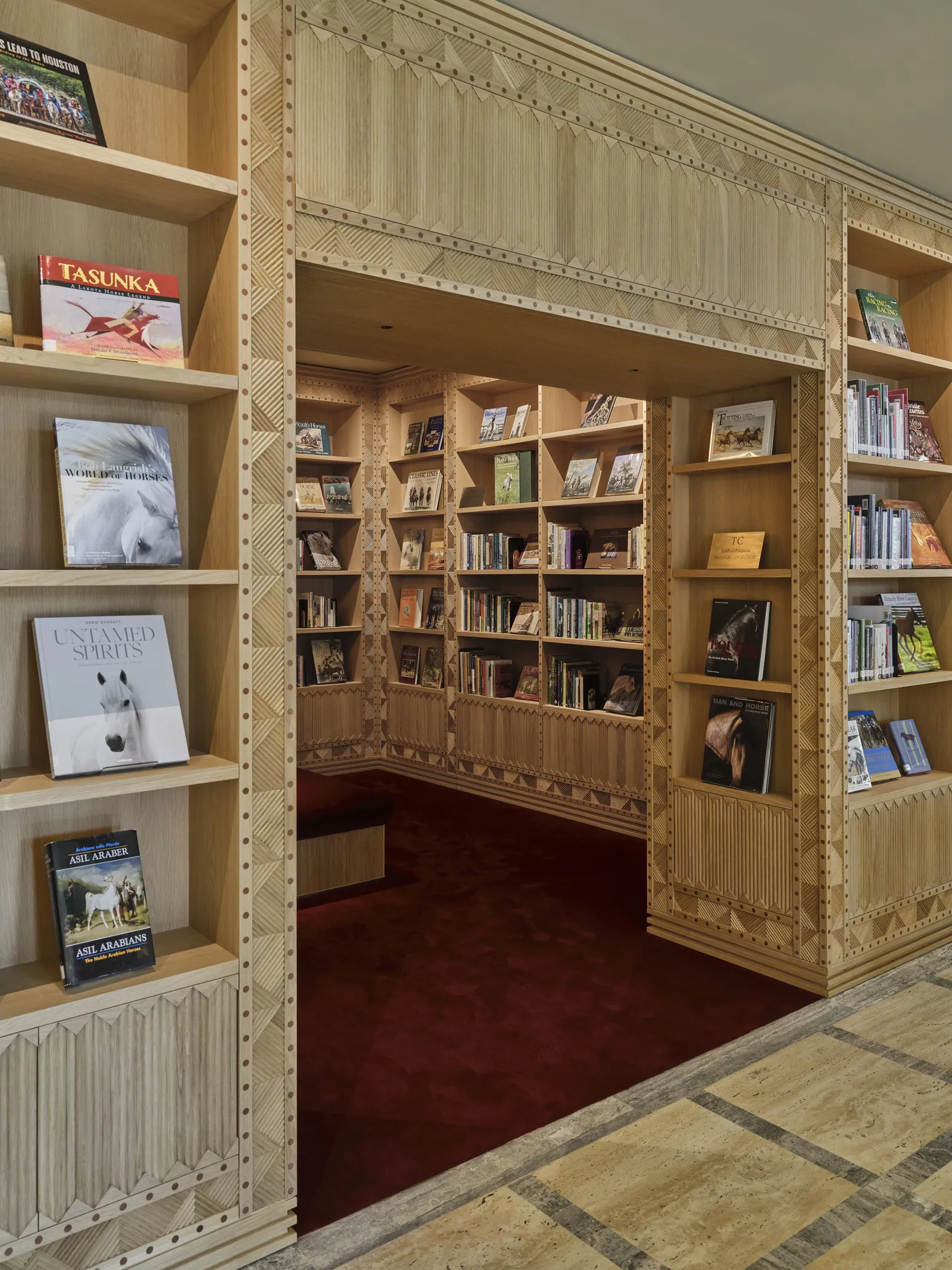
'The inner core of the plan is designed to feel calmer and more private,' Raffoul explains. 'We used carpet there and a softer type of lighting to create a sense of intimacy. As you move outward, toward the curved bookshelves, the space becomes more open and less secluded. It’s an area where people naturally cross paths, where the energy shifts from quiet focus to something more shared and social. That contrast between the intimate core and the open perimeter was an important part of shaping the visitor’s journey.'

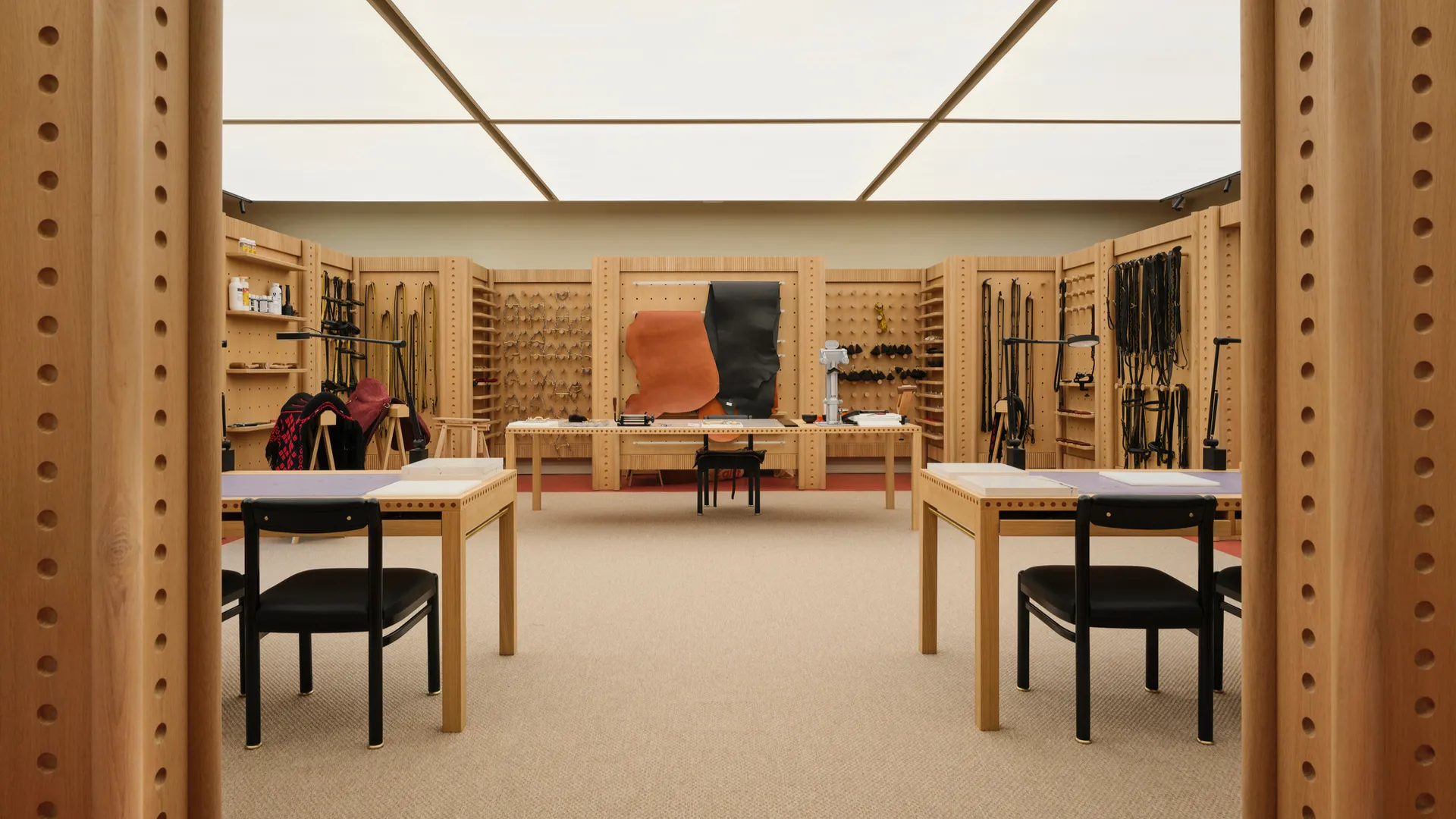
For the Saddle Workshop, the studio designed a room within a room. Along the outer walls, wooden hooks display saddles in progress, visible as you move around the perimeter before arriving at the central workshop space. Inside is a wood-panelled room drilled with grids of holes for interchangeable pegs where various leather straps, brass hardware and utilitarian tools are hung – like an elevated version of a pegboard.
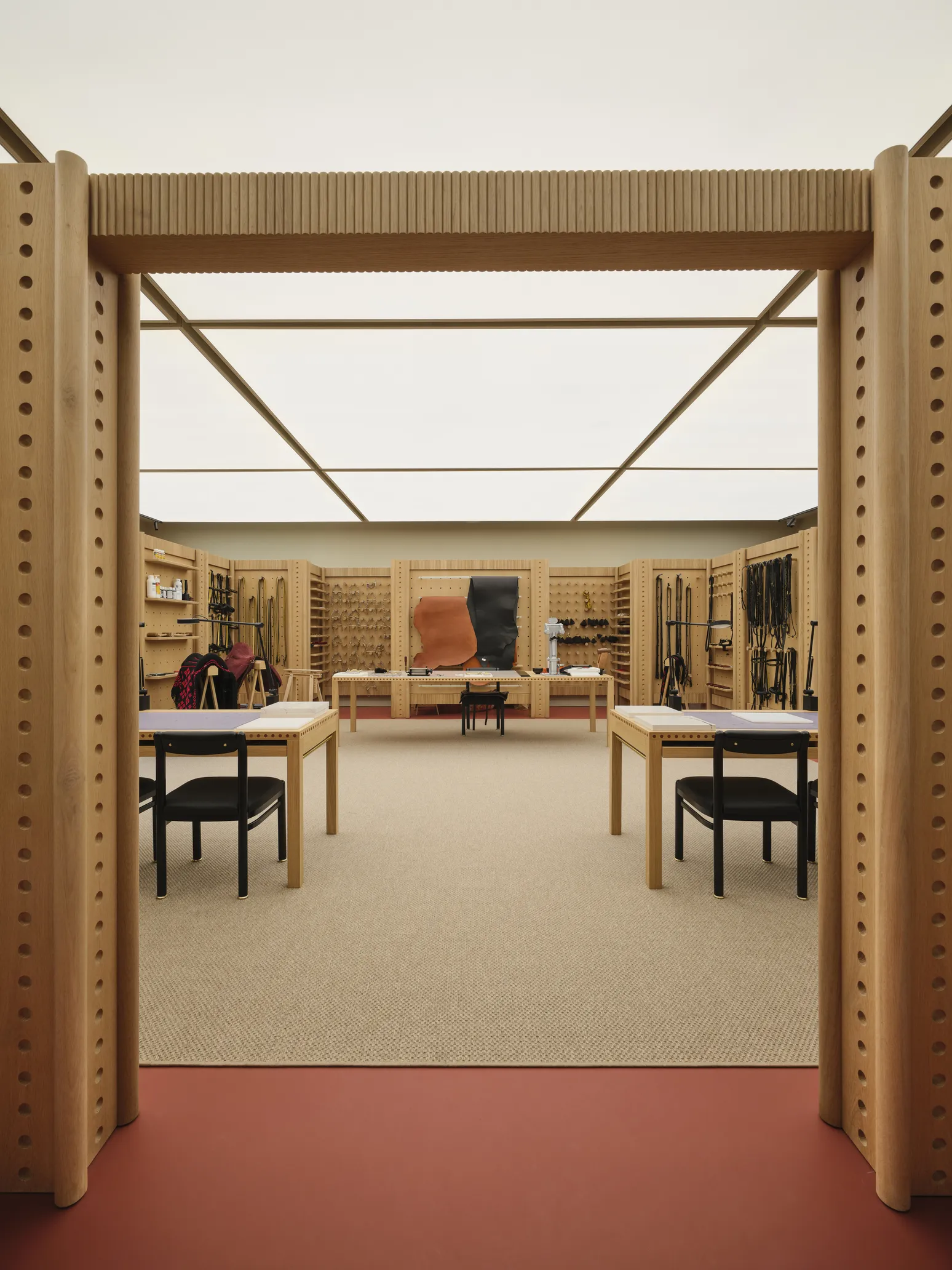
This is a space dedicated to craft, learning and artisanal production, where the saddles are actually made at long workshop tables featuring intricate marquetry depicting geometric forms informed by Emirati architecture. ‘We designed the space so that the materials they use – leather, tools, saddles in progress – are not just functional, but displayed and celebrated,’ explains Moussallem. ‘The architecture steps back, allowing their craft to become the true protagonist.’

Materiality and proportion were central to the project. In the Library, wood is the dominant material – warm, textured, hand-carved – contrasted with metal elements that bring a sharper, more contemporary feel. ‘One evokes the past, the other gestures toward the future,’ says Raffoul. ‘But what truly brings the materials to life is the handwork. The craftsmanship is what gives them depth and presence.’