J Hannah returns to a slower way of creating with a considered new jewellery collection
The Los Angeles-based jewellery designer pays homage to traditional techniques in the JH Editions collection, including one-of-a-kind rings
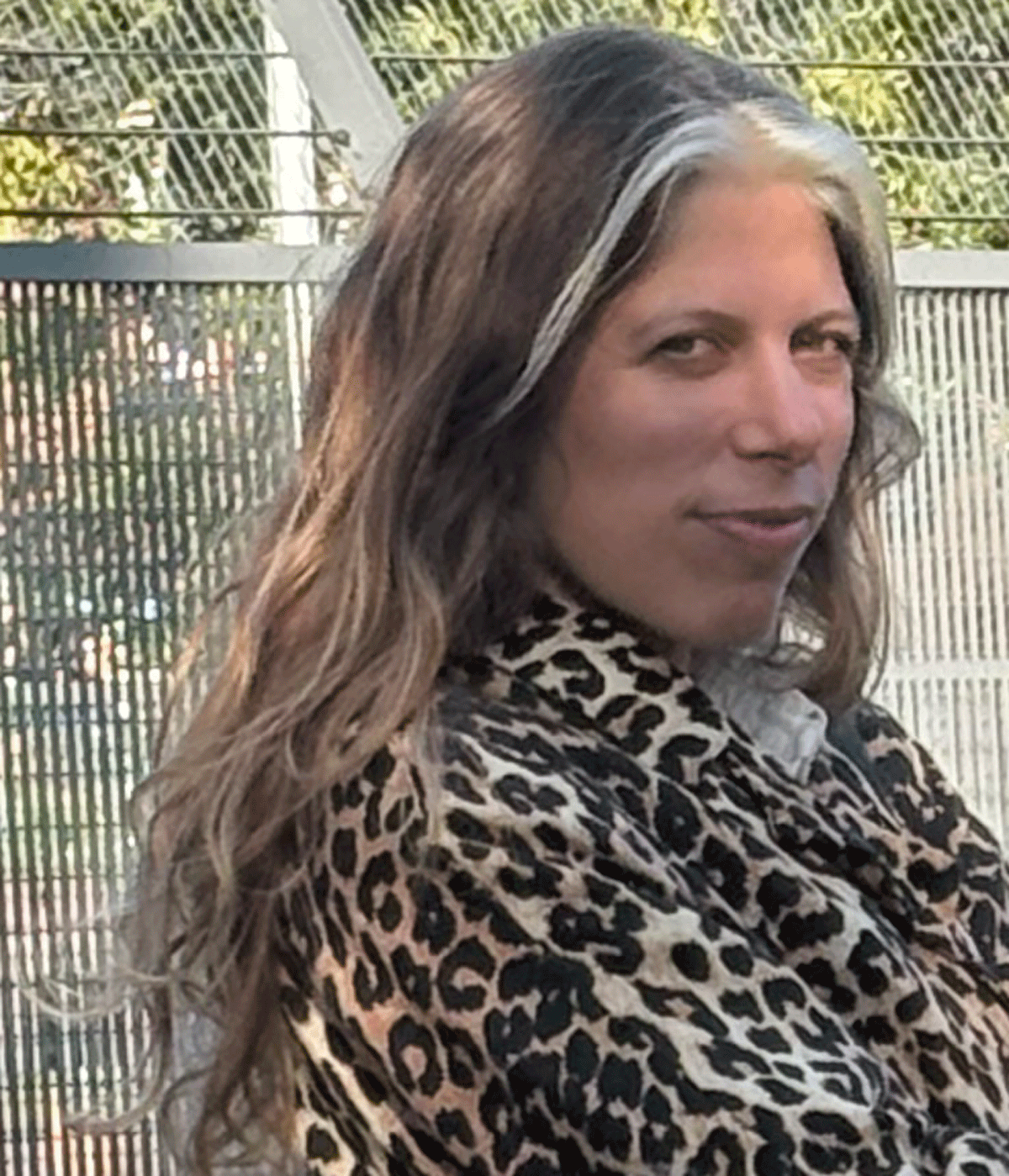
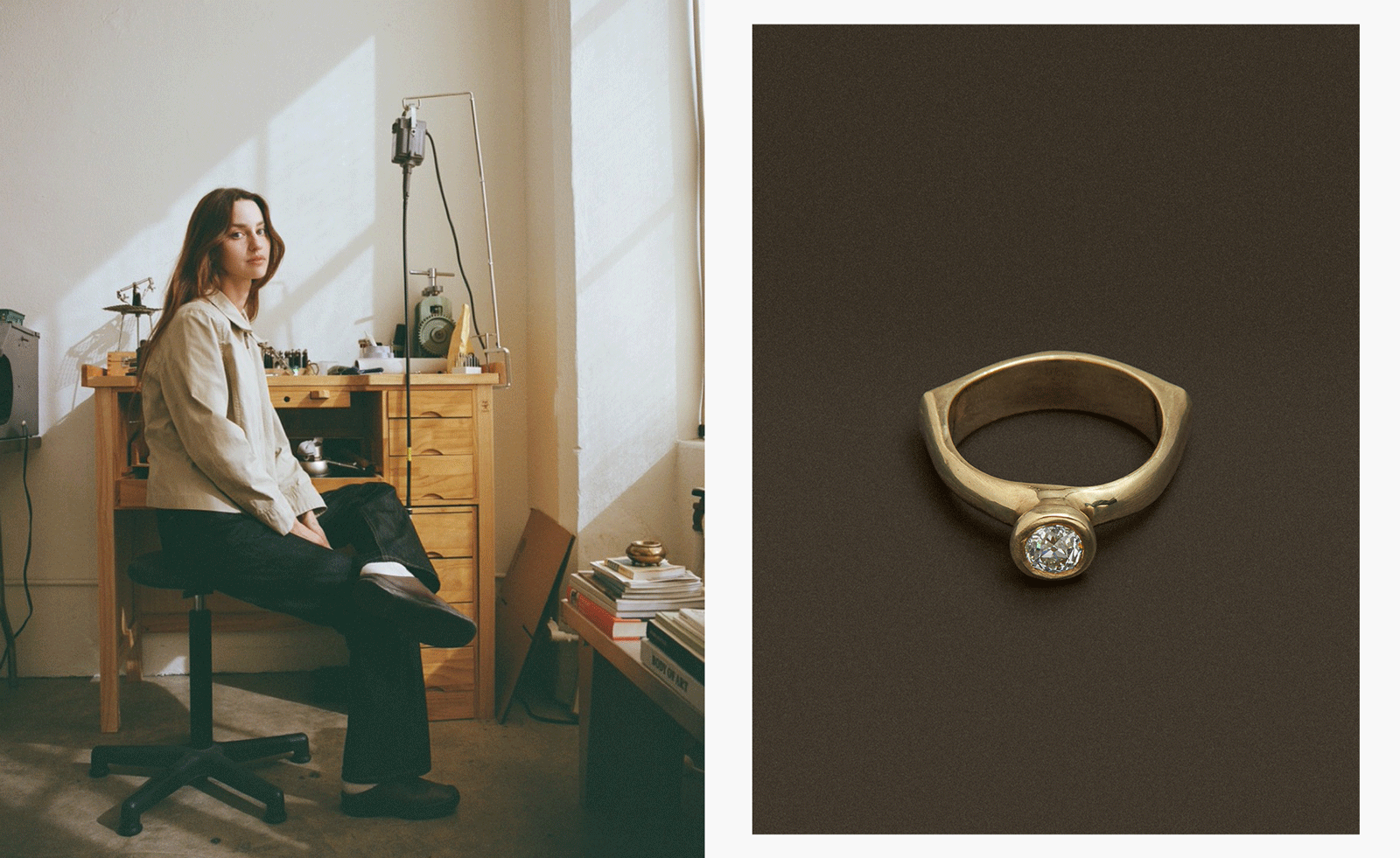
Jess Hannah Révész, founder and designer of fine jewellery brand J Hannah, creates jewellery in antithesis to the mass market. Her pieces, made in Los Angeles, encompass a slower, more ethical way of creating, a mindful philosophy brought to life in the new JH Editions collection.
The ongoing series of hand-created pieces marks the designer’s return to the bench – after having seen her time taken up with running the business – a move triggered by her desire to again experience the physicality of the process. ‘I don’t know that there was a singular moment so much as a gradual realisation that I missed making things,’ Hannah says. ‘Over time, my role shifted from fabricating jewellery myself to designing collections, managing production, marketing, and running a business. I genuinely enjoy those parts of the work (most of the time!), but they’re very different from sitting at a bench and the meditative experience of making something.’
The new pieces are created using the wax process – lost wax casting – where the jewellery form is first carved into wax before taking its final metal shape, here in 14ct and 18ct gold, studded with antique diamonds and reclaimed sapphires.
Hannah tells us how the new collection came to life.

One of a series of one-of-a-kind rings in the collection
W*: Can you tell us what you enjoy about the wax process?
JHR: What I love about wax is that it resists perfection. I originally learned through hand fabrication, where precision is often the goal – wax carving feels different. It's slower, more intuitive, a little less predictable. I usually begin with a loose idea, but the material has a way of steering the process. A slip of the tool or an unexpected contour often becomes the most interesting part of the piece.
The medium lends itself to open-ended outcomes partly because the material itself isn't precious... not yet, at least. With hand fabrication, there's an implicit pressure not to waste gold, which shapes the way you work. Wax removes that. The intention can just be to spend time in the process, without the outcome needing to justify it.

W*: What was key for you to consider in the design of these pieces?
JHR: In a way, the point was to consider design less. In my day-to-day work, design, collections, and market appeal are always part of the equation. With these pieces, I wanted to step away from that mindset and allow the process itself to lead. It was more personal, for me. I just happen to have a studio practice where the output is gold jewellery, so it makes sense to share and sell it too.
Rather than focusing on how a piece might fit into a collection or be received commercially, I tried to follow instinct and just make. Many of the forms draw from jewellery history, which is a constant source of fascination for me – signets, seal fobs, talismans, antique stones – but I wasn’t interested in developing them into a cohesive collection.
Instead, I wanted to explore them freely, fragmenting, simplifying, or reinterpreting them without worrying too much about the outcome.
The challenge was resisting the urge to control everything or evaluate the work too quickly. I wanted the process to remain intuitive and exploratory, and to leave room for surprise and imperfection. There are pieces in the series that I utterly adore and others that I don't. Part of this practice has been learning to make the work, put it into the world, and worry less about whether I think it’s ‘good enough’. The process itself is the purpose.
Oddly, this feels far more vulnerable than releasing a collection. For the past decade, I’ve been presenting work that has been refined, edited, and developed through a larger design process. These pieces feel closer to the source. They’re less filtered, which makes sharing them feel more personal.

One of a kind ring, inquire at J Hannah
W*: What did you find most challenging in the process?
JHR: Probably learning to let the process lead. When you’re designing for a collection, you’re often thinking about cohesion, production, pricing, customer response, and a hundred other considerations at once. This required a different mindset.
Some of my favourite pieces came from abandoning an original plan and following a small accident or unexpected idea instead. That can be uncomfortable because it means giving up a certain amount of control, which is hard for me. The challenge was trusting that not every piece needed a clear vision in order to be worth making.

One of a kind ring, inquire at J Hannah