Anatomy of a logo: Snoopy by Charles Shulz
Among our series on enduring American design motifs, Snoopy is perhaps the most endearing – and still a hot shot

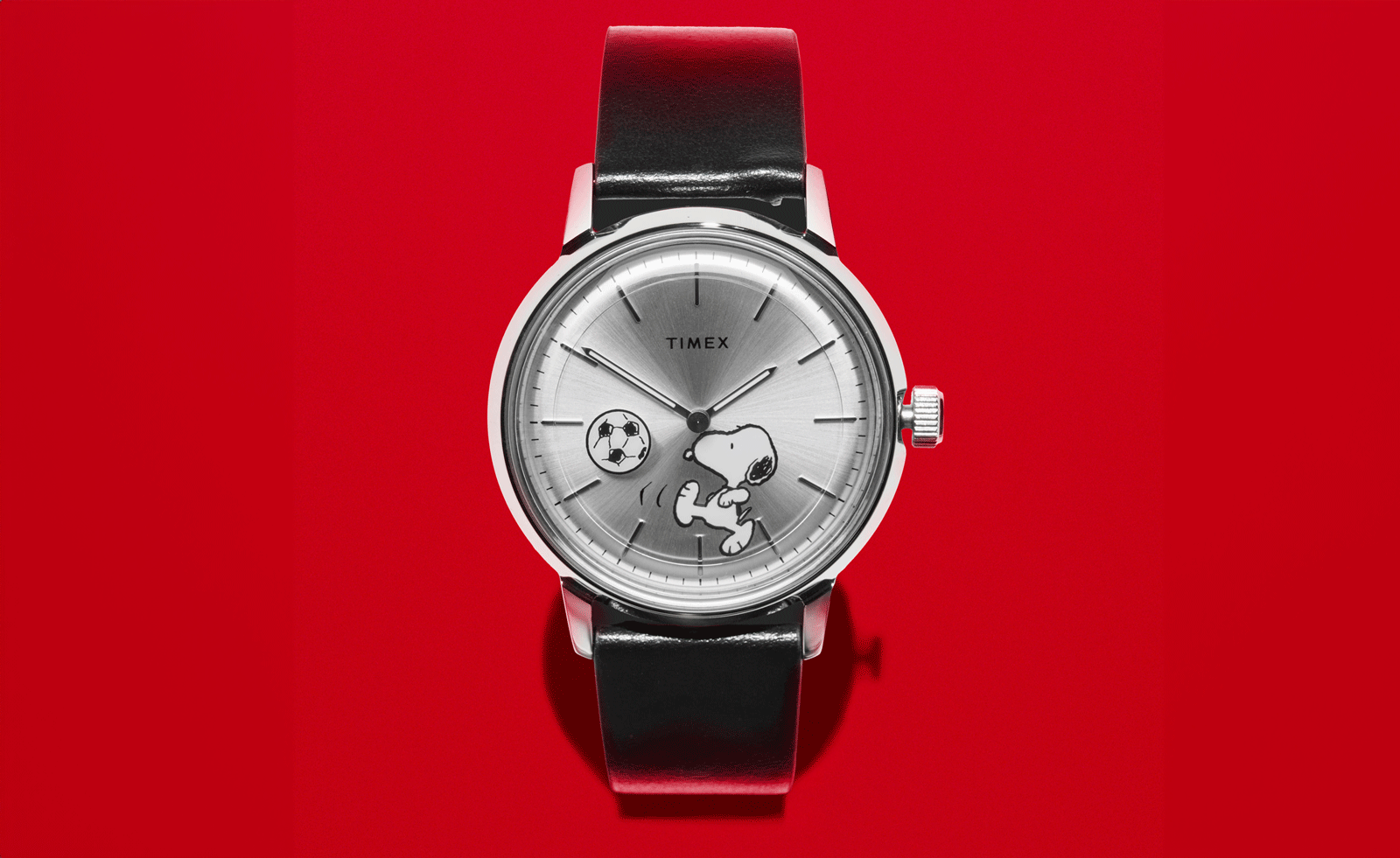
In October 1950, a new weekly comic strip, Peanuts, debuted in seven newspapers across the United States. Created by American cartoonist and writer Charles M Schulz, it followed the exploits of Patty, Shermy, Charlie Brown and his dog, Snoopy.
Born in Minneapolis in 1922, Schluz grew up during the Great Depression, serving in the United States Army during the Second World War, before embarking on a career as a cartoonist. Once remarking that the army ‘taught me all I need to know about loneliness’, Schulz infused this melancholy into the character of Charlie Brown.
His dog, Snoopy, was the result of Schulz’s observation of the relationship between children and dogs, noting the particularly high levels of tolerance a dog has for children’s games, a patience that became the foundation of Charlie Brown and Snoopy’s alliance. Schulz, who had wanted to name the series Li'l Folks, based Snoopy on his childhood dog, Spike, originally drawing the animal as a very ordinary-looking black-and-white beagle who walked on all fours.
The simplicity of his design made Snoopy both instantly recognisable – even at very small sizes – and adaptable

Over the years, Snoopy transformed, beginning to walk on two legs, and conducting a sly and playful inner monologue that readers accessed through his thought bubbles. Schulz simplified his drawing style, with Snoopy developing long ears and expressive dots for eyes. By Schulz’s final comic strip, in 2000, Snoopy’s form had been reduced to the essential, a distinctive mix of clean lines and abstract shapes.
Snoopy’s idiosyncrasies – sleeping on top of his kennel, experimenting with endless identities – meant both adults and children found him relatable. Snoopy imagined himself as everything from a First World War flying ace to a lawyer and a scout leader, and was usually preoccupied with themes of friendship, hope and disappointment.
The simplicity of his design made Snoopy both instantly recognisable – even at very small sizes – and adaptable. Snoopy moved easily from newspaper strips to toys, products, advertising campaigns and fashion collaborations.
Snoopy’s appeal transcended comics, extending into fashion and popular culture around the world. At its most popular, Peanuts was translated into 21 languages and syndicated in more than 2,600 newspapers across 75 countries. Notably, Nasa was particularly taken with Snoopy, using him as a safety mascot during the 1960s and introducing the Silver Snoopy Award, which was presented to those who make significant contributions to mission safety. The lunar module for the Apollo 10 mission, meanwhile, was dubbed ‘Snoopy,’ and the command module was called Charlie Brown.
The fashion industry, too, has embraced Snoopy, and he has appeared in collections by brands including Gucci and Lacoste, and on everything from sneakers to watches. Timex, which adopted Snoopy’s form in 1965, was one of the first brands to obtain licences for the use of the Peanuts characters, resulting in watches including the Peanuts x Timex Marlin Automatic Soccer.
Throughout its 50-year run, Schulz kept sole and complete creative control, personally penning every strip himself. It was a habit he maintained until his final strip, which appeared on 13 February 2000 – one day after his death.
This article appears in the August 2026, Creative America issue of Wallpaper*, available from 2 July in print on newsstands, on the Wallpaper* app on Apple iOS, and to subscribers of Apple News +. Subscribe to Wallpaper* today