Every year, emerging designers and interior decorators converge in the town of Toulon, in the south of France, as part of Villa Noailles’ Design Parade 2022 design festival. Taking over spaces across the city, each develops a unique concept that eschews traditional interiors and delves into experimental and conceptual territory. The 2022 edition winners are Madeleine Oltra and Angelo de Taisne, respectively a designer and architect, who for their space were inspired by 1970s camping icons.

The aluminium camping chair was made by Relax Factory with Kvadrat fabric, its design inspired by hiking backpacks
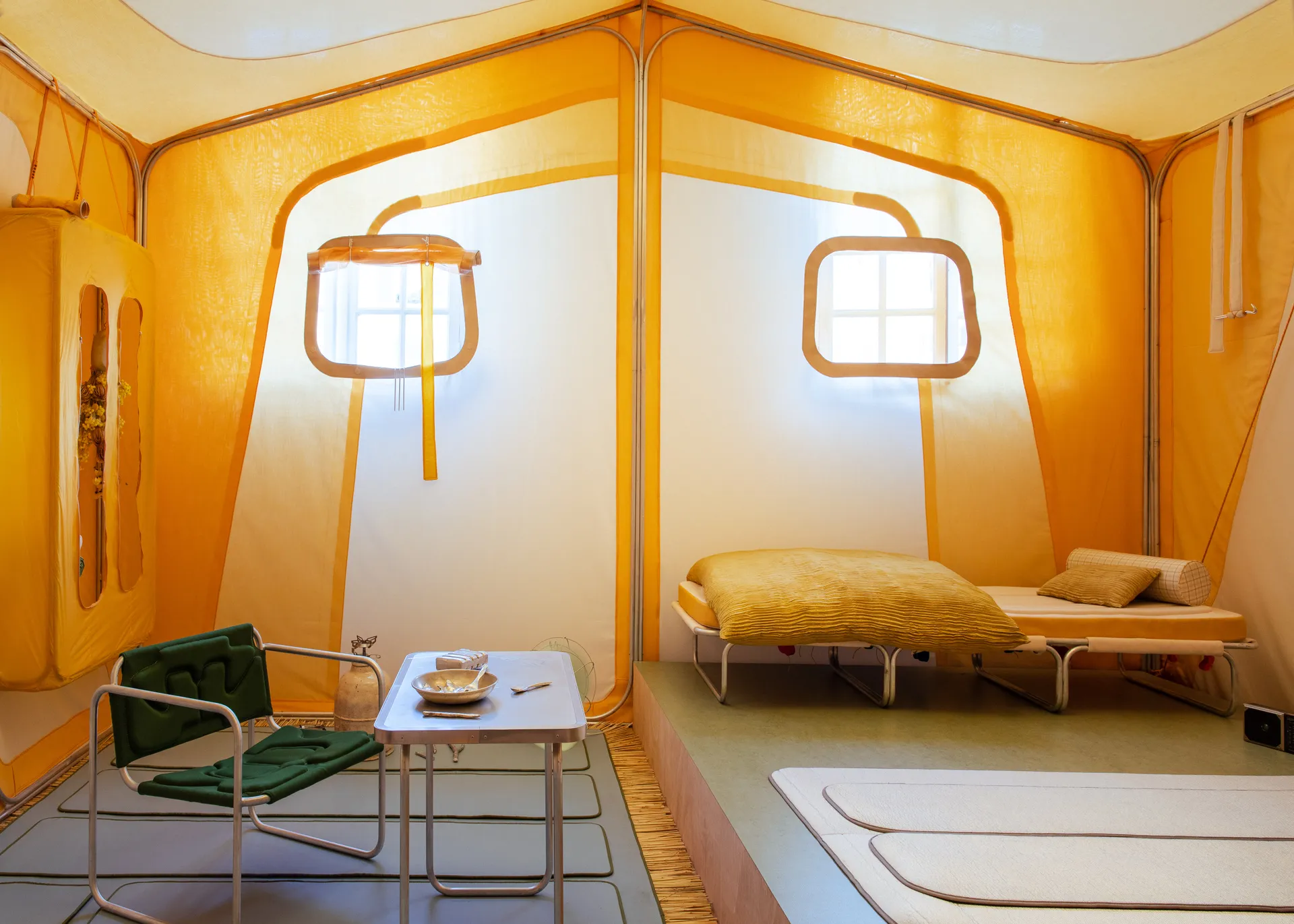
Their installation Sardine Sardine pays homage to summers spent camping in the south of France and offers a nostalgic approach to technical camping equipment. Oltra and de Taisne spent their teenage years travelling across the country over the summer, and it is their first-hand experience of camping culture that they want to celebrate through their work. Sardine Sardine features an orange tent with net-covered windows, sewn by Au Fil de l’Eau, a nautical saddlery from Marseille, using Kvadrat fabrics and supported by an aluminium structure.
Inside the space are camping essentials such as a camping bed made of a tubular aluminium structure and quilted mattress, a table tray (embossed with aniseed as a homage to the Mediterranean), and a green quilted camping chair whose design is inspired by technical backpacks. The tent’s floors reference old caravan floors and feature recycled wood and lino, with a floor mat created in collaboration with Nona Source.

Also made by Relax Factory with a tubular aluminium structure by Apsara Creations, the camping bed features a quilted mattress whose pattern references inflatable mattresses. The wrinkly texture of the duvet and cushion is inspired by freshly unwrapped sleeping bags, and they are made of organic pleated silk tinted with St John’s Wort flower
The designers also created a freestanding tripod coiffeuse, featuring a polished aluminium mirror, and another smaller rear-view mirror recycled from a caravan and a tray with hooks. Hanging from the structure is a water bag made of reflective fabric and featuring a second-hand tap. Beyond functionality, small amulets (cast in the shape of fork, spoon and knife but also ravioli and a lighter) were created by designer Olga Flor, who also made a buckle in her distinctive raw style.

The coiffeuse, featuring a tripod, tray with hooks and central polished stainless steel mirror made by Apsara Créations. The second-hand, extendable rear-view mirror comes from an old caravan. The reflective water bag is made with second-hand reflective fabric and tap, taken from a 1940s water vessel
‘The constraints of camping, such as transport and lightness, are a great source of inspiration for this project, as they lead to inventions that take everyday objects out of their initial formats,’ explain the designers. To create their project, the pair researched camping magazines from the 1970s to immerse themselves in the unique aesthetic of the movement, and looked at Jo and Roger Tourte’s book, À pied autour du monde: trois ans de camping for further inspiration.
‘Sardine Sardine tells the story of two campers who have amassed in this large, warm tent, all sorts of objects that have lived through several trips before them, and others that they have imagined for their pleasure and comfort.’

The camping table features aluminium marquetry with a pattern that pays homage to the aniseed drinks of the Mediterranean, anodized by designer Charles Gateau. On the table are a series of amulets created by artist Olga Flor, including cutlery and ravioli, presented in a vintage plate

Buckle by Olga Flor

Made of recycled wood from materials left over from Design Parade and covered with a green lino made of 97% linen from Tarkett France, the installation's floor is inspired by old caravan designs. The floor mat was made in collaboration with Codimat Collection with a fabric from Nona Source

Cupboard made of recycled parachutes

Inside view of the tent

Tent details

The camping gas is a reference to the ritual cooking food outside. Here, it becomes an enamelled stoneware sculpture, made at the Beaux Arts de Toulon, who gave the designers access to the kiln to create the piece. Sticks and lighter are by Olga Flor
INFORMATION
Sardine Sardine is on view until 30 October 2022 as part of Design Parade Toulon
ADDRESS
Ancien Évêché
69 Cours Lafayette
83000 Toulon, France