
You might remember Prince as many things: one of music’s most thrillingly talented and innovative stars; a polymath who created his own artistic HQ Paisley Park to realise the extent of his ambitions; a symbol both figuratively and, for a short name-change period, literally, who still defines the colour purple. But for Steve Parke, Prince was both a boss and a friend – a man who offered him the chance to expand his own artistic remit and was notably generous with the opportunities he gifted to those around him.
Parke first began working with Prince aged 25 during the rollout of his 1988 album ‘Lovesexy’. Having shown some of his artwork to a member of Prince’s touring band, he was offered the chance to design part of the stage set for the video of single ‘Glam Slam’ and was then taken into the fold, designing T-shirts, helping with creative odd jobs and, later, painting what would become the sleeve for 1990’s ‘Graffiti Bridge’ LP.

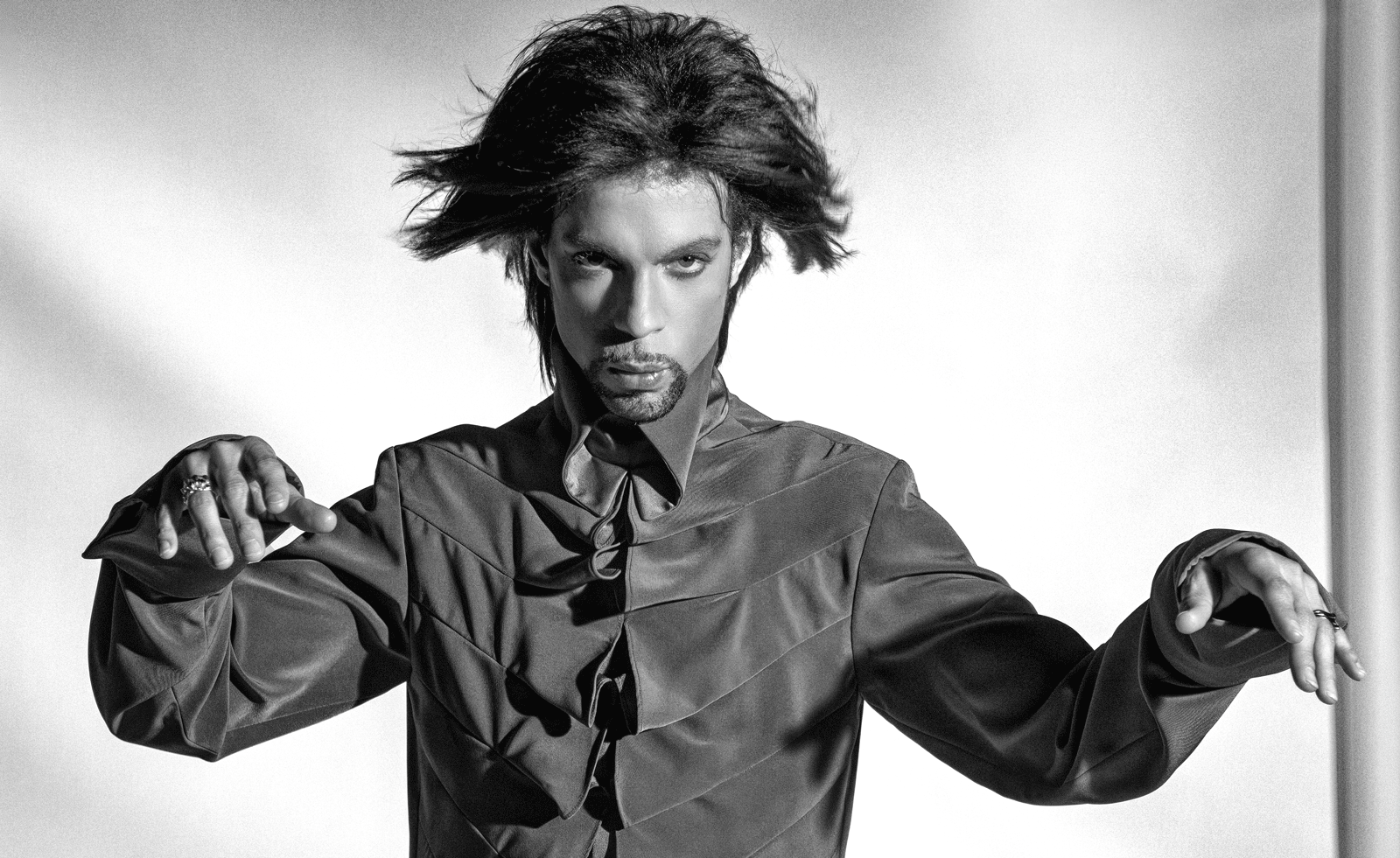
'We learned on the job, for sure,' Parke recalls. '[Prince] would say, ‘If you can do this, I wonder if you can do this?’ And he would ask if you'd want to try it. That was pretty amazing because, when I look back on it, I don't know too many other musicians at his level at that time who would have done that.'
One such opportunity came in 1996 when, intrigued by the slowly proliferating availability of the still-burgeoning digital camera, Prince asked Parke – who already had experience in analogue live music photography – to test out the new technology with him. Already ensconced in the inner circle of Paisley Park, the shoots would be spontaneous and on the fly; a pair of artists experimenting with the immediacy of working digitally in real time. 'We worked by the seat of our pants, we didn’t really employ traditional techniques,' he explains. 'He was very enamoured with the idea that we could just shoot and he could see it right away, so the casualness [of the photos] came from the fact that we could just do it. It's like having a cell phone now – you take a ridiculous number of photos; way more than you would if you were using film. That's what was different about having this immediate feedback. It gave him a lot of freedom to just try things.'

Prince and Mayte at their home in Marbella, Spain. 'Prince and Mayte with one of their dogs, Mia, posing on the piano. Mia was quite the trooper that day. I loved the light coming from all the windows and doors in this shot.'

Playground at Paisley Park Studios. 'The day we shot here, we ended at the playground in front of the studio, which had been intended for Prince and Mayte’s child and, as Prince told me, also for children of other employees at Paisley Park. Sadly, their child did not survived. I noticed his overall tone shifted dramatically to be more somber when we started shooting in this area.'
Aside from a handful of images that were selected as promo shots, most of these pictures have remained unseen until now. But in his new two-volume book Prince: Collected Photographs, Parke throws open his extensive archive to let the world into the inner workings of the legend’s visual process. There are photos of Prince at his Paisley Park home and with his first wife Mayte Garcia and dog Mia; others show him messing about at a children’s playground, or in different outfits that he’d cycle through in the same shoot, trying to find the vision that clicked.
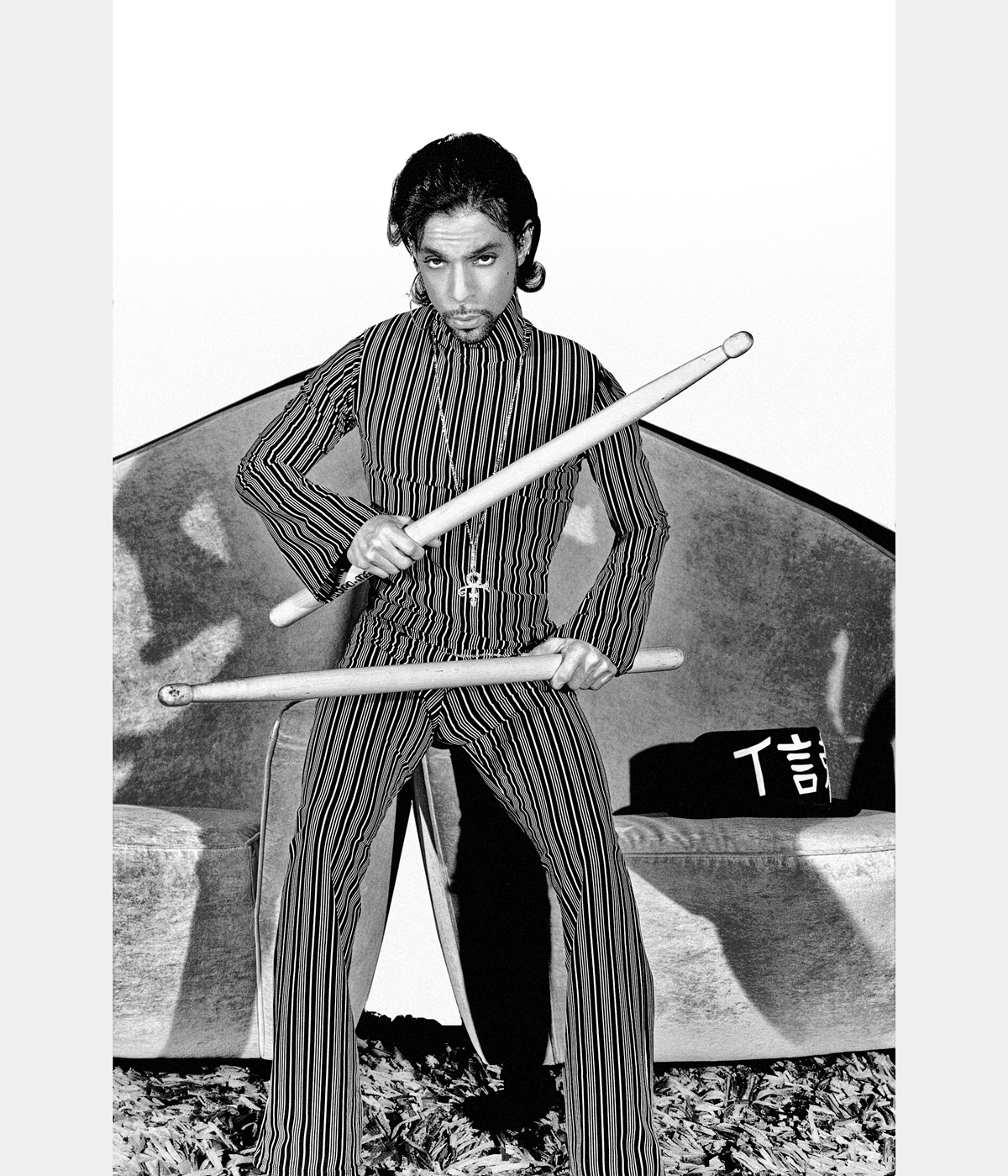
Importantly, all the images are ones that Prince – who passed away in 2016 – had OK-ed at the time. 'I feel confident in sharing them because these are all things he approved,' Parke notes. It means that, a decade after Prince’s death, and having spent significant time debating how best to share the work (the first volume is presented in black and white as a work-around for the colouring issues that they faced by shooting in such an off the cuff manner), fans are now able to get a glimpse of the notoriously meticulously and aesthetically-minded artist in a more casual setting. 'It was just the two of us and there was no outside pressure on any of it,” says Parke. “A lot of the shots didn't have a deadline or a specific purpose, so I definitely see the work reflecting more of the person I would see on a daily basis rather than the rock star – even though there are those pictures too.'

Paisley Park sound stage. 'On the set of the video shoot for ‘The Greatest Romance Ever Sold’. Every move was its own artistic composition; I was lucky to be there to capture it.'
Parke’s favourite shots in the collection are from a day spent with the artist at a local arboretum. The pictures are casual and intimate - a snapshot of a moment that the photographer recalls fondly. 'I think that’s the only time I can think of when it was just the two of us with no-one to pull him away. Anytime we were in the studio, his brain would be in all the other things he had going on. But when we were out in the arboretum, there were no cell phones and nobody was going to bother him. It was a beautiful day that sticks in my mind just because it was so unusual on so many fronts,' Parke remembers.

Minnesota Landscape Arboretum, near Chanhassen. 'Part of a series shot here in the fall. He told me to grab my camera and we hopped in the car and he drove us to someplace I had never been before. Clearly, he had spent a fair amount of time here because he knew exactly where he wanted to shoot and then we had some time to wander around and find other places. It is probably one of my favourite shoots because of the relaxed nature of the entire day.'
And while the hundreds of images shown in Prince: Collected Works speak to the hefty expectations at Paisley Park ('You were put through the ringer a little bit with the number of hours you were awake and the amount of stuff you were expected to produce,' Parke laughs), the photographer’s main takeaway, having spent the last years trawling his archives and remembering his storied time under Prince’s employment, is of how much the artist cared about putting the time in. When most people were sleeping on the advent of new technology, Prince was the one testing the waters, and working out how to use it to his advantage.
'He didn't take his skill set for granted. He worked at it. He pushed it,' says Parke. 'He is one of the hardest-working people I've ever met and I’ve worked with some pretty hardworking people. The difference with Prince was that he put the work in and a lot of people don't.'
Prince: Collected Photographs is published April 14th via ACC Art Books.