Phoebe Boswell’s ‘Art on the Underground’ dives into why the majority of Black British adults don’t swim
At London’s Notting Hill Gate and Bethnal Green Underground stations, Phoebe Boswell explores a complex relationship with water
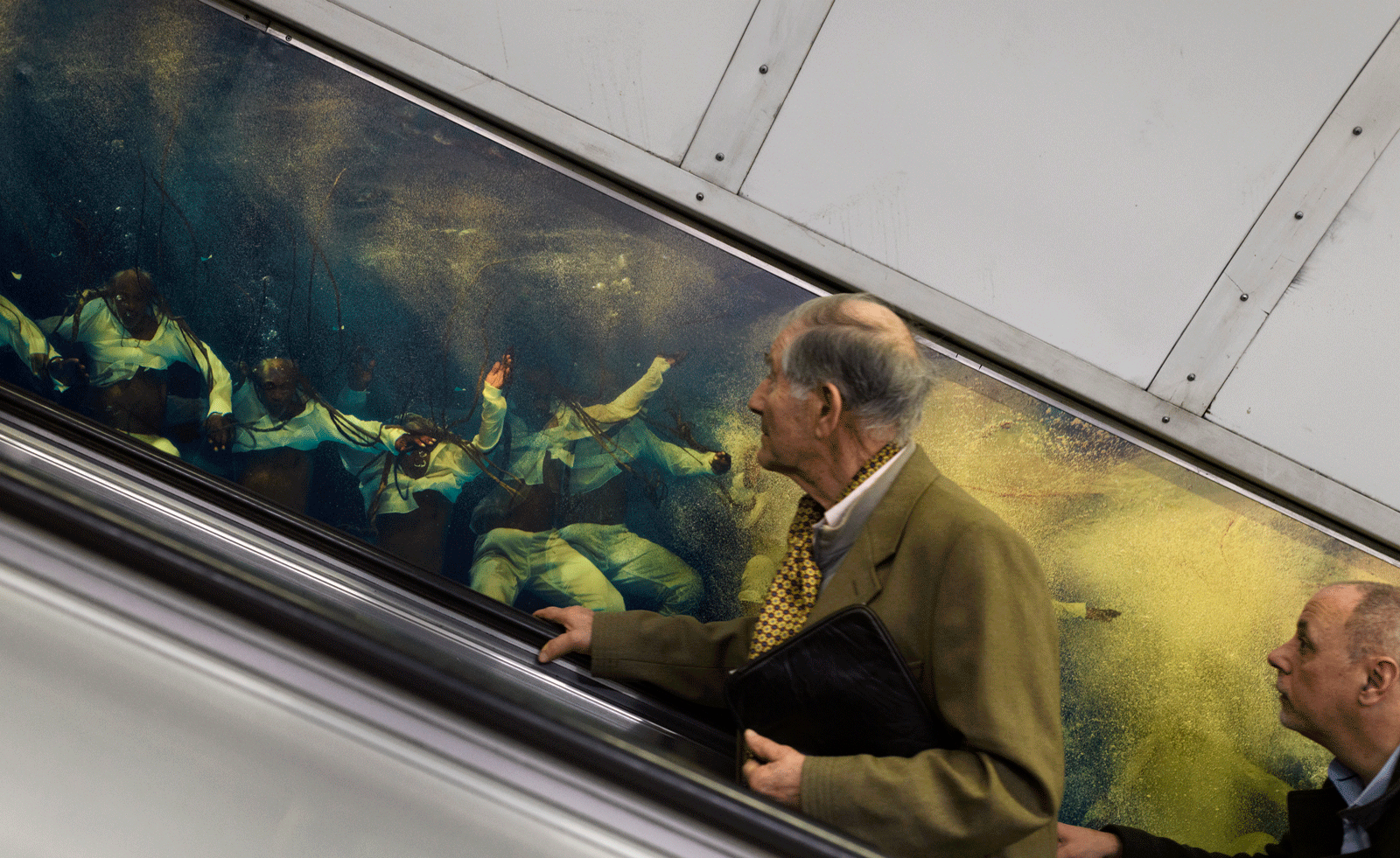
At Bethnal Green and Notting Hill Gate stations, aquatic artwork winding its way up the escalators is making commuters pause. The work is by artist Phoebe Boswell, who was commissioned by Art on the Underground to explore the possibilities of the subterranean space.

‘we move through scales of blue’ by Phoebe Boswell
For her commission, Boswell was keen to dive into a discovery she had made, that 95 per cent of Black British adults don’t swim, a question enmeshed in generational trauma, a significant lack of representation and underlying structural inequality. After a public call-out, Boswell asked Black subjects if they would be willing to be photographed underwater, moving in response to prompts.
The results, when viewed together, as you ride the escalators down into the Underground labyrinth or back up to the city streets, are immersive, a stop-motion of subjects moving through water.

Phoebe Boswell
Boswell has long been fascinated by the dichotomies of water, she says. ‘Bodies of water hold histories and narratives of our migrations, both forced and otherwise, upheavals, violences, trauma, tragedy – and yet water is also healing. It is [an] incubator, [a] womb, we float in water, it holds us up.’
‘Water, as a liminal site of non-citizenship, is a place to contemplate what liberates outside of land-bound notions of belonging. And aren’t we, too, simply made of water? We are water’
Phoebe Boswell
It can be wild, ungovernable, she adds. ‘It does not care for us and our tiny stories. And yet it connects us geographically, it is the space between here and there, between territories of land and rights and borders, where manmade constructs of citizenship and ownership govern who is treated well and who is not, who is claimed and who is not, who can claim and who can not, who is invited in and who is kept out. Water, then, as a liminal site of non-citizenship, is a place to contemplate what liberates outside of land-bound notions of belonging. And aren’t we, too, simply made of water? We are water.’
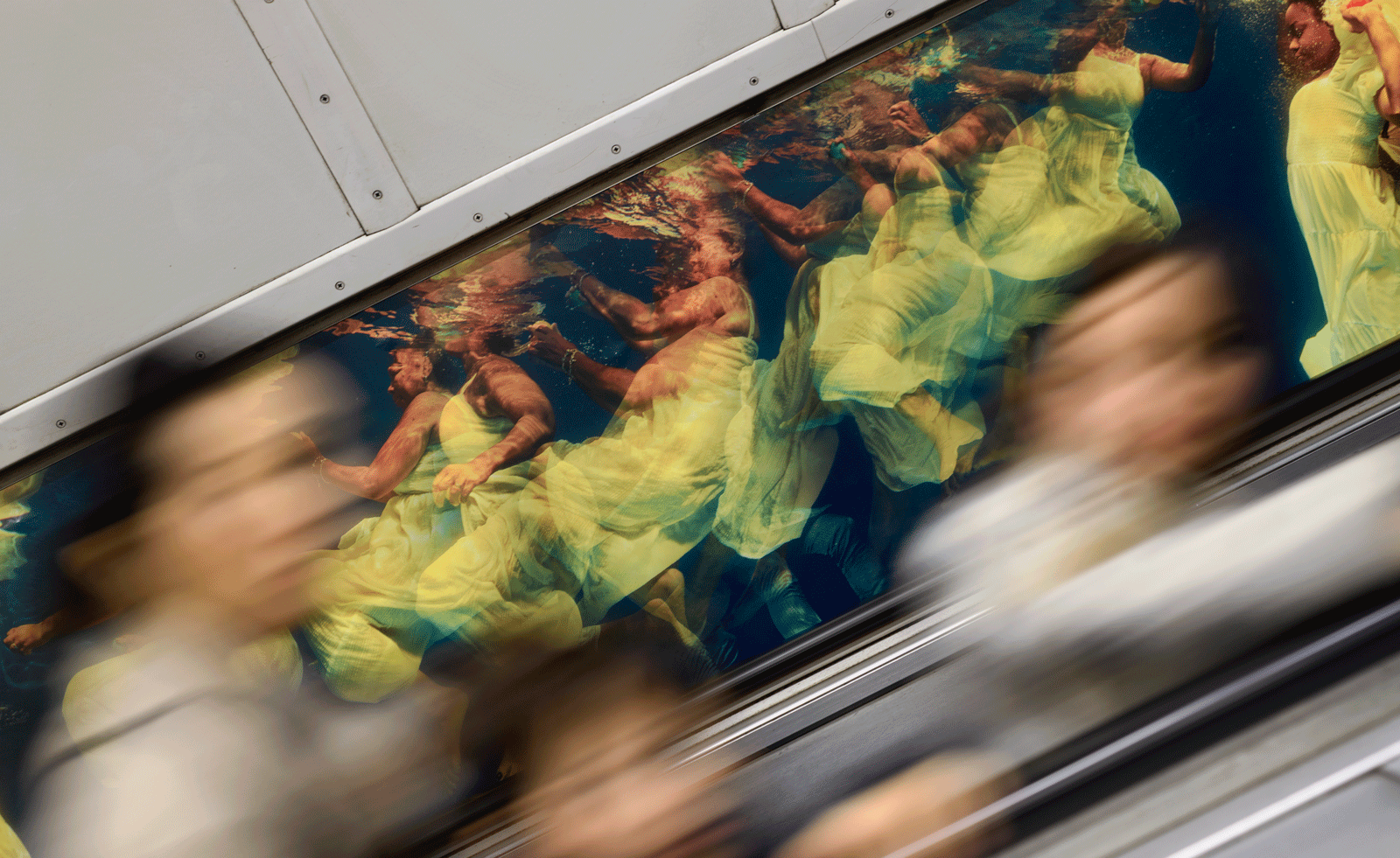
Over two days, she explored the ways we see water as both sanctuary and resistance, working with those who have a strong relationship to water. ‘The way it was set up, I could see them from the underwater booth where I was standing with the camera crew, and they could hear me in the water through a mic, but couldn’t see me. So already, there was a lot of trust-building taking place. I imagine it must have felt quite private and also somehow interpersonal at once, and watching it felt like a visual poetry taking form and making itself known.’

‘we move through scales of blue’ by Phoebe Boswell
‘As the UK contends with ever-tightening rules, fears, and prejudices around the freedom of movement, particularly for Black and brown people, I wanted to make something directly for us, to remind us that we are here, and we are fluid, and, like water, we will always be free’
Phoebe Boswell
Swimmers responded to Boswell’s prompts, while also interpreting them in personal ways that surprised her. ‘It became about loosening my own directions and searching for the thing that resonated most in each person, whether it be play, or memory, or longing; floating, or falling, somersaulting, splashing, stirring the water, or trying to be as still within it as possible. Each swimmer brought their own source, as it were. And yet I also noticed the gestures that inherently linked them all, the moments where their bodies unknowingly echoed or mirrored each other.’ In these very human instincts, Boswell saw the work in the context of the art-historical canon, which informed the composition of the panels that encompass the final work.

‘we move through scales of blue’ by Phoebe Boswell
The works, covering the 20m span of the escalators, bring a mystical element to the mundane. ‘I was immediately excited by the idea that while the artwork itself would be static, the audience viewing it would not be. On a wider note, as the UK contends with ever-tightening rules, fears, and prejudices around the freedom of movement, particularly for Black and brown people, I wanted to make something directly for us, to remind us that we are here, and we are fluid, and, like water, we will always be free.’