Tate Modern restores Frida Kahlo to her rightful place in art history
In a major new exhibition, ‘Frida: The Making of an Icon’, Kahlo’s work is presented alongside that of her peers and later artists influenced by her legacy
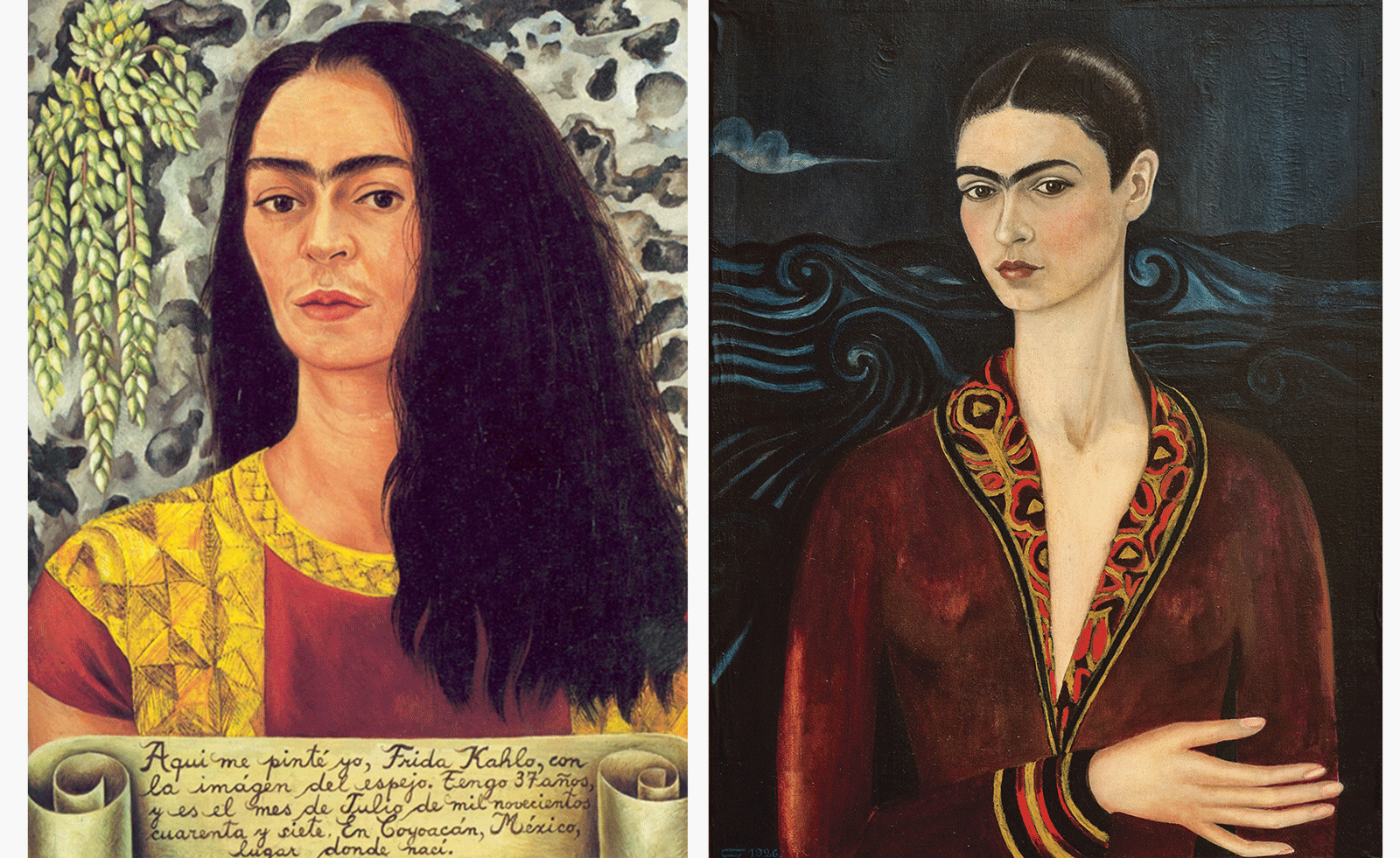
Frida Kahlo’s reputation precedes her. Even those who aren’t familiar with her work will recognise her ubiquitous portrait, the aura of which has been in danger of eclipsing her work. It is an oversight Tate Modern is keen to rectify with the major new exhibition, ‘Frida: The Making of an Icon’, which pairs Kahlo’s work with that of her contemporaries and later artists, including Kiki Smith, Judy Chicago and Ana Mendieta. The move cements Kahlo’s place in the art canon, and it seems appropriate that an artist so taken over by legend and myth should share exhibition space with those who respect, acknowledge or have been inspired by her.
It is a shame Kahlo’s work has been outshone by her celebrity, as, in its strikingly surreal composition, it is sharply emotive (although Kahlo rejected the surrealist label itself). She created around 150 works in her lifetime, a third of which were self-portraits. More than 30 of these representations are here, tracing the way Kahlo’s self-perception developed, fractured and rebuilt itself throughout her lifetime, running parallel to the health troubles that plagued her.

Mary McCartney, Being Frida, London 2000, featuring Tracey Emin
Born in Mexico City in 1907, Kahlo established an aesthetic entirely her own, after a difficult start that saw her suffer from polio as a child and, later, chronic pain for the remainder of her life following a near-fatal bus crash. It left her fragmented, a sum of her political, physical and spiritual sides that united to create a magnetic private and public persona.
This fluidity takes shape in the portraits in the exhibition, and we vividly see Kahlo secure in her Mexican identity, documenting her experience as a disabled woman, commitment to social activism and influence on LGBTQI+ art.

Frida Kahlo, Still Life (I Belong to Samuel Fastlich), 1951. Private Collection
Despite André Breton’s identification with and deep admiration for the artist – he called her work ‘a ribbon around a bomb’ – Kahlo consistently rejected surrealism, the movement he co-founded, as a definition of her art, arguing her works were rooted in reality, rather than dreams. Still, many works in Tate Modern’s show overlap with the surrealists’ fantastical view of life, intertwining religious motifs and folklore and fraught with natural imagery – from spider monkeys to tangled vines and thorns – symbolising both the endless pain and deep spirituality that accompanied Kahlo throughout her life.
‘Frida: The Making of an Icon’ is at Tate Modern from 25 June 2026 until 3 January 2027, tate.org.uk

Julien Levy, Frida Kahlo, 1938

Diego Rivera, Portrait of Frida Kahlo, c.1935