They are, in the words of their frontman, 'that video band'. But now OK Go – the indie-rock group rightly fêted for their jaw-droppingly innovative pop videos (the Grammy-winning ‘Here It Goes Again’, ‘Needing/Getting’, ‘This Too Shall Pass’) – are also That Album Packaging Band.
After a lengthy hiatus (because kids, the pandemic, a co-written/directed film called The Beanie Bubble, middle-aged life), the LA-by-way-of-Chicago fourpiece re-emerged in spring last year with And the Adjacent Possible. It had been 11 years since their last album, so OK Go came hard and they came extra-inventive.
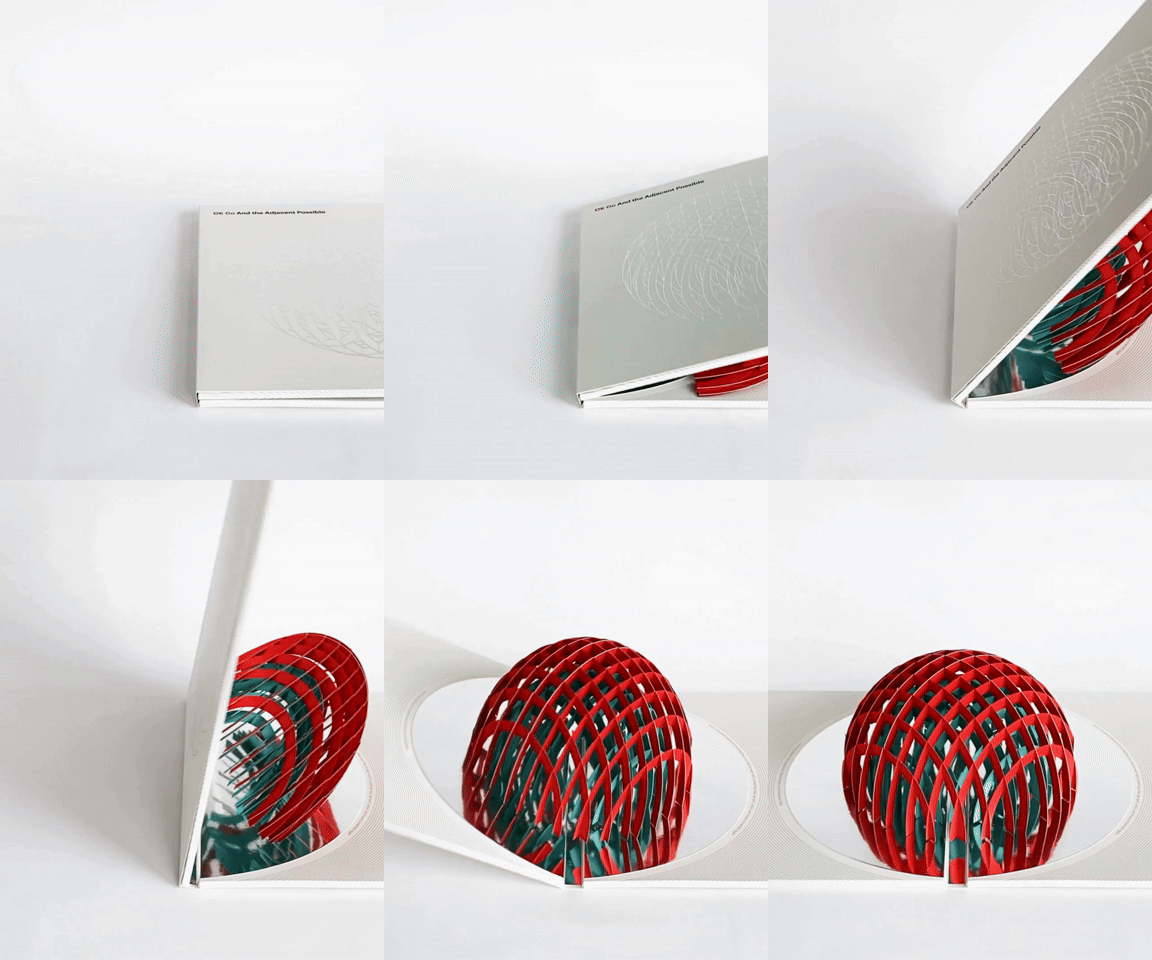

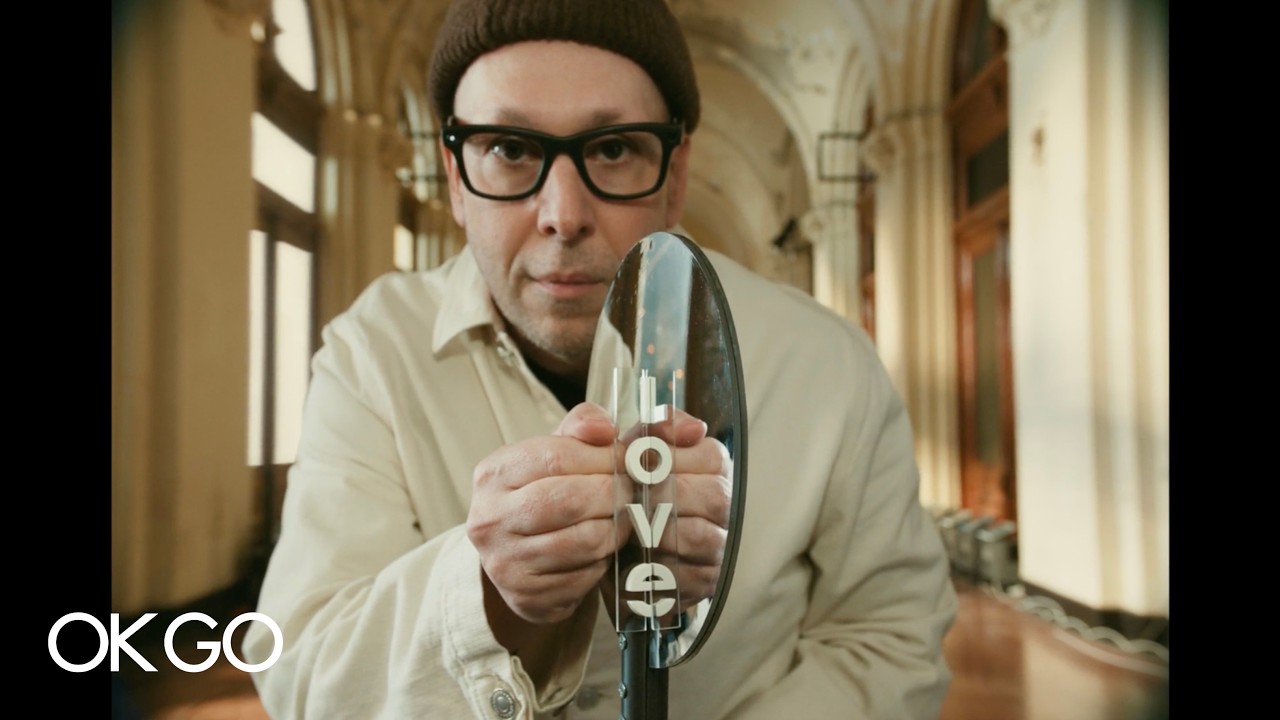
The video for the single ‘Love’ was shot in a Budapest railway station using 29 robots, an infinity of mirrors, precision choreography and sleight-of-hand costume changes, and was another one-take wonder. Albeit that take was the 37th. But theirs is a love you can hold, too. The vinyl of their fifth album comes encased in an elaborately engineered 3-D sleeve that speaks to the lyrical themes of the album, and was designed in partnership with a 'sound as a medium' artist Yuri Suzuki, London multi-disciplinary design studio Yard, and the Vietnam-based paper experts of greetings card company Lovepop.
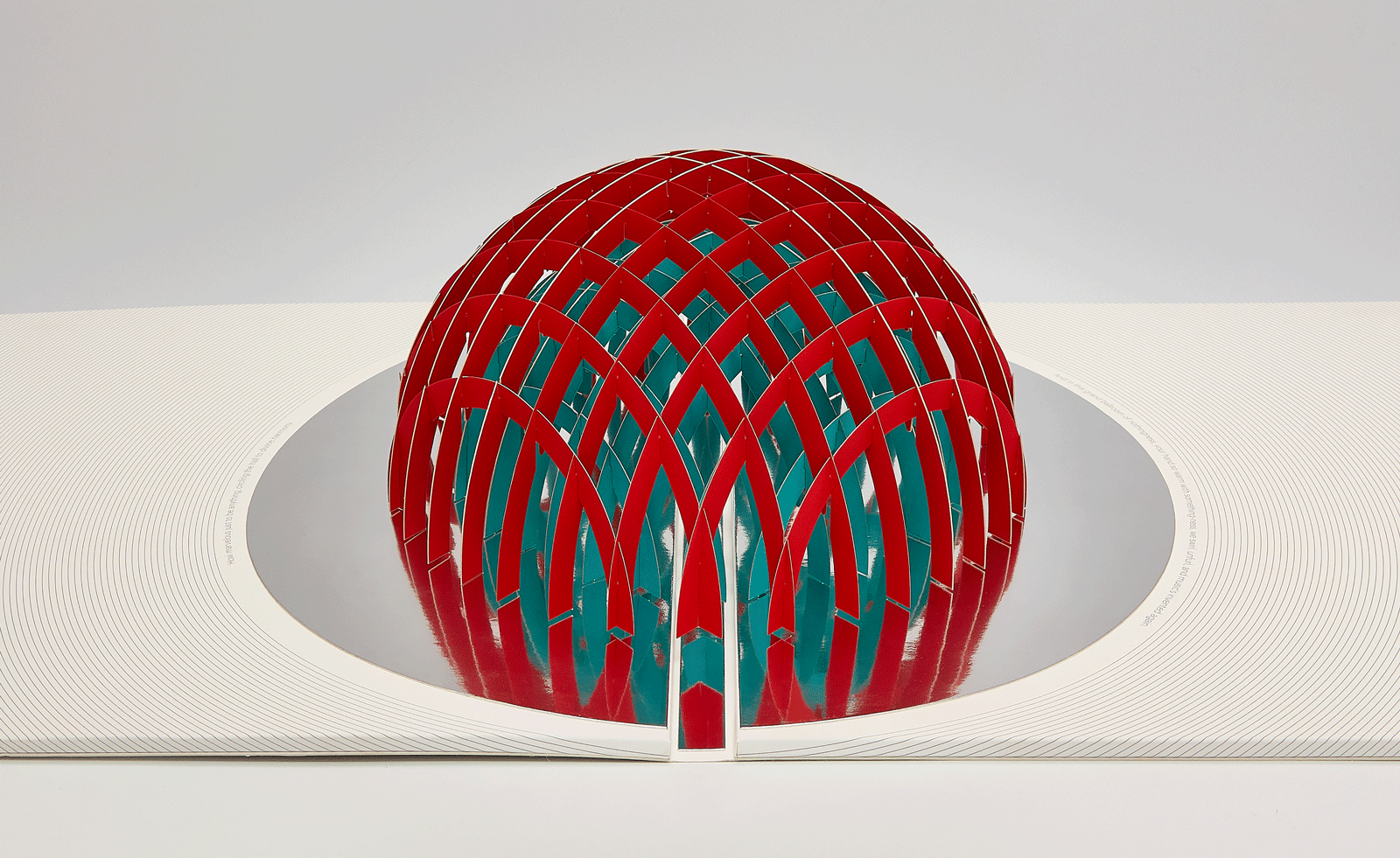
'It's a sliceform sculpture,' explains singer Damian Kulash, 'a pop-up sculpture made of a few dozen ribs that create two nested spheres. They're actually half spheres, but there's a reflective background on it, so you get the reflection, completing the sphere itself. What it means is that you've got a whole bunch of small, disparate, two-dimensional elements that, when pulled together, create an unexpected three-dimensional world.
'This bunch of songs is all about the magic in the spaces between,' continues Kulash, a big-thinking musician who’s as expansive as And the Adjacent Possible’s gatefold sleeve. 'It sounds so cliché when I hear myself say it out loud. But all of the real meaning, all of the real alchemy of life – and of art in life – is in these strange connections. You put two notes together and somehow they turn into an emotion.'
In other words: position two things together and as if by magic – or by mathematics – you get the opportunity for a third thing 'on a completely different dimension. You get the adjacent possible. That's literally what the title is about. So we wanted the album package to do the same thing. To take the simplest elements and make something that seems impossible.'

OK Go's And the Adjacent Possible vinyl
Of course, this took its own version of 37 takes, with 'dozens and dozens of iterations'. That cost some considerable time, although the band are used to that: 'Making the elaborate videos adds a year or two to each of our album cycles.' But did that cost OK Go – who run their own record label – money, too? Keen student of rock history Kulash will be well aware of the lore of New Order’s ‘Blue Monday’ 12-inch: a sleeve so intricate that every time they sold a copy, it cost their label Factory.
'Yes!' he replies, laughing. 'We worried about that with this! It is not cheap. But we realised that the community of people who buy OK Go records on vinyl are dedicated. [It would be different] if we were Taylor Swift and had to make sure that we were dealing with the bins in Target and exactly how many you can fit in one of those bins to make sure that your cost overruns aren't [excessive]. But we're not dealing on that scale.'
That said, 'it does get sold in big box stores. But we decided it was worth it to say: instead of this being a $38 record, it's a $44 record. But also, if you want to hear these songs, they're damn near free on streaming services. And if you want this art experience, it felt like it was OK to have it be a slightly more premium object.'

That premium object quickly sold out of its initial pressing of 3,000. And OK Go fans weren’t the only ones who thought it was worth it: the Grammy Awards recently handed the band nominations for Best Music Video for ‘Love’, and Best Recording Package for And the Adjacent Possible.
Sure, says Kulash, a win in either category would be marvellous, albeit mostly in terms of recognition for their valued collaborators. But the art is itself the prize.
'Our feeling with this record was: we're not trying to get a copy in every set of hands in the universe. What we want is that every set of hands that gets it, falls in love with it. It's a sculpture that only a few people are going to get. And when they do, we want it to be their favourite album cover they've ever held. That was more important than our profit margins at the end of this record cycle.'
The 2026 Grammys are on 1st February