
London-based electronic musician Danny L Harle has always been driven by a simple, defining mission statement: to make music that sounds the way he feels. Having cultivated his own distinctive palette for well over a decade, spanning everything from hardcore to rave, pop and everything in between, his sound remains virtually impossible to pigeonhole.
Harle’s career-long commitment to eclecticism has often manifested itself in ambitious visual world-building, too. Following a decade of digital maximalism through his association with the confounding electronic label PC Music, his 2021 album Harlecore evolved from a one-off local pub night into a global rave brand. In response to lockdown, the project was ultimately reimagined as a virtual interactive club environment, developed alongside VR artists Team Rolfes. Now he’s preparing to step out of the trappings of digital environs and into the physical world.
'The useful thing about Harlecore was the fact that it was a set in this kind of fantasy environment,' he muses. 'I was supposedly showing where the music was being performed in that… Here, there's maybe slightly more of an emphasis on images of an imagined process of the making of the music as well, but always with an emphasis on a necessary abstractness and atmospheric storytelling, rather than world building.'
Half a decade later, Harle has unleashed Cerulean, the album he considers to be his true debut – a voyage into sprawling sonic landscapes where speaker-blowing bass and euphoric trance collide with classical harmonies and tactile sound design. To that end, it’s very much a Danny L Harle project, not least because of its stark, striking visual components - even when the music comes first.
'A lot of the ways in which I made this album were a very concerted effort to not be high-concept,' he explains. 'I sat down and just made the music I wanted to hear. The album in its finished state would be my manifesto for music, really. Anything visual would come after that.'
What did follow, however, was a project that embodies the physicality of that music – a dreamscape, of sorts, built from and inspired by sculpture, decaying sea forts and the strange, lonely mechanics of video games. It’s every bit as meticulous and considered as what came before, with the same keen sense of playfulness that underpins everything he touches.

At the centre of Cerulean is artwork from Yuma Burgess, which sees the sculptor and designer transforming Harle’s homey recording studio at The Premises in London into something more reminiscent of a spaceship’s control room. Perhaps most impressively, the cover isn't a digital render; it’s a physical set built by hand inside a church in Dunfermline, Scotland where Burgess lives and works. Having recently relocated from London – a move he recommends to any sculptor in need of storage space – the church became the only place where a physical build of this scale could conceivably happen.
'I tell everyone to just go and buy a church in Scotland, because they're just insanely affordable,' Burgess jests. 'I spent a year visiting random churches in Scotland, which was a fun thing to do in itself. Whenever I did, I always asked who else was interested, just out of curiosity and quite often it would be other sculptors – specifically sculptors from London.'

'It’s almost like the picture existed before we took the picture,' Harle adds. 'We'd never really collaborated before, but he'd worked with Caroline Polachek, a frequent collaborator of mine. He came over and just knew all my references… I had the idea for the cover in a flash, and explained it to him.'
After a single phone call followed by a few references, Burgess returned with a digital painting on his iPad that perfectly encapsulated Harle’s vision.

Yuma's digital painting
'I suggested to Danny that he just come up for a couple of days to do the shoot,' Burgess explains. 'I had about a month and a half to chip away at the set. It was just a bit more relaxed than renting a studio for two days and panicking.'
The result was a three-by-three metre cube populated with an array of found ephemera, largely built from scratch or salvaged from the church itself. Burgess even repurposed a wooden font that sits in front of Harle on the cover.

'It was a funny process and I've honestly never done anything like it,' Burgess says. 'I usually just make a one-off singular object and I don't really do set design, so this was a bit different to what I'm used to - just going on eBay and looking at auction houses. We were approaching antique furniture places looking at props for film and stuff. As time drew on, I realised that there was quite a bit of stuff that suited the vibe at the church.'
Eager to supplement Burgess’ visuals, Harle and photographer Ronan Park sought out locations to shoot that looked like portals into another world. Inspired by one of Park’s photographs – a shot of the Matterhorn taken from a plane window – the pair set off in search of decaying sea forts off the UK coast – liminal spaces that are literally collapsing into the ocean.
'They're incredibly dangerous and it's very hard to charter boats to get to them,' he states. 'And that's where basically all of the visual material was created, other than the cover shoot, which was built inside of Yuma’s church. Those locations really kind of resonated with what I was thinking about.'
Harle also cites the literary influence of author Suzanna Clark’s Piranesi, a meditative journey into human nature, which quickly became compulsory reading for all of his collaborators.

Cerulean album cover
'I do think it's the best book I've ever read,' he enthuses. 'It just really seemed to hit on something that was absolutely perfect in relation to the album. It involves this island in the sea that's full of these marble sculptures that are sort of created by the human imagination, but it's also then a place that you can occupy and get stranded there. I found that to be a really interesting concept.'
Meanwhile, Andrei Tarkovsky’s Stalker served as a major influence on the project as a whole, both thematically and in the ways in which the director was forced to reshoot the movie on a shoestring budget, which ultimately cemented its reputation as a masterpiece.
'When you're forced to do something really quickly or on a low budget, it often produces a better result,' he posits. 'It just forces spontaneity and resourcefulness.'
Shirking conventional notions for music videos, Cerulean arrives accompanied by a visual companion directed by Paris-based filmmaker and visual artist Lillian Hardoineau. Across its 30-minute runtime, Harle performs against the backdrop of a fantastical, nautical rave base, surrounded by a curious cast of contemplative ravers, feline companions and masked antagonists.
'Lillian's approach to light, grading and his camera work was just like an absolute no-brainer in terms of choosing someone,' Harle states. 'There's such a sense of emotion just in the way he films a landscape, and that just worked perfectly with what I was trying to do.'
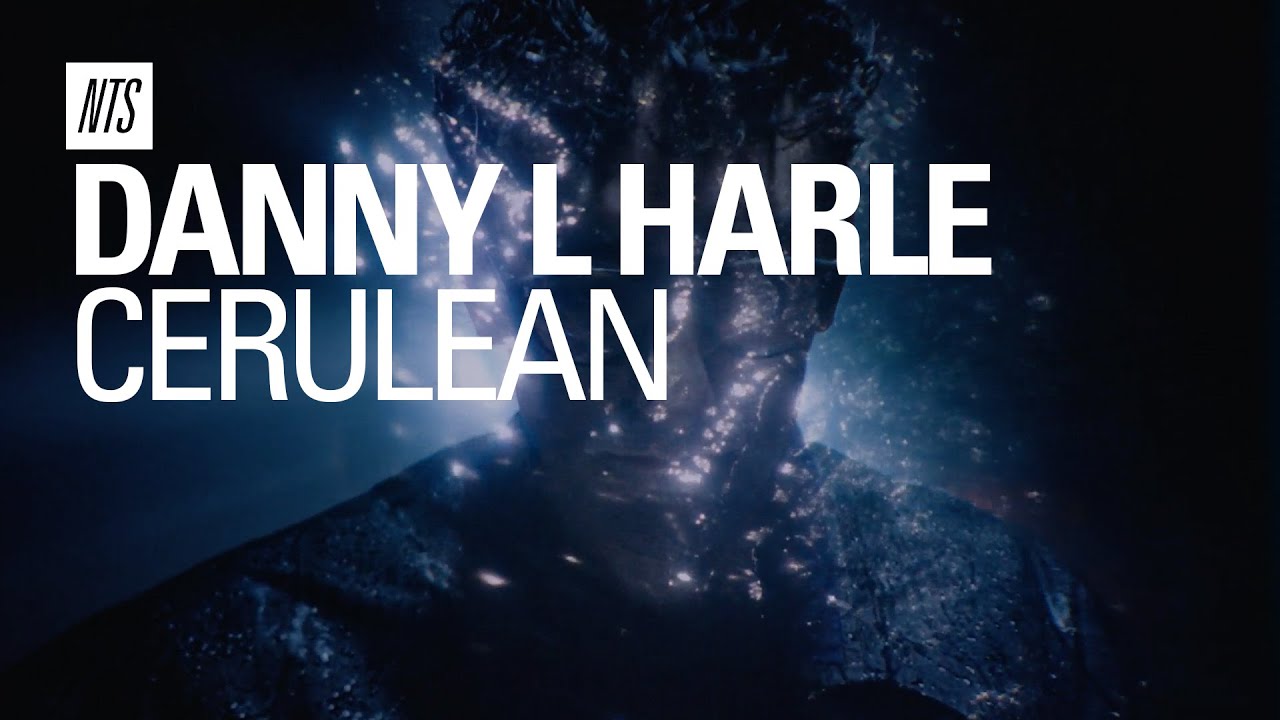
Cinematic and literary allusions aside, Harle initially pitched his idea for the live-action visuals with one very specific cultural reference in mind – Radiohead frontman Thom Yorke’s notoriously uneasy Boiler Room set.
'The thing that I found quite inspiring about it is that everyone's having their own response to the music,' Harle observes. 'It's not this collective thing, but there's still an overall atmosphere of positivity. I just think that's a really lovely thing, but I was interested in a more euphoric, melancholic version of that.'
Fittingly, in Harle’s imagined world, a rave is a place where one person might be dancing, while the person next to them is crying or lost in thought. It’s a collective of individuals, all having their own private experience in a shared space.
One of Cerulean’s most potent yet curious influences is a gameplay mechanic in the Dark Souls video game series whereby players catch glimpses of other people struggling through the same environments. Unable to communicate, they are nevertheless acutely aware of each other’s presence.
'This ‘alone together’ thing is very evocative,' Harle explains. 'You see these phantoms of other people who have gone on the same mission... everyone’s had this experience of going down the same path, but differently, and on their own.'
Harle’s fascination with gaming’s capacity to inspire communal experiences extends beyond merely playing them too. During a meeting with legendary game director Hideo Kojima, with whom Harle collaborated on Caroline Polachek’s song ‘On The Beach’ for the Death Stranding 2 soundtrack, their conversation focused less on technology and more on human connection. Harle was struck by Kojima’s genuine desire to use his craft to help people.
'I wanted to get quite nerdy about video game mechanics, but he bypassed anything technical,' Harle states. 'He spoke about how there has to be a hope for humanity in these games. We spoke about how in The Exorcist, for example, he loves the message from the preacher: ‘I am an adult and I will protect you as a child.’ To him, that is a very profound statement to make in that film… He's not a kind of game-obsessive making games - he's trying to help people in the only way he knows how, seemingly, and that is such a cool way of doing it.'
Similarly, a refusal to follow any kind of conventional blueprint is ultimately what makes the world of Cerulean so compelling. Whether he’s chartering boats to rusting sea forts or building interstellar cockpits in a church, Harle’s work is all about a DIY obsession with his own specific brand of unorthodox beauty.
'I’m just so involved in the way I do things and the way my collaborators do things,' he admits. 'I’m not aware of what’s normal at all. I don’t think there is a ‘normal’ with it. Whenever I write with a new person, they're like, "I've never written music like this before." I've just got quite a specific process for everything – basically learning how to make what I want to hear and see in the world. And it's maybe slightly unorthodox at times.'
In a landscape often dominated by slick, digital perfection, Cerulean stands out as a monument to that sense of creativity. After all, the most evocative worlds aren’t always built in a computer. Sometimes, they’re hammered together in a Scottish church, or discovered in the ruins of a collapsing sea fort – one ‘alone together’ moment at a time.
Cerulean by Danny L Harle is out now.
