How Luca Guadagnino and a daring show set helped Jonathan Anderson usher in a new dawn at Dior
Fashion, film and architecture came together, says Guadagnino as he and production designer Stefano Baisi reflect on working with Anderson for his debut, S/S 2026 Dior womenswear set

‘When fashion, film and architecture work together, it’s an empowering thing,’ says film director Luca Guadagnino, who explored the links between the mediums when designing the show set for Jonathan Anderson’s first Dior womenswear collection, for S/S 2026, which debuted last October. A collaborative project, it was the second time Guadagnino and production designer Stefano Baisi had worked with Anderson, who was the costume designer on Guadagnino’s 2024 film Queer.
Anderson’s brief for the show was for a standalone space that also acknowledged his respect for Dior’s history. Says Guadagnino: ‘The way Jonathan works is to involve people dear to him, pushing everybody to get to their limits. It’s beautiful to see that the space we created was really real – physical, massive, very architectural. It didn’t feel transient.’

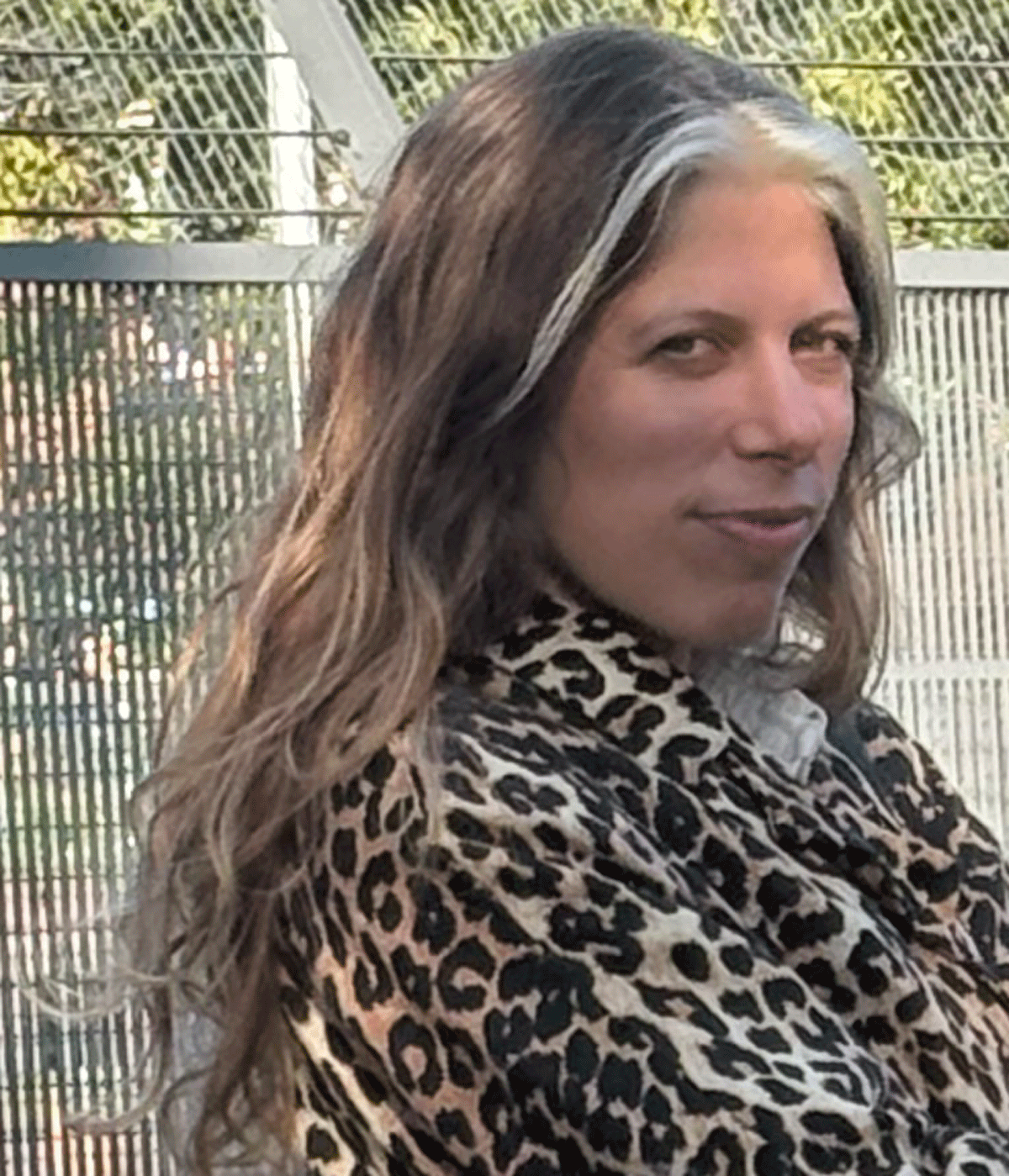
Stefano Baisi and Luca Guadagnino

The Dior S/S 2026 womenswear show space, featuring the inverted pyramid
‘The way Jonathan works is to involve people dear to him, pushing everybody to get to their limits’
Luca Guadagnino
The purpose-built space was dominated by an inverted pyramid that protruded from the ceiling, becoming a screen as the show began. On it, played a specially commissioned film by British director Adam Curtis, best known for his documentaries on power, politics and the media. Anderson was keen for the space to be monumental, a concept he introduced in the runway set for his S/S 2026 menswear collection for Dior in Paris, which drew inspiration from Berlin’s atmospheric Gemäldegalerie art museum. ‘There is always a lovely playfulness in what Jonathan does,’ says Guadagnino.
The womenswear show also responded to its location in the Jardin des Tuileries, opposite the Place de la Concorde and the Louvre. ‘We started to reflect on the axis that connected the Louvre and the Place de la Concorde, and on the idea of an iconic Paris landmark. The reverse pyramid was one of the topics we discussed, and that was the moment in which Stefano and I brought this architectural museum sensitivity to the place. And then – and this was a beautiful intuition from Jonathan – we thought of using the pyramid not just as decoration, but as the diamond upon which this video could be shown, letting you into the new era at Dior.’

The box that guests had received the week before the show, containing the show’s invitation

The inverted pyramid showed a film by Adam Curtis
The modernist backdrop was offset by the evocative narrative of Curtis’ film, which interspersed archival footage with his distinctive eclecticism. Clips from Dior’s history are juxtaposed against fragments from horror movies. Curtis keeps the anxiety cranked up throughout, ending abruptly on a pure white frame, signalling the clean slate Anderson is beginning at Dior.
‘I think the documentary-style way in which Adam works inspired Jonathan, showing a better way to communicate,’ says Baisi. ‘He has this big challenge of designing a new collection for a brand that has its own important history. He’s been very successful in writing his own vision. Using irony is the key to his success, and this also comes through in the lens of the way Adam works.’
Taken together, the film and the set confront Dior’s history, before turning the page to Anderson’s new chapter. ‘The idea of making a mini haunted mansion film – which is traditionally Anglo-Saxon Gothic, from an Anglo-Saxon designer and filmmaker – shows that the ghosts inhabit the past and the present, and it’s inevitable that we have to deal with those ghosts,’ Guadagnino says. ‘What was beautiful here was that not only did Dior go for this very evocative piece, but when the movie finished during the show, the audience had an incredible reaction to it even before the first look was out. It was very emotional and very strong.’
This article appears in the Wallpaper* March Style 2026 issue, available in print on newsstands, on the Wallpaper* app on Apple iOS, and to subscribers of Apple News + Subscribe to Wallpaper* today