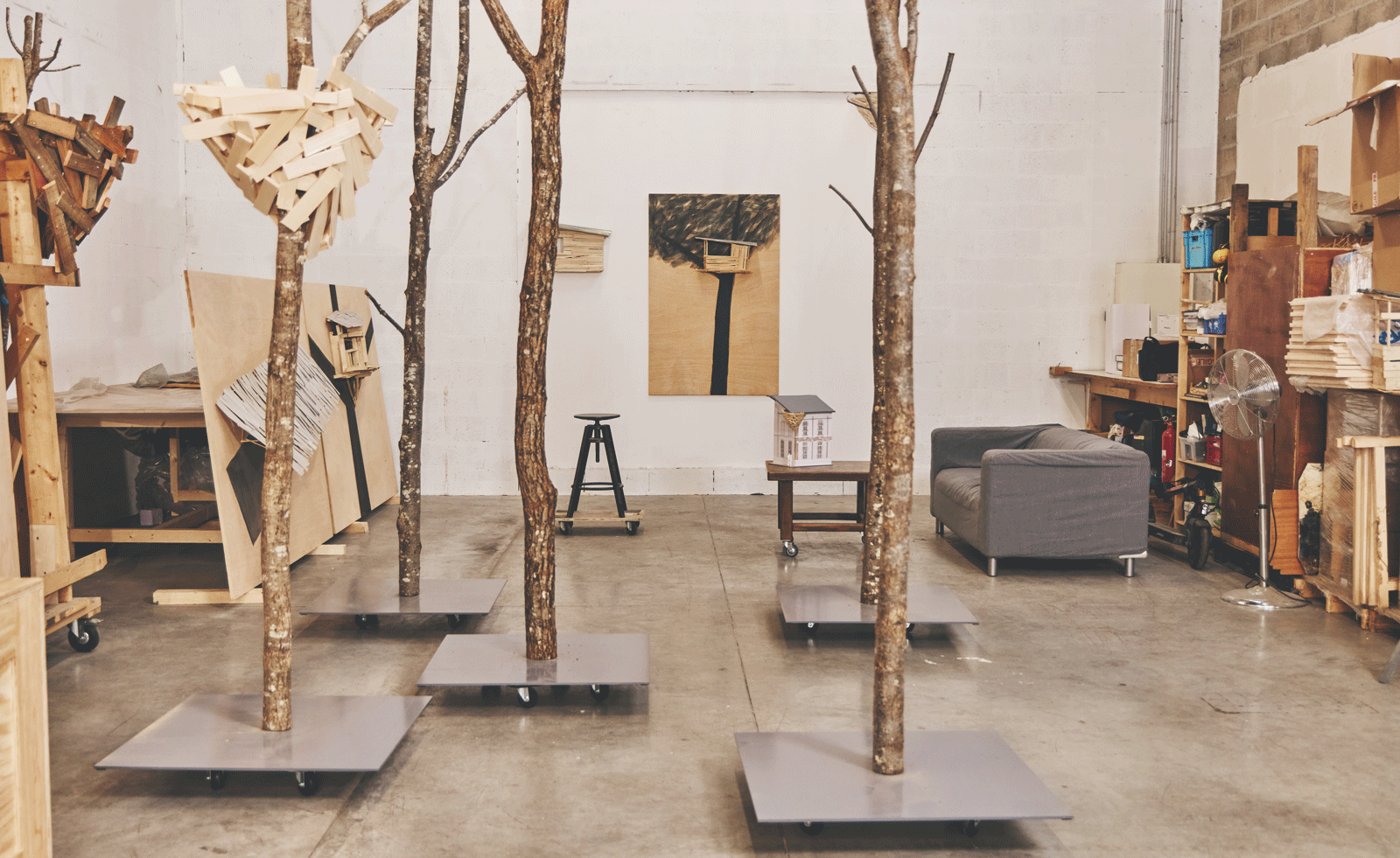
Tadashi Kawamata grew up in Hokkaido, Japan, where his father worked mining coal. This year, the celebrated artist is creating a permanent installation in Reims, France, where underground caverns contain champagne.
Conceived for Ruinart's 'Conversations with Nature' series, the installation comprises three artworks. One is an observatory, a wooden tower six metres high and shaped like an inverted champagne bottle, mirroring the cathedral-like chalk cellars where the company ages its wines. 'The cellar is a huge space that people can't see from the ground, so I really wanted to connect with a totally empty space, or a big kind of hole, on top,' Kawamata says. 'The people go up to the sky.'
Elsewhere, one of the artist's wood nests will cling to a corner of Ruinart's historical building, while a signature tree hut perches in the branches of a nearby tree.
Fabien Vallérian, Ruinart’s International Director of Arts & Culture, says he has had Kawamata on his wish list for years. 'For the Conversations with Nature, we look for an artist that is accessible to a large audience, but also very specific to us.'

Tadashi Kawamata shot in his Paris studio in November 2025
Ruinart and Kawamata are launching the collaboration this month with an installation at the Palais de Tokyo in Paris, including a tornado-shaped overhead structure inspired by the weather and the spider webs the artist noticed in the vineyards. At the same time, collectors can buy one of 20 three-litre Ruinart bottles in a wooden box Kawamata redesigned, with one corner sawed off and reconstructed from bits of wood.
Born in 1953, Kawamata did not come from a cultural milieu. He still prefers to hang out in cafés rather than museums. But he has always worked with his hands. As a child, he obsessively built little plastic fighter planes – the store-bought kits were meant to make one aeroplane, but he would find a way to build two. He wasn't scholarly, and painting seemed easy, so after high school, he applied and was accepted to the Tokyo University of Fine Arts. Tokyo impressed him with its speed and constant change, destruction and rebuilding.
At university, he discovered he was allergic to oil paint, both physically and artistically. 'I really wanted a different way to express my work, without a canvas or painting,' he says. One day after class, when he was alone, he took his easel and blank canvas and the other students' painted ones, and arranged them in the room – his first installation. The next time, he removed the canvas, leaving only the wood, his material of choice ever since.
This was the late 1970s, and few professors took any interest in what he was doing. But one did, along with some students, who pitched in to help. Kawamata started showing his work in apartments and galleries, eventually moving one installation out the window and onto the building's facade. By 1982, he was selected to represent Japan at the Venice Biennale.
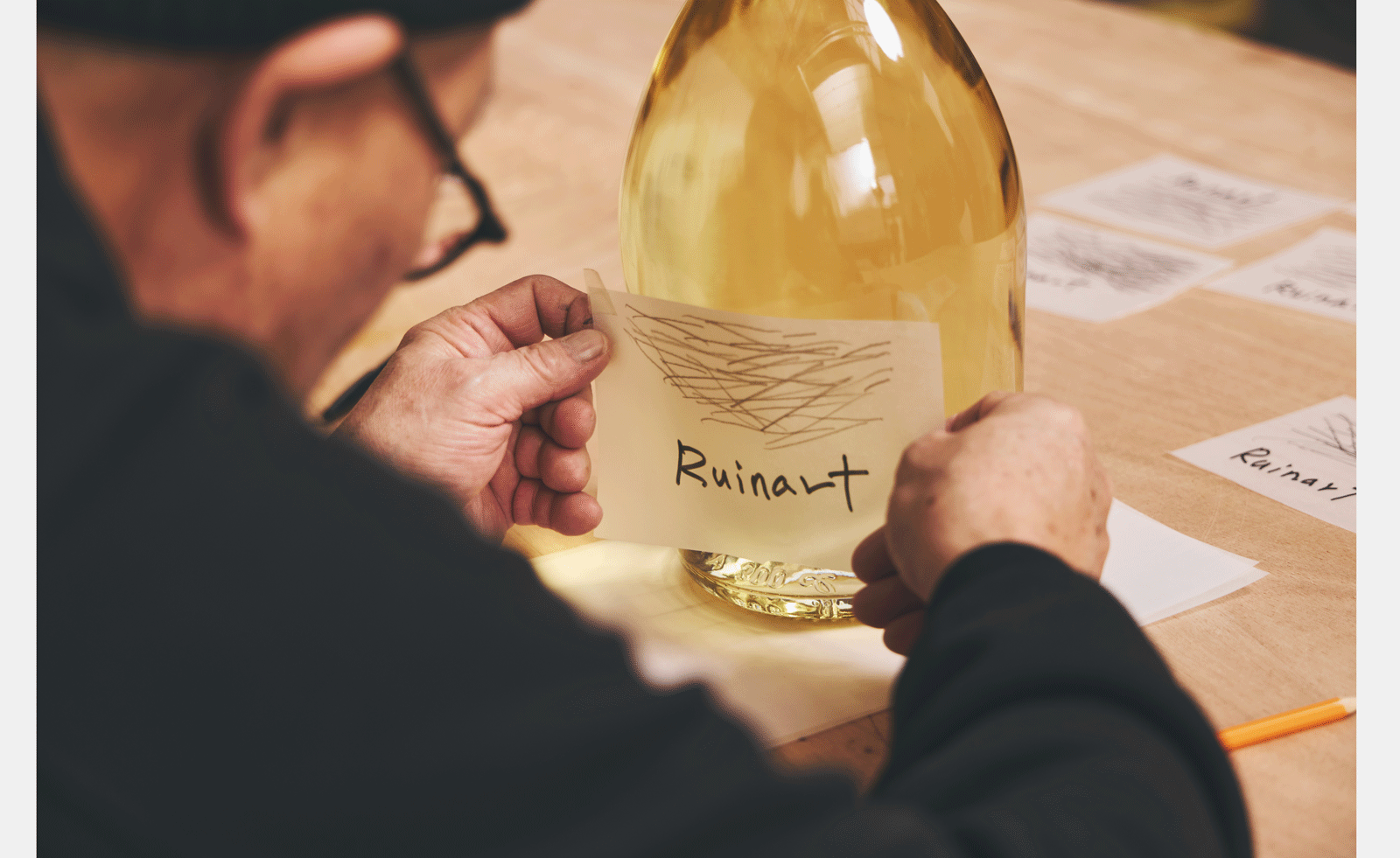
Ruinart x Tadashi Kawamata Limited edition Jeroboam Ruinart Blanc de Blancs
Two years later, while finishing his doctorate in Tokyo, he accidentally sawed off the tips of three fingers on his left hand. He used the insurance settlement to live for a while in New York, where he exhibited at PS1, created imitation homeless shelters, hung out at CBGB and rubbed shoulders with Basquiat and Haring. 'I got so much inspiration from graffiti and street art,' he recalls.
In those early days, Kawamata built temporary, in-situ projects that he would then demolish, carting the materials elsewhere to make something new – 'like a circus.' He gravitated to wood because it was handy and inexpensive, often using scrap or vegetable crates. He was an early recycler, simply because it was practical. 'When I was working in the 1980s, nobody was talking about recycling. I was just working. Now people always say to me: 'Oh, you are like an ecologist.''
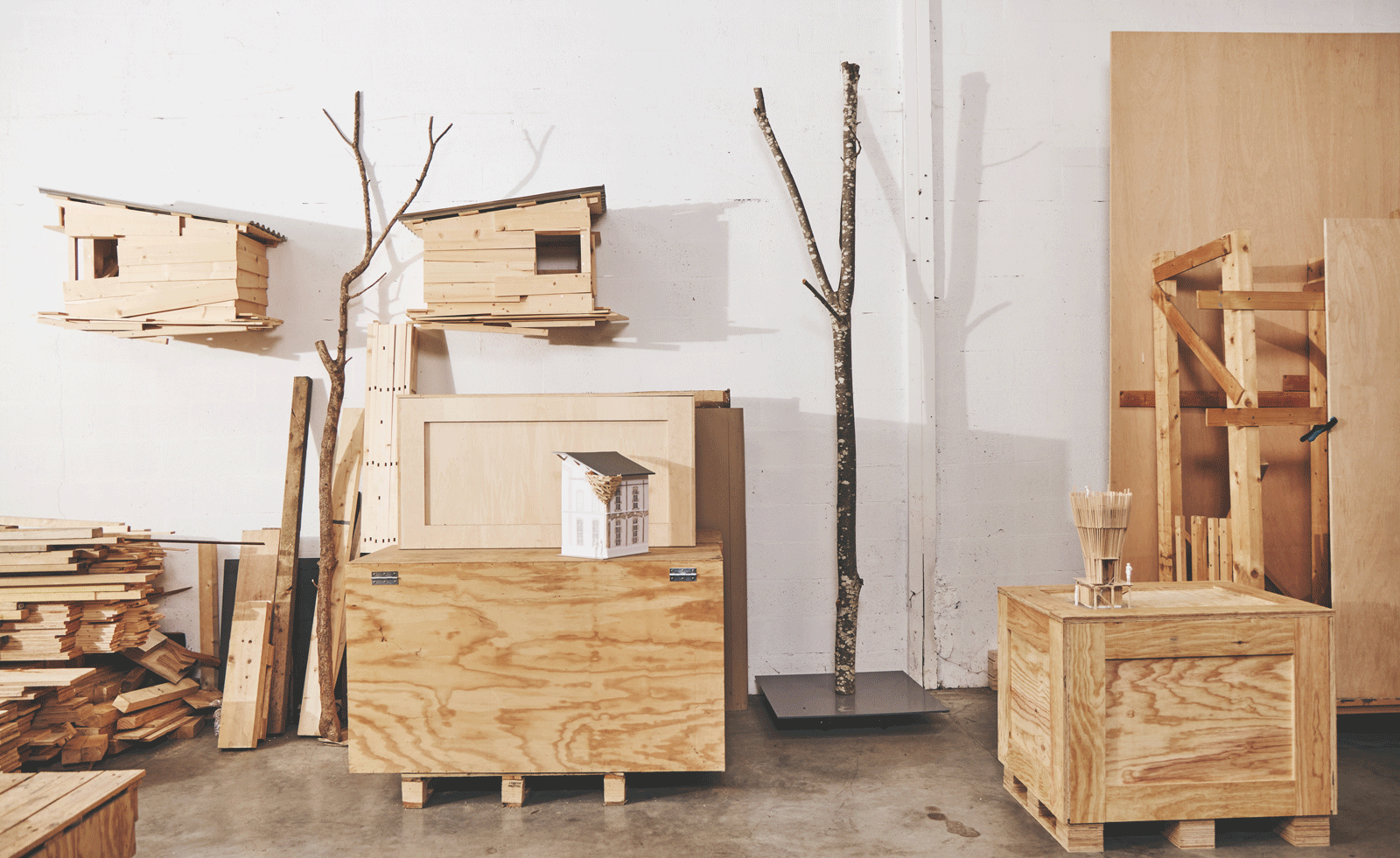
Tadashi Kawamata's studio
He travelled constantly, often for projects in Europe. In the early 2000s, someone offered him an apartment and atelier in Paris; tired of hotel rooms, he took it. He brought his wife over from Japan, and soon after was given a position teaching at the Ecole nationale supérieure des Beaux-Arts. He has maintained studios in Paris and Tokyo ever since.
Unlike most artists of his standing, Kawamata has very few permanent assistants, and works on every piece himself. He often invites others – students, patients, local inhabitants – to collaborate in building them. A former student of his, Guillaume Sokoloff, is his right-hand man, driving him around, arranging for building permits, operating the crane when Kawamata is up a tree.
After visiting each site, the artist makes sketches and models of his ideas, though in the end his process includes a great deal of spontaneity. The results may seem haphazard, but every stick of wood is positioned precisely. His creations are both precarious-looking and invasive, exploring the tensions between construction and destruction, built and empty space, architectural grandeur and humble shelter.
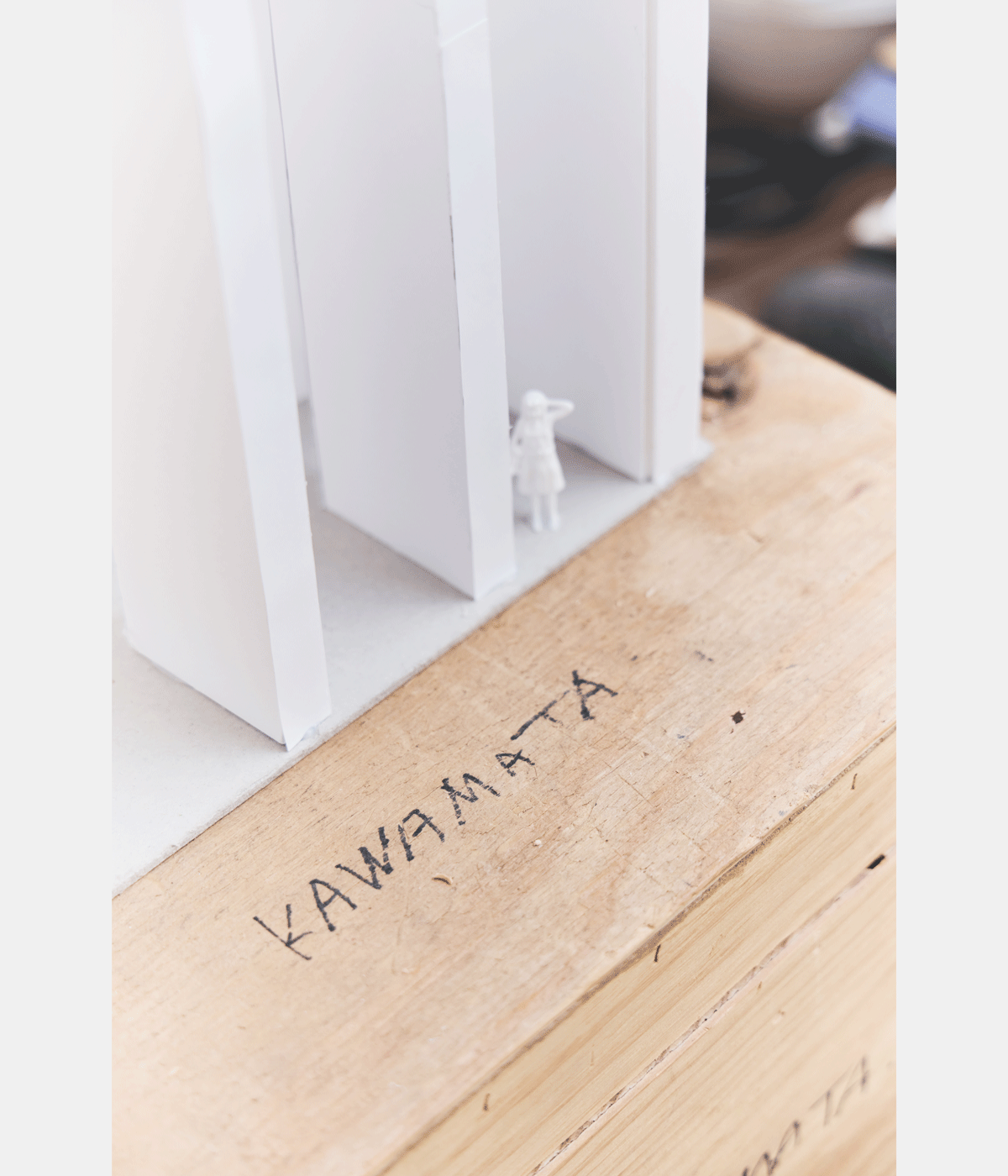
Tadashi Kawamata's studio
He has filled in the remains of a bombed-out church in Kassel, Germany, with scaffolding; installed wooden 'favelas' in Houston; erected a tower of wooden chairs in the chapel of a Paris hospital; created a carpet of floating debris to honour the victims of the Fukushima tsunami. Visitors can walk on his footbridges, climb up his towers, take refuge in his hideaways. However, he has no pretensions of being an architect, and frequently calls upon engineers to ensure his artworks won't fall down.
Some of his themes are recurrent, such as tree huts, of which he's built more than 200 (all different), or nests, which he says represent a safe place in Japanese mythology.
Whereas Kawamata's creations were once ephemerous, now many are built to endure. He describes them as 'semi-permanent.' The wood will turn grey from the elements. Pigeons may roost in the nests. Some huts will come crashing down if and when their host trees fall. 'Everything changes,' Kawamata says. 'We cannot believe anything is permanent. We just stay together with nature.'

Ruinart Blanc de Blancs