Arles: Guido Mocafico
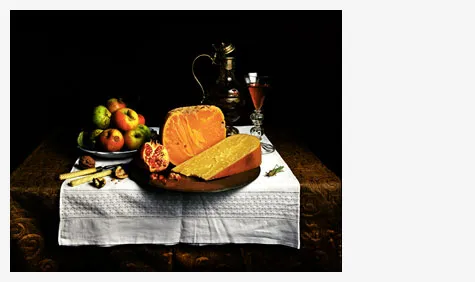
Another of our favourites at Arles this year is the Italian artist-photographer Guido Mocafico. Practising in Paris, Mocafico, along with his production team of food and flower designers, creates large-scale, still life pictures. At first glance the photographs could easily be mistaken for the work of a 17th century Flemish still-life painter and this is precisely Mocafico’s skill.
Click here to see more of the exhibition.
Through a painstaking process he photographs sumptuous still-life scenes that take their lead from the trompe-l’œil masters such as Chardin and Bruegel. Mocafico, however, takes it one step further, creating the illusion of painting through photography – the ultimate expression of hyper-reality. Mocafico says of his work ‘The day someone looking at my pictures asked me why I had photographed paintings, I knew my goal – illusion – had been achieved’.
Still-life paintings, or Vanitas, were born of the Rococo obsession with artifice and the superficial. With his photographs not only has Mocafico managed to duplicate the technique, he’s managed to do it twice in one sitting. His photographs confront us with a double image of reality, an illusion of a painting and in turn an illusion of the real.
Mocafico’s opulent sets, filled with skulls, flowers, meat and other symbols of decay are disconcerting and alluring at the same time. He plays with his viewers, drawing us into a world of shadows, light, colour and texture, then throws us into confusion whilst we attempt to make sense of the illusion. However it’s the sublime beauty of the finished works that’s truly captivating and whether or not you allow Mocafico’s artifice to tie you in knots, you’d be mad to look away.
Receive our daily digest of inspiration, escapism and design stories from around the world direct to your inbox.