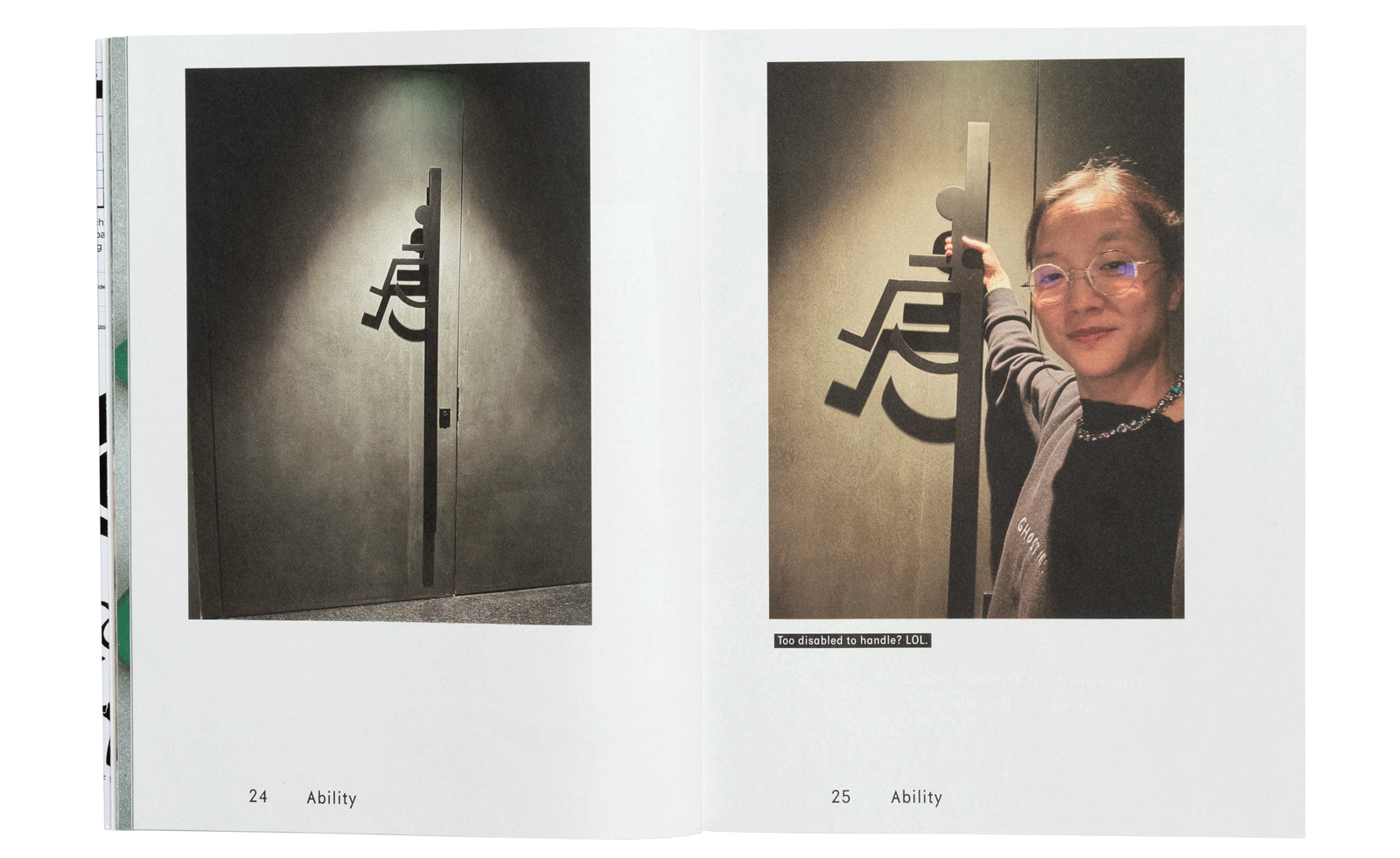
Humour has always been a central tenet of Christine Sun Kim’s artistic practice - and her first artist book, Deaf Material is no different. Across 400 pages, the artist presents over 600 images from her personal archive of photographs and deaf imagery found in mainstream culture, often captioned with critical but humorous anecdotes, histories, and commentaries. Yet when her work and the book’s captions are funny, it isn’t just for the giggles; it is a way of opening the work to new audiences.
'The subject of deafness can be closed and very specific,' Kim says, 'so audiences often find it difficult to relate, and they stop right there. I use humour as a tool to hold their attention, serve as an entry point, and make the work accessible,' she continues. 'It’s like memes: Unfunny memes don’t make the rounds, but funny ones do. Super funny memes circulate so well that they transfer into real life - as Halloween costumes, as mentions in movies, and as part of contemporary language. Humour has to be right enough to circulate.'

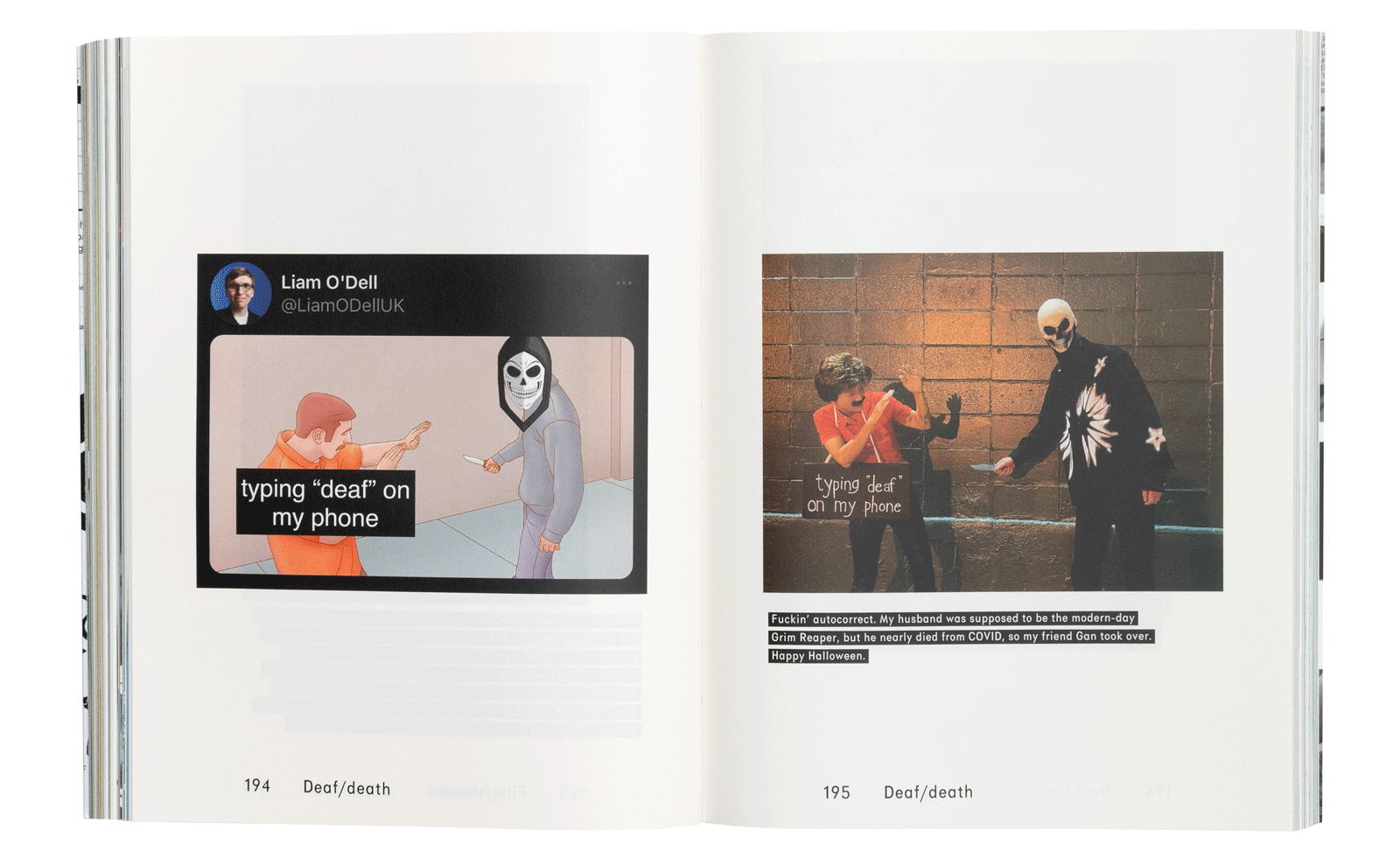
In her work, the American artist strikes that balance: It’s right enough to circulate, but critical enough to send a message.
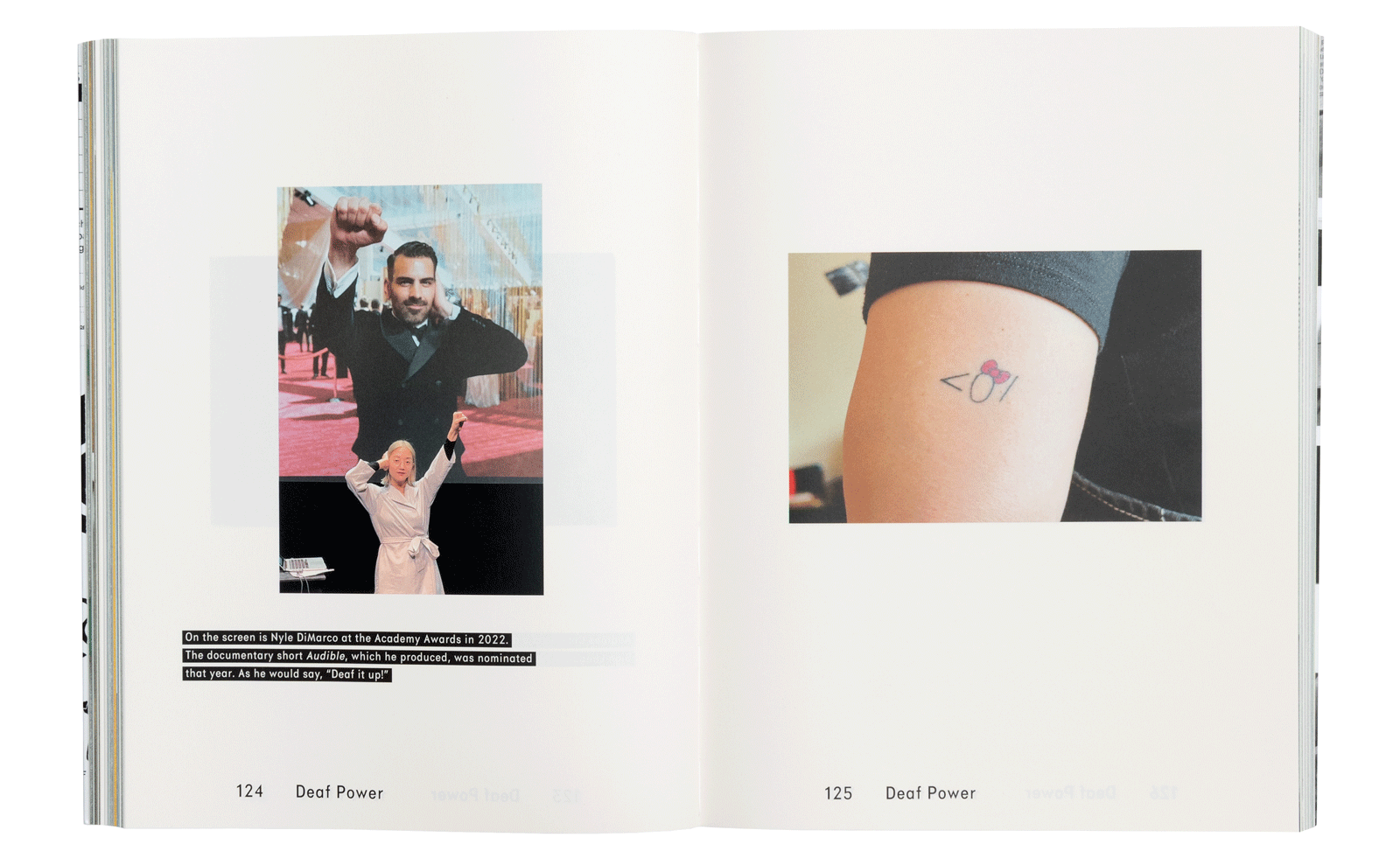
Kim – who earlier this year was included in the Wallpaper* US 400 – is known for drawings, performances, videos, and large-scale murals that examine how societies are shaped by sound and language, often adapting forms from silent modes of communication like musical notation, infographics, and American Sign Language to reshape and translate lived experiences into visual language. With Deaf Material, she offers an array of new insights into her personhood and, more generally, Deaf and disabled cultures and histories through captioned images, divided into 24 categories, drawn from her expansive personal archive.
'I find myself asking, again and again, ‘What are deaf aesthetics, exactly?’ So I started putting hundreds of images together, loosely categorizing them, and getting a good sense of our aesthetics,' she explains of the inspiration and process for the book. 'Deaf histories are messy. They’re often erased, hearing-washed, or not fully documented. Not only that, but many archives out there haven’t been digitized. We need to make our [Deaf] histories more formal: documenting, filing, and sharing. That will force a place in human history for us.'
Some categories in the book speak to specific bodies of Kim’s artwork - such as Captions, Subtitles, and Deaf/death - while others, like Ability, Airports, and Celebrity ASL, shed light explicitly onto her personal feelings toward and experiences relating to the titular topic.
For example, in her performance Spoken on My Behalf (2019) and series of public installations Captioning the City (2021), Kim reframes closed captions as poetic, political, and emotional tools. In Deaf Material’s Captions and Subtitles sections, photos immediately make clear the gaps in how the hearing world perceives sound and deafness compared to the reality, as well as sharing histories about captioning. Atop a photo of a pamphlet titled 'How you can add words to the picture,' Kim writes a caption that explains how a television station received a number of complaints after becoming the first to air a program with opening captioning (meaning the captions were burned in and could not be turned off). This resulted in the development of closed captioning, which can be turned on and off. Other photos are of videos playing on Kim’s laptop, showing how sometimes captions are not actually captions: One reads, 'This is a captions test. This is a test. This is a capt.'. Other offer the opportunity to 'advertise your product or brand here.'
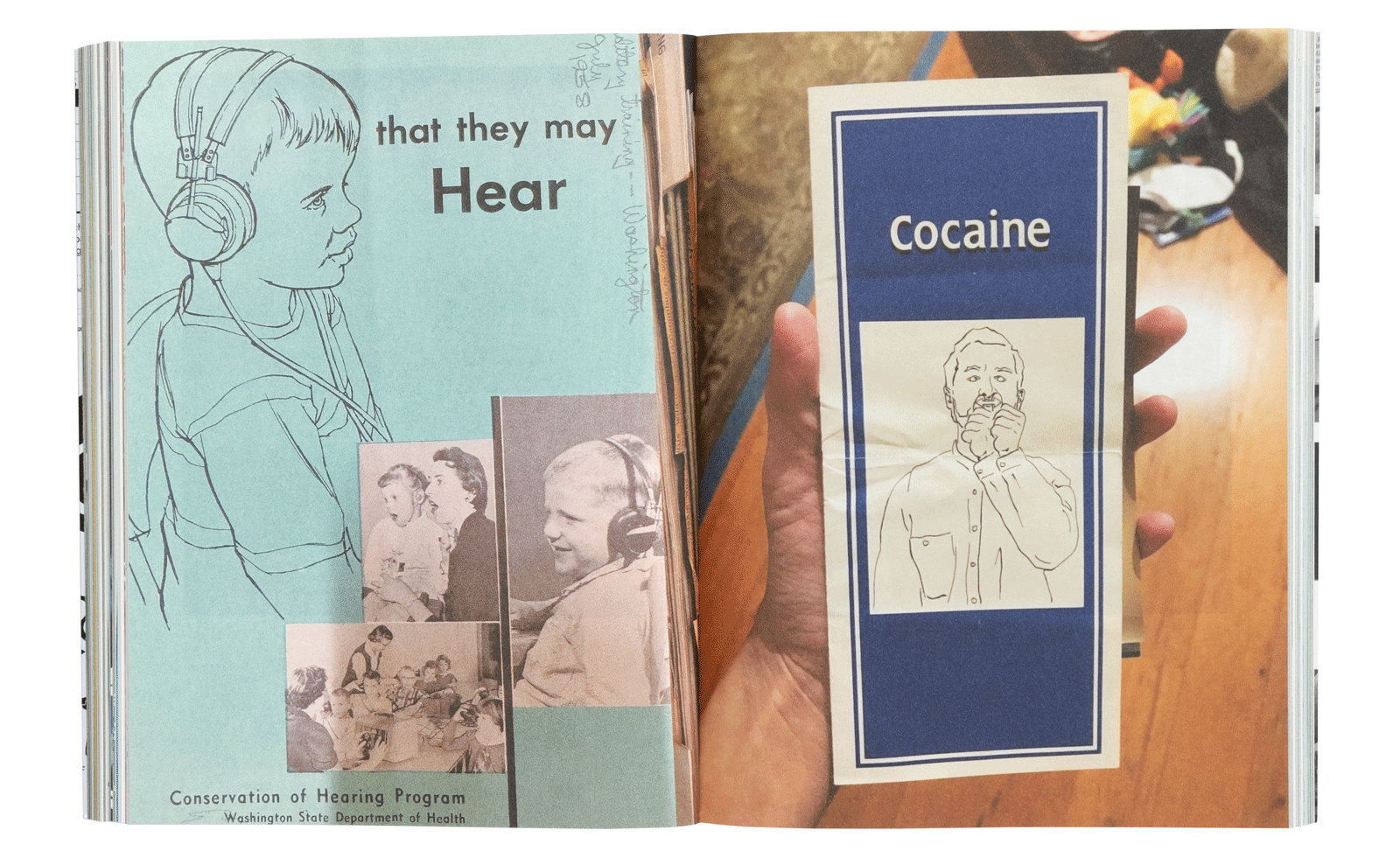
Meanwhile, in the sections Celebrity ASL and ILY, Kim’s captions explain how she feels toward the ASL sign for 'ILY' increasingly appearing in pop culture and worldwide marketing. Beneath a photo of a Japanese bag of chips featuring a cartoon hand signing 'ILY,' she writes: 'ILY has gone global. I would have loved it even more if deaf people had the same resources and access to education and employment as hearing people in their countries. ILY is being hearing-washed.' Atop an image of Hilary Clinton flashing the sign, Kim has written: 'Love over emails.'
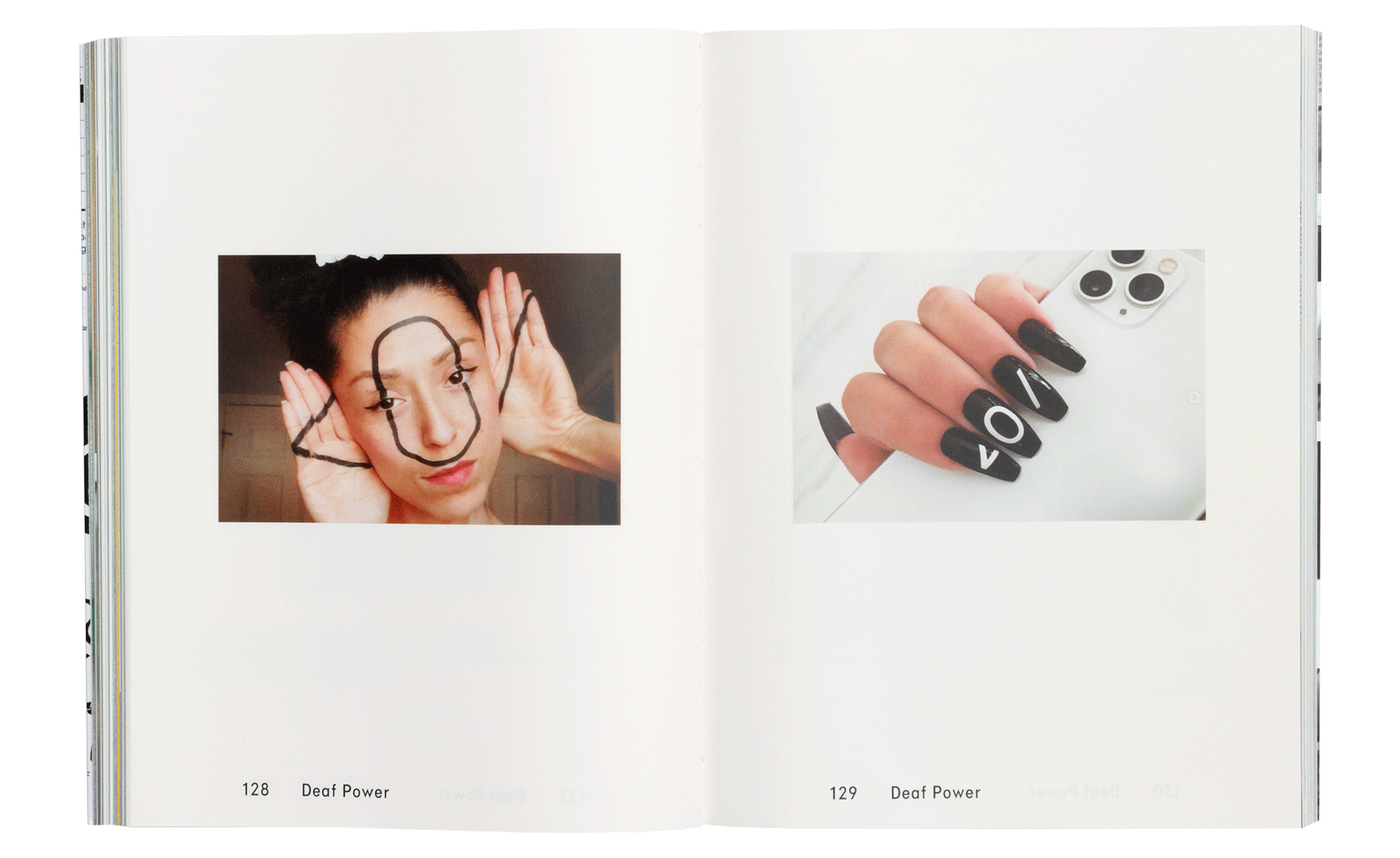
Taken as a whole, Deaf Material is a material expansion of Kim’s overarching practice. It is not only about deafness but disability and accessibility at large, making clear that we still have a long way to go: 'As much as I don’t want to admit it, I have an insanely huge amount of anxiety and paranoia around my existence,' Kim says. 'With eugenics against deafness in full swing and disability laws weakening, I am not very optimistic about the future of the Deaf community. Putting work together like this actually helps me deal with it. Therapy, I guess?'
'Christine Sun Kim: Deaf Material' is currently available online via Primary Information. It will be available in bookstores from September 15