Architecture

Venice Architecture Biennale 2012

1. Torre David / Gran Horizonte, by Urban Think Tank, Justin McGuirk and Iwan Baan, at the Arsenale
Winning this year's Golden Lion, the Urban Think Tank and Justin McGuirk's Torre David / Gran Horizonte not only offered a taste (quite literally) of Venezuela within this Biennale, but also addressed urban issues springing from the world's tallest squat, Torre David. Strategically placed halfway through the Corderie de l'Arsenale, the installation included a Venezuelan food canteen and plenty of photographs by Iwan Baan illustrating life in Caracas' Torre David. It also presented research produced by the organisers in collaboration with Alfredo Brillembourg & Hubert Klumpner of ETH Zurich.
Photography: Iwan Baan

1. Torre David / Gran Horizonte, by Urban Think Tank, Justin McGuirk and Iwan Baan, at the Arsenale
Winning this year's Golden Lion, the Urban Think Tank and Justin McGuirk's Torre David / Gran Horizonte not only offered a taste (quite literally) of Venezuela within this Biennale, but also addressed urban issues springing from the world's tallest squat, Torre David. Strategically placed halfway through the Corderie de l'Arsenale, the installation included a Venezuelan food canteen and plenty of photographs by Iwan Baan illustrating life in Caracas' Torre David. It also presented research produced by the organisers in collaboration with Alfredo Brillembourg & Hubert Klumpner of ETH Zurich.
Photography: Iwan Baan

1. Torre David / Gran Horizonte, by Urban Think Tank, Justin McGuirk and Iwan Baan, at the Arsenale
Winning this year's Golden Lion, the Urban Think Tank and Justin McGuirk's Torre David / Gran Horizonte not only offered a taste (quite literally) of Venezuela within this Biennale, but also addressed urban issues springing from the world's tallest squat, Torre David. Strategically placed halfway through the Corderie de l'Arsenale, the installation included a Venezuelan food canteen and plenty of photographs by Iwan Baan illustrating life in Caracas' Torre David. It also presented research produced by the organisers in collaboration with Alfredo Brillembourg & Hubert Klumpner of ETH Zurich.
Photography: Iwan Baan

1. Torre David / Gran Horizonte, by Urban Think Tank, Justin McGuirk and Iwan Baan, at the Arsenale
Winning this year's Golden Lion, the Urban Think Tank and Justin McGuirk's Torre David / Gran Horizonte not only offered a taste (quite literally) of Venezuela within this Biennale, but also addressed urban issues springing from the world's tallest squat, Torre David. Strategically placed halfway through the Corderie de l'Arsenale, the installation included a Venezuelan food canteen and plenty of photographs by Iwan Baan illustrating life in Caracas' Torre David. It also presented research produced by the organisers in collaboration with Alfredo Brillembourg & Hubert Klumpner of ETH Zurich.
Photography: Iwan Baan

1. Torre David / Gran Horizonte, by Urban Think Tank, Justin McGuirk and Iwan Baan, at the Arsenale
Winning this year's Golden Lion, the Urban Think Tank and Justin McGuirk's Torre David / Gran Horizonte not only offered a taste (quite literally) of Venezuela within this Biennale, but also addressed urban issues springing from the world's tallest squat, Torre David. Strategically placed halfway through the Corderie de l'Arsenale, the installation included a Venezuelan food canteen and plenty of photographs by Iwan Baan illustrating life in Caracas' Torre David. It also presented research produced by the organisers in collaboration with Alfredo Brillembourg & Hubert Klumpner of ETH Zurich.
Photography: Iwan Baan

1. Torre David / Gran Horizonte, by Urban Think Tank, Justin McGuirk and Iwan Baan, at the Arsenale
Winning this year's Golden Lion, the Urban Think Tank and Justin McGuirk's Torre David / Gran Horizonte not only offered a taste (quite literally) of Venezuela within this Biennale, but also addressed urban issues springing from the world's tallest squat, Torre David. Strategically placed halfway through the Corderie de l'Arsenale, the installation included a Venezuelan food canteen and plenty of photographs by Iwan Baan illustrating life in Caracas' Torre David. It also presented research produced by the organisers in collaboration with Alfredo Brillembourg & Hubert Klumpner of ETH Zurich.
Photography: Iwan Baan

1. Torre David / Gran Horizonte, by Urban Think Tank, Justin McGuirk and Iwan Baan, at the Arsenale
Winning this year's Golden Lion, the Urban Think Tank and Justin McGuirk's Torre David / Gran Horizonte not only offered a taste (quite literally) of Venezuela within this Biennale, but also addressed urban issues springing from the world's tallest squat, Torre David. Strategically placed halfway through the Corderie de l'Arsenale, the installation included a Venezuelan food canteen and plenty of photographs by Iwan Baan illustrating life in Caracas' Torre David. It also presented research produced by the organisers in collaboration with Alfredo Brillembourg & Hubert Klumpner of ETH Zurich.
Photography: Iwan Baan

1. Torre David / Gran Horizonte, by Urban Think Tank, Justin McGuirk and Iwan Baan, at the Arsenale
Winning this year's Golden Lion, the Urban Think Tank and Justin McGuirk's Torre David / Gran Horizonte not only offered a taste (quite literally) of Venezuela within this Biennale, but also addressed urban issues springing from the world's tallest squat, Torre David. Strategically placed halfway through the Corderie de l'Arsenale, the installation included a Venezuelan food canteen and plenty of photographs by Iwan Baan illustrating life in Caracas' Torre David. It also presented research produced by the organisers in collaboration with Alfredo Brillembourg & Hubert Klumpner of ETH Zurich.
Photography: Iwan Baan

1. Torre David / Gran Horizonte, by Urban Think Tank, Justin McGuirk and Iwan Baan, at the Arsenale
Winning this year's Golden Lion, the Urban Think Tank and Justin McGuirk's Torre David / Gran Horizonte not only offered a taste (quite literally) of Venezuela within this Biennale, but also addressed urban issues springing from the world's tallest squat, Torre David. Strategically placed halfway through the Corderie de l'Arsenale, the installation included a Venezuelan food canteen and plenty of photographs by Iwan Baan illustrating life in Caracas' Torre David. It also presented research produced by the organisers in collaboration with Alfredo Brillembourg & Hubert Klumpner of ETH Zurich.
Photography: Iwan Baan

1. Torre David / Gran Horizonte, by Urban Think Tank, Justin McGuirk and Iwan Baan, at the Arsenale
Winning this year's Golden Lion, the Urban Think Tank and Justin McGuirk's Torre David / Gran Horizonte not only offered a taste (quite literally) of Venezuela within this Biennale, but also addressed urban issues springing from the world's tallest squat, Torre David. Strategically placed halfway through the Corderie de l'Arsenale, the installation included a Venezuelan food canteen and plenty of photographs by Iwan Baan illustrating life in Caracas' Torre David. It also presented research produced by the organisers in collaboration with Alfredo Brillembourg & Hubert Klumpner of ETH Zurich.
Photography: Iwan Baan

1. Torre David / Gran Horizonte, by Urban Think Tank, Justin McGuirk and Iwan Baan, at the Arsenale
Winning this year's Golden Lion, the Urban Think Tank and Justin McGuirk's Torre David / Gran Horizonte not only offered a taste (quite literally) of Venezuela within this Biennale, but also addressed urban issues springing from the world's tallest squat, Torre David. Strategically placed halfway through the Corderie de l'Arsenale, the installation included a Venezuelan food canteen and plenty of photographs by Iwan Baan illustrating life in Caracas' Torre David. It also presented research produced by the organisers in collaboration with Alfredo Brillembourg & Hubert Klumpner of ETH Zurich.
Photography: Iwan Baan

2. Japanese pavilion
The Japanese Pavilion presented the search for a 'home for all', a specific commission for a house that attempts to deal with the widespread devastation following last year's earthquake and tsunami. Here the architectural process is laid bare using a vast array of working models, all progressing towards the finalised version of the design. Overseen by Toyo Ito, working with Atsuko Sato and Tae Mori, the models are dwarfed by huge-scale landscape photography of post-tsunami Rikuzentakata, shot by Naoya Hatakeyama who lost his mother in the disaster.
Photography: Sergio Pirrone

2. Japanese pavilion
The Japanese Pavilion presented the search for a 'home for all', a specific commission for a house that attempts to deal with the widespread devastation following last year's earthquake and tsunami. Here the architectural process is laid bare using a vast array of working models, all progressing towards the finalised version of the design. Overseen by Toyo Ito, working with Atsuko Sato and Tae Mori, the models are dwarfed by huge-scale landscape photography of post-tsunami Rikuzentakata, shot by Naoya Hatakeyama who lost his mother in the disaster.
Photography: Sergio Pirrone

3. Canadian pavilion
Jason Chung's show, designed by 5468796 Architecture, was a colossal chunk of Canadian timber, interspersed with work by young emerging architects, dealing with the personal stories and disparate approaches inherent to this vast country.
Photography: Sergio Pirrone

3. Canadian pavilion
Jason Chung's show, designed by 5468796 Architecture, was a colossal chunk of Canadian timber, interspersed with work by young emerging architects, dealing with the personal stories and disparate approaches inherent to this vast country.
Photography: Sergio Pirrone

4. Archipelago Cinema by Buro Ole Scheeren, collateral events
We must confess to having qualms about the logistical sense of a cinema on a raft, but the seamless organisation, superb catering and crisp Venetian weather ensured the premiere of Horst Brandenburg's film about Ole Scheeren, Against All Rules, was one of the Biennale highlights. The film itself delved into Scheeren's swift elevation into the new architectural elite, underpinned by a preoccupation with the world around the buildings on display. Characterised by hitherto unseen imagery of his studio's suite of new Asian megastructures, it was a concise portrait of a modern architectural personality. Wallpaper* was proud to co-host the aftershow event - thanks to sponsorship from Belvedere Vodka and Peroni beer, and kind support from the KT Wong Foundation - and we whipped up a strictly limited edition version of Scheeren's guest-edited section of our October issue just for the occasion. With Vaparettos gliding up to discharge their starry cargos throughout the evening, music from the film's composers Marc Feigenspann and Johannes Brecht and visual magic by VJ Philipp Monjoie, this was a fine way to kick off the Biennale.
Photography: Alejandro Falceto Palacin

4. Archipelago Cinema by Buro Ole Scheeren, collateral events
We must confess to having qualms about the logistical sense of a cinema on a raft, but the seamless organisation, superb catering and crisp Venetian weather ensured the premiere of Horst Brandenburg's film about Ole Scheeren, Against All Rules, was one of the Biennale highlights. The film itself delved into Scheeren's swift elevation into the new architectural elite, underpinned by a preoccupation with the world around the buildings on display. Characterised by hitherto unseen imagery of his studio's suite of new Asian megastructures, it was a concise portrait of a modern architectural personality. Wallpaper* was proud to co-host the aftershow event - thanks to sponsorship from Belvedere Vodka and Peroni beer, and kind support from the KT Wong Foundation - and we whipped up a strictly limited edition version of Scheeren's guest-edited section of our October issue just for the occasion. With Vaparettos gliding up to discharge their starry cargos throughout the evening, music from the film's composers Marc Feigenspann and Johannes Brecht and visual magic by VJ Philipp Monjoie, this was a fine way to kick off the Biennale.
Photography: Alejandro Falceto Palacin

5. Wim Wenders on Peter Zumthor, Arsenale
Shown in this old lighthouse, tucked away at the very tail end of the Arsenale (a long trek in the Venetian heat), was a perfectly composed short film about Zumthor by Wenders. Shot in crisp, rich tones, it followed the Swiss master on his daily routine, capturing something of the gravity of his work and the painstaking process behind it.

6. Wunderkammer by Tod Williams Billie Tsien Architects, Arsenale
Sending a standard box to 35 practices and asking them to send it back, filling it with items from their desks, New York based Todd Williams and Billie Tsien explored what inspires some of the world's most interesting architects. Participating firms offering us insight into their influences include Peter Zumthor, Richard Meier and O'Donnell Tuomey.

7. Public Works by OMA, Central Pavilion
One of the curated section's most interesting installations, OMA's Public Works: Architecture by Civil Servants explores architectural masterpieces created by architect-bureaucrats. This includes work by architects employed by the Greater London Council and the Public Works Department of Amsterdam, as well as more projects from France, Italy and Germany. Fifteen buildings produced by the public sector offer a strong and interesting show, overseen by OMA partner and AMO Director Renier de Graaf.
Photography: Sergio Pirrone

8. Architecture Magazines: Playgrounds & Battlegrounds by Steve Parnell, Central Pavilion
If you want to escape the hustle and bustle of the Giardini for a few moments, British architect and critic Steve Parnell's installation at the Central Pavilion is the place to go. Focusing on architectural publications, Architecture Magazines: Playgrounds & Battlegrounds does exactly what it says on the tin, displaying a selection of publications, which can be browsed through at your leisure. Plenty of food for thought.

8. Architecture Magazines: Playgrounds & Battlegrounds by Steve Parnell, Central Pavilion
If you want to escape the hustle and bustle of the Giardini for a few moments, British architect and critic Steve Parnell's installation at the Central Pavilion is the place to go. Focusing on architectural publications, Architecture Magazines: Playgrounds & Battlegrounds does exactly what it says on the tin, displaying a selection of publications, which can be browsed through at your leisure. Plenty of food for thought.

9. Polish pavilion
A tilted floor, surrounded by bare grey walls with just the memory of the architecture beneath them, was the set for Ralf Meinz's sound design. The result was an experiential space that was calming and unsettling at the same time. Titled 'Making The Walls Quake As If They Were Dilating With The Secret Knowledge Of Great Powers', it reminds us that the aural is as important as the visual.

10. Grafton Architects and Paulo Mendes da Rocha, Central Pavilion  
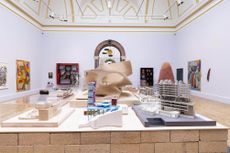
Dublin based Shelley McNamara and Yvonne Farrell  (Grafton Architects) find common ground with Brazilian Pritzker Prize-winning architect Paulo Mendes de Rocha. Winning this Biennale's Silver Lion, the display focuses on the relationship of landscape and infrastructure through a series of models of work by both parties, creating a discourse about architecture, landscape, geography and the human factor.

10. Grafton Architects and Paulo Mendes da Rocha, Central Pavilion  
Dublin based Shelley McNamara and Yvonne Farrell  (Grafton Architects) find common ground with Brazilian Pritzker Prize-winning architect Paulo Mendes de Rocha. Winning this Biennale's Silver Lion, the display focuses on the relationship of landscape and infrastructure through a series of models of work by both parties, creating a discourse about architecture, landscape, geography and the human factor.

Brazilian pavilion
Marcio Kogan's laid-back installation was created as a response to the work of Lucio Costa, in particular his installation 'Riposatevi' from the 1964 Milan Triennale. There's something of the spirit of the Sixties in the colourful hammocks and palm trees that scatter the space, with guitars on hand for impromptu sing-a-alongs. Adjacent to this is 'Peep Show', a playful take on Kogan's simple but ostentatious architecture that invites the viewer to spy on the staged (and family-friendly) antics of a ditzy socialite and her maid(s).
Photography: Sergio Pirrone

Brazilian pavilion
Marcio Kogan's laid-back installation was created as a response to the work of Lucio Costa, in particular his installation 'Riposatevi' from the 1964 Milan Triennale. There's something of the spirit of the Sixties in the colourful hammocks and palm trees that scatter the space, with guitars on hand for impromptu sing-a-alongs. Adjacent to this is 'Peep Show', a playful take on Kogan's simple but ostentatious architecture that invites the viewer to spy on the staged (and family-friendly) antics of a ditzy socialite and her maid(s).
Photography: Sergio Pirrone

Zaha Hadid and Pier Luigi Nervi
Zaha Hadid paid homage to Pier Luigi Nervi, with a structure of her own and some historical imagery, including spectacular engineering models built to illustrate the strength of Nervi's thin shelled structures.
Photography: Sergio Pirrone

Zaha Hadid and Pier Luigi Nervi
Zaha Hadid paid homage to Pier Luigi Nervi, with a structure of her own and some historical imagery, including spectacular engineering models built to illustrate the strength of Nervi's thin shelled structures.
Photography: Sergio Pirrone

Zaha Hadid and Pier Luigi Nervi
Zaha Hadid paid homage to Pier Luigi Nervi, with a structure of her own and some historical imagery, including spectacular engineering models built to illustrate the strength of Nervi's thin shelled structures.
Photography: Sergio Pirrone

Elbphilharmonie
Herzog & de Meuron gamely presented models of the ongoing Elbphilharmonie in a room ringed by newspaper clippings chronicling the project's long gestation, with exultation and anticipation turning slowly sour over the years. There's every indication that the building will ultimately be one of Germany's most significant modern structures, but the journey is not proving easy.
Photography: Sergio Pirrone

Russian pavilion
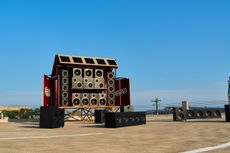
A landscape of QR codes that swapped the impermeable bureaucracy of Soviet times with the dense digital pathways of modern technology. Photogenic and complex within its simplicity, the pavilion tells the story of the 60 secret Soviet research towns, their stories cloistered behind a monumental hole-filled screen, and the emergence of one - Skolkovo - as a beacon of the new knowledge economy.
Photography: Sergio Pirrone

German pavilion
The serene photography of Erica Overmeer was displayed on a colossal scale in this pavilion, illustrating modernism that has been re-born with new uses and new interventions. The space was modified by the temporary walkways Venetians know so well from winter flooding.
Photography: Sergio Pirrone

German pavilion
The serene photography of Erica Overmeer was displayed on a colossal scale in this pavilion, illustrating modernism that has been re-born with new uses and new interventions. The space was modified by the temporary walkways Venetians know so well from winter flooding.
Photography: Sergio Pirrone

German pavilion
The serene photography of Erica Overmeer was displayed on a colossal scale in this pavilion, illustrating modernism that has been re-born with new uses and new interventions. The space was modified by the temporary walkways Venetians know so well from winter flooding.
Photography: Sergio Pirrone

USA pavilion
The Venice Architecture Biennale offers countries a chance to deviate from their national script and send a political message. 'Spontaneous Interventions,' a show about 'design actions for the common good', could not have been more distant from the prevailing political mood in the States, with its emphasis on community projects, social responsibility and 'the power of human agency'. Set up as an elaborate system of banners and pulleys that gave it a certain quirky interactivity, the show - curated by Cathy Lang Ho, (in collaboration with Ned Cramer and David van der Leer), on behalf of the Institute for Urban Design - was the antithesis of lonely libertarianism.
Photography: Sergio Pirrone

USA pavilion
The Venice Architecture Biennale offers countries a chance to deviate from their national script and send a political message. 'Spontaneous Interventions,' a show about 'design actions for the common good', could not have been more distant from the prevailing political mood in the States, with its emphasis on community projects, social responsibility and 'the power of human agency'. Set up as an elaborate system of banners and pulleys that gave it a certain quirky interactivity, the show - curated by Cathy Lang Ho, (in collaboration with Ned Cramer and David van der Leer), on behalf of the Institute for Urban Design - was the antithesis of lonely libertarianism.
Photography: Sergio Pirrone

Hungarian pavilion
'Spacemaker', curated by Balint Bachmann and Marko Balazs, is a monumental celebration of the architectural model. A sea of 300 or so structures are presented on plinths protruding from carefully tended gravel. It may be visually successful, but it is hard to parse as anything more than a celebration of Hungary's architectural community.

Hungarian pavilion
'Spacemaker', curated by Balint Bachmann and Marko Balazs, is a monumental celebration of the architectural model. A sea of 300 or so structures are presented on plinths protruding from carefully tended gravel. It may be visually successful, but it is hard to parse as anything more than a celebration of Hungary's architectural community.

Dutch pavilion
This transformable installation is driven by rolling curtains that perpetually change the spatial character of Gerrit Rietveld's 58-year old pavilion.
Photography: Sergio Pirrone

Dutch pavilion
This transformable installation is driven by rolling curtains that perpetually change the spatial character of Gerrit Rietveld's 58-year old pavilion.
Photography: Sergio Pirrone

Spanish pavilion
The Spanish offering was old-school in its boundless optimism about the role of technology to push a green agenda.
Photography: Sergio Pirrone

Spanish pavilion
The Spanish offering was old-school in its boundless optimism about the role of technology to push a green agenda.
Photography: Sergio Pirrone

Swiss pavilion
The exhibition 'And Now the Ensemble!' (Und jetzt das Ensemble!), curated by Miroslav Šik, in collaboration with architects Miller & Maranta and Knapkiewicz & Fickert, in the Swiss Pavilion presents the dialogue and common ground between architecture and urban planning, especially in the case of new-builds entering a pre-existing environment.
Photography: Sergio Pirrone

Austrian pavilion
Technically brilliant, logistically awkward and ultimately baffling, 'Hands have no tears to flow' is an abstract visual representation of a Paul Bowles short story, curated by Arno Ritter. The hypothetical questions posed by the installation ('is the construction site then no longer the building, but the body itself?') felt awkwardly out of time and at odds with the Biennale as a whole.
Photography: Sergio Pirrone

Romanian pavilion
Inviting visitors to emboss and create stamps that show the buildings of legendary Romanian architect Ion Mincu or quotes by famous international architects, 'Play Mincu' is interactive and playful.
Photography: Sergio Pirrone

Finnish pavilion
Elsewhere in the Giardini, the Finns celebrate the complete restoration of Alvar Aalto's tiny wooden pavilion, a temporary structure that survived long past its intended shelf life only to be crushed by a falling tree last winter.

Radix, by Aires Mateus Architects, Arsenale
The Radix installation, designed by Portuguese practice Aires Mateus, sits outside the Corderie space of the Arsenale and creates a juxtaposition between its unashamedly modern, refreshingly contemporary shape and the historical environment of Venice.

Alvaro Siza pavilion
Alvaro Siza contributed an open air pavilion at the far end of the Arsenale. Its three faceted walls create intimate spaces in the middle of the garden, designed for the 12th Biennale in 2012 by Piet Oudolf

Eduardo Souto de Moura pavilion
Sited next to Siza's pavilion, Souto de Moura's offering frames the views of the canals

British pavilion
A research-led exhibition was threaded through Britain's classical pavilion at the head of the grand axis on the Giardini. 'Venice Takeaway' was a flippant description of a plethora of very varied projects, all of which shared a common thread - the impact of cross-cultural collaboration on modern practice. Led by Vicky Richardson, the exhibitors included aberrant architecture, drMM, Elias Redstone, Smout Allen with BLDGBLOG and Darryl Chen and Hawkins/Brown.
Photography: Cristiano Corte

British pavilion
A research-led exhibition was threaded through Britain's classical pavilion at the head of the grand axis on the Giardini. 'Venice Takeaway' was a flippant description of a plethora of very varied projects, all of which shared a common thread - the impact of cross-cultural collaboration on modern practice. Led by Vicky Richardson, the exhibitors included aberrant architecture, drMM, Elias Redstone, Smout Allen with BLDGBLOG and Darryl Chen and Hawkins/Brown.
Photography: Cristiano Corte

British pavilion
A research-led exhibition was threaded through Britain's classical pavilion at the head of the grand axis on the Giardini. 'Venice Takeaway' was a flippant description of a plethora of very varied projects, all of which shared a common thread - the impact of cross-cultural collaboration on modern practice. Led by Vicky Richardson, the exhibitors included aberrant architecture, drMM, Elias Redstone, Smout Allen with BLDGBLOG and Darryl Chen and Hawkins/Brown.
Photography: Cristiano Corte

British pavilion
A research-led exhibition was threaded through Britain's classical pavilion at the head of the grand axis on the Giardini. 'Venice Takeaway' was a flippant description of a plethora of very varied projects, all of which shared a common thread - the impact of cross-cultural collaboration on modern practice. Led by Vicky Richardson, the exhibitors included aberrant architecture, drMM, Elias Redstone, Smout Allen with BLDGBLOG and Darryl Chen and Hawkins/Brown.
Photography: Cristiano Corte

British pavilion
A research-led exhibition was threaded through Britain's classical pavilion at the head of the grand axis on the Giardini. 'Venice Takeaway' was a flippant description of a plethora of very varied projects, all of which shared a common thread - the impact of cross-cultural collaboration on modern practice. Led by Vicky Richardson, the exhibitors included aberrant architecture, drMM, Elias Redstone, Smout Allen with BLDGBLOG and Darryl Chen and Hawkins/Brown.
Photography: Cristiano Corte

British pavilion
A research-led exhibition was threaded through Britain's classical pavilion at the head of the grand axis on the Giardini. 'Venice Takeaway' was a flippant description of a plethora of very varied projects, all of which shared a common thread - the impact of cross-cultural collaboration on modern practice. Led by Vicky Richardson, the exhibitors included aberrant architecture, drMM, Elias Redstone, Smout Allen with BLDGBLOG and Darryl Chen and Hawkins/Brown.
Photography: Cristiano Corte

British pavilion
A research-led exhibition was threaded through Britain's classical pavilion at the head of the grand axis on the Giardini. 'Venice Takeaway' was a flippant description of a plethora of very varied projects, all of which shared a common thread - the impact of cross-cultural collaboration on modern practice. Led by Vicky Richardson, the exhibitors included aberrant architecture, drMM, Elias Redstone, Smout Allen with BLDGBLOG and Darryl Chen and Hawkins/Brown.
Photography: Cristiano Corte

Carlo Scarpa. Venini 1932 - 1947, Fondazione Giorgio Cini, collateral events
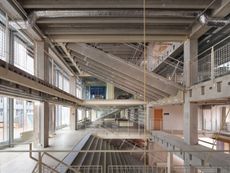
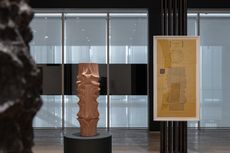
Housed in a newly renovated building (pictured), overseen by US-based architect Annabelle Selldorf, the exhibition 'Carlo Scarpa. Venini 1932-1947' was curated by Marino Barovier and opened on the Island of San Giogrio Maggiore during the Biennale vernissage. Consisting of over 300 glass artworks by iconic designer Carlo Scarpa from his time as artistic director at the Venini Glass Works, this show not only inaugurates the new building (a collaboration between Fondazione Giorgio Cini and Pentagram Stiftung) but offers a celebration of Venetian glassmaking.

Carlo Scarpa. Venini 1932 - 1947, Fondazione Giorgio Cini, collateral events
Housed in a newly renovated building, overseen by US-based architect Annabelle Selldorf, the exhibition 'Carlo Scarpa. Venini 1932-1947' was curated by Marino Barovier and opened on the Island of San Giogrio Maggiore during the Biennale vernissage. Consisting of over 300 glass artworks by iconic designer Carlo Scarpa from his time as artistic director at the Venini Glass Works, this show not only inaugurates the new building (a collaboration between Fondazione Giorgio Cini and Pentagram Stiftung) but offers a celebration of Venetian glassmaking.

Carlo Scarpa. Venini 1932 - 1947, Fondazione Giorgio Cini, collateral events
Housed in a newly renovated building, overseen by US-based architect Annabelle Selldorf, the exhibition 'Carlo Scarpa. Venini 1932-1947' was curated by Marino Barovier and opened on the Island of San Giogrio Maggiore during the Biennale vernissage. Consisting of over 300 glass artworks by iconic designer Carlo Scarpa from his time as artistic director at the Venini Glass Works, this show not only inaugurates the new building (a collaboration between Fondazione Giorgio Cini and Pentagram Stiftung) but offers a celebration of Venetian glassmaking.

Carlo Scarpa. Venini 1932 - 1947, Fondazione Giorgio Cini, collateral events
Housed in a newly renovated building, overseen by US-based architect Annabelle Selldorf, the exhibition 'Carlo Scarpa. Venini 1932-1947' was curated by Marino Barovier and opened on the Island of San Giogrio Maggiore during the Biennale vernissage. Consisting of over 300 glass artworks by iconic designer Carlo Scarpa from his time as artistic director at the Venini Glass Works, this show not only inaugurates the new building (a collaboration between Fondazione Giorgio Cini and Pentagram Stiftung) but offers a celebration of Venetian glassmaking.

Carlo Scarpa. Venini 1932 - 1947, Fondazione Giorgio Cini, collateral events
Housed in a newly renovated building, overseen by US-based architect Annabelle Selldorf, the exhibition 'Carlo Scarpa. Venini 1932-1947' was curated by Marino Barovier and opened on the Island of San Giogrio Maggiore during the Biennale vernissage. Consisting of over 300 glass artworks by iconic designer Carlo Scarpa from his time as artistic director at the Venini Glass Works, this show not only inaugurates the new building (a collaboration between Fondazione Giorgio Cini and Pentagram Stiftung) but offers a celebration of Venetian glassmaking.

Foscarini
A key sponsor for this Venice Architecture Biennale, as well as its art and architecture predecessors over the past three years, lighting specialist Foscarini lit up the show's communal seating and eating areas with their recent products. 'The common ground for us is emotion, and this can be achieved through light', says Foscarini's Carlo Urbinati.

Foscarini
A key sponsor for this Venice Architecture Biennale, as well as its art and architecture predecessors over the past three years, lighting specialist Foscarini lit up the show's communal seating and eating areas with their recent products. 'The common ground for us is emotion, and this can be achieved through light', says Foscarini's Carlo Urbinati.

Foscarini
A key sponsor for this Venice Architecture Biennale, as well as its art and architecture predecessors over the past three years, lighting specialist Foscarini lit up the show's communal seating and eating areas with their recent products. 'The common ground for us is emotion, and this can be achieved through light', says Foscarini's Carlo Urbinati.

Uncommon Venice by Case Studio Vogt and Eth Zurich, Arsenale
Using the form of the typical Venice kiosk for their Uncommon Venice installation at the Arsenale, Case Studio Vogt and ETH Zurich researched the different layers of Venice, seeing the city's public space as the common ground for people and activities. Bringing the focus back to Venice but looking out and beyond, the team produced a publication of different articles that present their research.

Young Arab Architects, collateral event
Even though the show's presentation was not as inspirational as it could be, the presence of (usually underrepresented) Arab architects in Venice is certainly very welcome. Hosted in the CA'ASI, the Common House by AS Architecture Studio Architects, Young Arab Architects shows the results of the recent competition of the same name that highlighted the work of practices such as Kilo Architectures of Morocco and Khalid Al Najjar of the UAE.

Young Arab Architects, collateral event
Even though the show's presentation was not as inspirational as it could be, the presence of (usually underrepresented) Arab architects in Venice is certainly very welcome. Hosted in the CA'ASI, the Common House by AS Architecture Studio Architects, Young Arab Architects shows the results of the recent competition of the same name that highlighted the work of practices such as Kilo Architectures of Morocco and Khalid Al Najjar of the UAE.

Young Arab Architects, collateral event
Even though the show's presentation was not as inspirational as it could be, the presence of (usually underrepresented) Arab architects in Venice is certainly very welcome. Hosted in the CA'ASI, the Common House by AS Architecture Studio Architects, Young Arab Architects shows the results of the recent competition of the same name that highlighted the work of practices such as Kilo Architectures of Morocco and Khalid Al Najjar of the UAE.
Pictured: 'Memorial, history of a destroyed city', by Chamss Oulkadi from Agadir, Morocco, working with Khalid Ait El Madani
Photography: Chamss Oulkadi
 

Young Arab Architects, collateral event
Even though the show's presentation was not as inspirational as it could be, the presence of (usually underrepresented) Arab architects in Venice is certainly very welcome. Hosted in the CA'ASI, the Common House by AS Architecture Studio Architects, Young Arab Architects shows the results of the recent competition of the same name that highlighted the work of practices such as Kilo Architectures of Morocco and Khalid Al Najjar of the UAE.
Pictured: 'Memorial, history of a destroyed city', by Chamss Oulkadi from Agadir, Morocco, working with Khalid Ait El Madani
Photography: Chamss Oulkadi


Young Arab Architects, collateral event
Even though the show's presentation was not as inspirational as it could be, the presence of (usually underrepresented) Arab architects in Venice is certainly very welcome. Hosted in the CA'ASI, the Common House by AS Architecture Studio Architects, Young Arab Architects shows the results of the recent competition of the same name that highlighted the work of practices such as Kilo Architectures of Morocco and Khalid Al Najjar of the UAE.
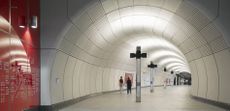
Pictured: Volubilis Archeological Museum, by Tarik Oualalou (Kilo Architectures) from Rabat, Morocco
Photography: Luc Boegly


Young Arab Architects, collateral event
Even though the show's presentation was not as inspirational as it could be, the presence of (usually underrepresented) Arab architects in Venice is certainly very welcome. Hosted in the CA'ASI, the Common House by AS Architecture Studio Architects, Young Arab Architects shows the results of the recent competition of the same name that highlighted the work of practices such as Kilo Architectures of Morocco and Khalid Al Najjar of the UAE.
Pictured: Volubilis Archeological Museum, by Tarik Oualalou (Kilo Architectures) from Rabat, Morocco
Photography: Luc Boegly
 

Young Arab Architects, collateral event
Even though the show's presentation was not as inspirational as it could be, the presence of (usually underrepresented) Arab architects in Venice is certainly very welcome. Hosted in the CA'ASI, the Common House by AS Architecture Studio Architects, Young Arab Architects shows the results of the recent competition of the same name that highlighted the work of practices such as Kilo Architectures of Morocco and Khalid Al Najjar of the UAE.
Pictured: Volubilis Archeological Museum, by Tarik Oualalou (Kilo Architectures) from Rabat, Morocco
Photography: Luc Boegly
 

Young Arab Architects, collateral event
Even though the show's presentation was not as inspirational as it could be, the presence of (usually underrepresented) Arab architects in Venice is certainly very welcome. Hosted in the CA'ASI, the Common House by AS Architecture Studio Architects, Young Arab Architects shows the results of the recent competition of the same name that highlighted the work of practices such as Kilo Architectures of Morocco and Khalid Al Najjar of the UAE.
Pictured: Volubilis Archeological Museum, by Tarik Oualalou (Kilo Architectures) from Rabat, Morocco
Photography: Luc Boegly
 

Young Arab Architects, collateral event
Even though the show's presentation was not as inspirational as it could be, the presence of (usually underrepresented) Arab architects in Venice is certainly very welcome. Hosted in the CA'ASI, the Common House by AS Architecture Studio Architects, Young Arab Architects shows the results of the recent competition of the same name that highlighted the work of practices such as Kilo Architectures of Morocco and Khalid Al Najjar of the UAE.
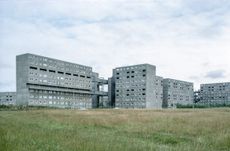
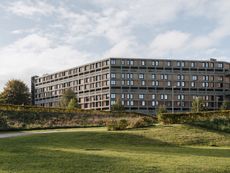
Pictured: Campus for innovation, economics and sport, by Youssef Tohme (Y.Tohme / Architects & associates) from Beirut, Lebanon, in association with 109 Architectes
Photography: Joe Keserouani
 

Young Arab Architects, collateral event
Even though the show's presentation was not as inspirational as it could be, the presence of (usually underrepresented) Arab architects in Venice is certainly very welcome. Hosted in the CA'ASI, the Common House by AS Architecture Studio Architects, Young Arab Architects shows the results of the recent competition of the same name that highlighted the work of practices such as Kilo Architectures of Morocco and Khalid Al Najjar of the UAE.
Pictured: Campus for innovation, economics and sport, by Youssef Tohme (Y.Tohme / Architects & associates) from Beirut, Lebanon, in association with 109 Architectes
Photography:
Joe Keserouani
 

Young Arab Architects, collateral event
Even though the show's presentation was not as inspirational as it could be, the presence of (usually underrepresented) Arab architects in Venice is certainly very welcome. Hosted in the CA'ASI, the Common House by AS Architecture Studio Architects, Young Arab Architects shows the results of the recent competition of the same name that highlighted the work of practices such as Kilo Architectures of Morocco and Khalid Al Najjar of the UAE.
Pictured: Campus for innovation, economics and sport, by Youssef Tohme (Y.Tohme / Architects & associates) from Beirut, Lebanon, in association with 109 Architectes
Photography: Joe Keserouani
 

Australian pavilion
The Australian Pavilion offers a refreshing new approach to selecting its participants; the practices included were picked for the originality of their office's structure rather than work alone. This was illustrated by an infographic that represents' each studio's formation. Contributors include Richard Goodwin and the Architects Radio Show. This will be the last architecture biennale for this pavilion, which will be replaced by a new structure by Denton Corker Marshall.
Photography: John Gollings

Australian pavilion
The Australian Pavilion offers a refreshing new approach to selecting its participants; the practices included were picked for the originality of their office's structure rather than work alone. This was illustrated by an infographic that represents' each studio's formation. Contributors include Richard Goodwin and the Architects Radio Show. This will be the last architecture biennale for this pavilion, which will be replaced by a new structure by Denton Corker Marshall.
Photography: John Gollings

1. Torre David / Gran Horizonte, by Urban Think Tank, Justin McGuirk and Iwan Baan, at the Arsenale
Winning this year's Golden Lion, the Urban Think Tank and Justin McGuirk's Torre David / Gran Horizonte not only offered a taste (quite literally) of Venezuela within this Biennale, but also addressed urban issues springing from the world's tallest squat, Torre David. Strategically placed halfway through the Corderie de l'Arsenale, the installation included a Venezuelan food canteen and plenty of photographs by Iwan Baan illustrating life in Caracas' Torre David. It also presented research produced by the organisers in collaboration with Alfredo Brillembourg & Hubert Klumpner of ETH Zurich.
Photography: Iwan Baan

Tudor: Style File Atelier

Wallpaper* Tudor Style File is back for another year-long season

Bespoke promotion

Join us on Facebook Follow us on Twitter